Section 1: The Modern Professional’s Health Dilemma
It’s 9:45 a.m. You’re on your third coffee, your inbox is overflowing, and you’ve barely moved since waking up. Between deadlines, calls, and quick bites between meetings, the day blurs. By evening, you’re too drained to cook or exercise—so you scroll, snack, and promise that tomorrow will be different.
 Sound familiar? You’re not alone. For most professionals, productivity is rewarded more than well-being. Our schedules stay full, but our energy runs empty. This creates a loop: fatigue leads to skipped healthy habits, which leads to more fatigue.
I lived that cycle early in my career—irregular meals, slouched posture, constant stress. I told myself, “I just don’t have time.” Eventually, I learned that staying healthy isn’t about adding time—it’s about changing how you use it.
Healthy living for professionals isn’t about perfection; it’s about sustainability. You don’t need a strict diet, 5 a.m. workouts, or a wellness retreat. You need simple, practical routines that fit your real life: long hours, short breaks, and constant digital noise.
In this guide, you’ll learn how to:
Understand how work stress and screen time drain your body and mind
How to build small, effective healthy lifestyle habits that improve focus and energy
Use smart tools like a [Affiliate: Standing Desk Converter] to make your workspace healthier
Maintain these habits long-term—even when work gets chaotic
These are tested, real-world strategies—not motivational fluff. Your job doesn’t have to cost you your health. With structure and intention, you can reclaim balance and perform at your best.
Health shouldn’t compete with your career. With consistent effort, you can integrate healthy lifestyle habits into your daily life and reclaim your energy—without sacrificing productivity.
Let’s start by uncovering what’s actually causing this modern lifestyle burnout—and how to reverse it without quitting your career.
Section 2: Why It Happens — The Real Causes Behind Unhealthy Routines
The struggle to stay healthy in today’s professional world isn’t about willpower—it’s about environment and biology. Most of us already know we should move more, eat better, and sleep longer. But our modern work culture constantly fights against how our bodies and minds are designed to function.
1. The Biology of Burnout
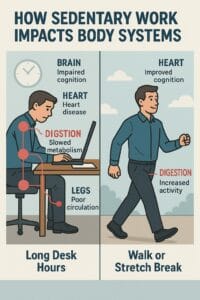 Your body was built for rhythm—periods of focus, then rest and movement. Long hours of screen time and back-to-back meetings break that cycle. When your brain stays in stress mode all day, cortisol levels rise and stay high, keeping you alert but drained. Over time, this leads to fatigue, poor digestion, and sleep disruption.
That’s why you can feel exhausted yet restless at night—your mind worked hard, but your body barely moved. Chronic stress becomes your baseline, and your system starts adapting to dysfunction. The Mayo Clinic warns that prolonged stress suppresses immunity, disrupts digestion, and increases depression risk.
2. Sedentary Living and “Desk Disease”
The average professional sits 8–10 hours a day—often more. This stillness slows metabolism, weakens circulation, and tightens muscles in your hips, neck, and shoulders. Even daily workouts can’t fully offset that.
To combat this, integrate micro-movements into your workday. Alternate sitting and standing using a [Affiliate: Standing Desk Converter], take walking calls, or stretch hourly. The goal isn’t to avoid sitting—it’s to avoid sitting stagnantly.
3. The Digital Overload Cycle
Technology keeps us connected but overstimulated. Constant notifications and scrolling train your brain to crave novelty, making it harder to focus or rest. This dopamine fatigue shortens attention spans and drains mental energy.
Studies from NCBI show that excessive screen exposure disrupts circadian rhythms, reducing sleep quality and increasing anxiety. Poor sleep then throws off hunger and stress hormones, creating a cycle of cravings and burnout.
4. The “Always-On” Work Culture
Busyness has become a badge of honor. Many professionals feel guilty for resting or taking breaks. This “always-on” mindset causes low-grade burnout—you’re never fully collapsing, but never fully recharged either.
True productivity comes from recovery, not just effort. Without enough rest and hydration, your focus, digestion, and immunity decline. Ever fallen sick right after finishing a big project? That’s your body finally reacting to ignored stress.
5. Disconnection from Natural Rhythms
We’re wired for sunlight, movement, and consistent meals—but city life flips that rhythm. Artificial light, skipped breakfasts, and late dinners confuse the body’s internal clock, or circadian rhythm.
To reset: get morning sunlight, eat at regular times, and step away from screens before bed. These simple shifts realign your energy, mood, and sleep cycles naturally.
The Big Picture
Our biology is ancient, but our lifestyle is modern. The wider that gap grows, the harder your body has to compensate. Every unhealthy habit—from stress eating to fatigue—is your body’s response to an unnatural pace.
You don’t need to fight your biology—you need to work with it. That starts with small, sustainable habits that honor your body’s needs within your professional lifestyle.
Section 3: Core Healthy Lifestyle Habits That Build a Healthy Lifestyle.
Building a healthy lifestyle habits doesn’t mean overhauling your entire routine. It means doing a few key things consistently. These four pillars—movement, nutrition, mental balance, and recovery—work together to restore focus, energy, and long-term health for busy professionals.
1. Movement & Mobility — Break the Sitting Cycle
 The biggest challenge isn’t lack of motivation—it’s lack of movement opportunities. Prolonged sitting slows circulation, weakens posture, and drains energy.
Quick, realistic fixes:
Stand for 5–10 minutes every hour using a [Affiliate: Standing Desk Converter].
Walk during calls or between meetings.
Keep a resistance band or dumbbell near your desk for stretch breaks.
Set hourly “movement snacks”—two minutes of motion every hour.
Even small bursts of movement reset focus and blood flow. According to the World Health Organization, just 150 minutes of moderate activity weekly (around 20 minutes daily) cuts the risk of chronic disease dramatically.
📎 [How to Stay Healthy Working a 9-to-5 Desk Job]
📎 [How to Build a Sustainable Fitness Routine for Total Wellness]
2. Nutrition & Energy — Eat for Focus, Not Just Fullness
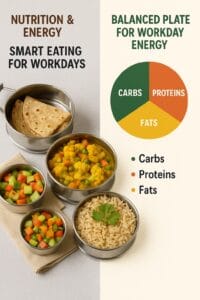 Most professionals eat reactively, not strategically—skipping meals, relying on caffeine, or eating heavy late dinners. Food affects focus, mood, and decision-making as much as it fuels your body.
What to fix:
Don’t skip breakfast; start with balanced fuel like eggs, oats, or fruit smoothies.
Choose slow-digesting carbs—millets, dal, quinoa, or brown rice.
Keep clean snacks (nuts, fruit, roasted makhana) within reach.
Drink water before reaching for another coffee.
Stable blood sugar keeps you alert and reduces afternoon crashes. Think of meals as tools for performance, not just hunger.
📎 [How to Boost Your Immune System Naturally at Home]
📎 [How to Improve Gut Health Without Probiotics]
3. Mind & Stress Management — Staying Calm in Chaos
Your mental state drives every physical habit. Stress raises cortisol, disrupts digestion, and leads to poor choices.
Simple stress resets for busy days:
Take 2-minute micro-breaks every hour.
Set boundaries—log off at a fixed time.
Use transitions (commute, post-work) to decompress with music or journaling.
Avoid checking emails first thing in the morning or before bed.
According to Harvard Health, short breathing or mindfulness practices can lower heart rate and blood pressure within weeks. Consistent calm builds resilience far better than weekend “detoxes.”
📎 [How to Manage Stress Naturally Without Therapy]
📎 [How to Do a Digital Detox for Mental Health]
4. Sleep & Recovery — The Hidden Productivity Tool
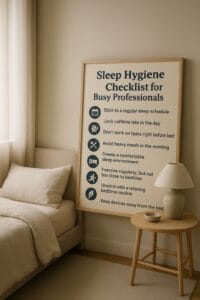 Most professionals trade sleep for productivity—and lose both. During deep sleep, your brain repairs, stores memory, and restores energy. Skipping it sabotages focus and immunity.
Practical recovery upgrades:
Maintain a consistent sleep schedule, even on weekends.
Avoid screens 30 minutes before bed.
Keep your room cool, dark, and quiet.
Journal or read light material before sleep to unwind.
Even minor improvements here compound fast. The Mayo Clinic reports that losing just 30–60 minutes of sleep nightly impairs judgment, focus, and metabolism.
📎 [How to Sleep Better Without Medication]
📎 [How to Start a Morning Routine for Mental Clarity]
Bottom Line
Sustainable health is built from small, repeatable actions. You don’t need radical diets or extreme workouts—just consistent progress in movement, nutrition, mindset, and recovery.
The next section covers the smart tools and supplements that make these habits easier to maintain without relying on willpower.
Section 6: Conclusion — Start Small, Stay Consistent
 Building a healthy lifestyle habits isn’t about perfection—it’s about consistency. The modern professional’s health challenge isn’t lack of knowledge, it’s lack of alignment. We work in environments that reward productivity, not well-being. The real solution is designing your day so that health becomes part of your workflow, not an afterthought.
Keep it simple:
Sit less, move more.
Eat real, balanced meals.
Sleep when your body asks for rest.
Protect your mental space like you protect your calendar.
You don’t need a new diet, gym membership, or complex bio hacks. You need structure and commitment—plus an environment that makes good habits easy to repeat.
A healthy lifestyle habit starts small, upgrade your workspace with a [Affiliate: Standing Desk Converter] to support better posture, focus, and energy. Once your environment changes, your behavior follows naturally.
Remember: every day you practice healthy lifestyle habits, you’re proving to yourself that your health matters as much as your success. Start small. Stay consistent. Results follow discipline, not intensity.






Sibani is the founder of The Calm Bloom, sharing mindful living tips, wellness guides, and practical routines for a balanced lifestyle.