Section 1 — Introduction
 Most people live with constant background stress: fast mornings, scattered attention, digital overload, and a mind that never fully settles. The issue is not due to lack of discipline. The habits that shape your attention are what you don’t realize.
Mindfulness is not a time-consuming practice. The small, repeatable choices that you make determine whether your mind feels centered or chaotic. When your habits promote awareness, mental clarity is enhanced. When they don’t, stress becomes your default.
This guide breaks down 11 practical mindfulness habits that you can integrate into a normal Indian lifestyle. Their design is simple and realistic, with the aim of reducing noise, sharpening focus, and improving emotional stability. Each habit includes clear instructions and examples, so you can apply them immediately.
Section 2 — Root Cause: Why Mental Noise Build Up
 People struggle with mental wellness because modern routines constantly divide attention. Over time, the brain adjusts to overstimulation and remains reactive.
1. The brain is overloaded with stimuli
Notifications, reels, and messages all require your brain to switch context. Mental energy is drained and irritability is caused by these micro-switches.
2. Your nervous system remains alert
Your body is under mild stress all day because of rush mornings, screens at night, irregular meals, and loud environments.
3. You operate on autopilot
Repeating unconscious behaviors, such as fast eating, shallow breathing, and distracted walking, keeps your mind disconnected from the present.
4. Negative loops cause an amplitude
A mind that is scattered tends to default to worry. When focus is fragmented, negative thoughts become louder.
5. Mental rest is not a requirement
Physical pauses are common on most days, but not mental ones. The accumulation of tension is not possible without intentional slow moments.
These patterns are disrupted by mindfulness habits. Mental wellness is made possible by their ability to help your mind shift from reactivity to awareness.
Section 3 – Mindfulness Habits #1: Start the day without rush.
 A lot of people start their day by grabbing their phone. The single action causes reactivity before the mind fully awakens.
What makes it important
Your early morning brain is more impressionable. Filling that window with stimulation causes mental clutter throughout the rest of the day.
The process of applying it
- Don’t use your phone for the first 10 minutes.
- Do one slow task mindfully: drink water, fold your blanket, open windows.
- Add one grounding cue – three slow breaths, a minute on the balcony, and washing your face mindfully.
Indian example
When preparing morning tea, be mindful of the boil, aroma, and warmth. It teaches your mind to remain present.
Section 4 —Mindfulness Habits #2: Single-Task During High-Stress Hours
 Mental fatigue can be increased by trying to multitask. The feeling of productivity is balanced by the fragmentation of attention.
What makes it important
Your brain can handle one task well, but switching quickly drains your emotional and cognitive energy.
How can I apply it?
- Select two periods that are not conducive to multitasking (e.g., 9:30-11 AM and 5-7 PM).
- Work in 10-minute task blocks.
- Eliminate visual clutter by closing tabs and putting the phone face down.
Indian example
While cooking, refrain from checking WhatsApp between steps. Focus on sounds, movement, and aromas.
Section 5 -Mindfulness Habits #3: Eat Without Distraction.
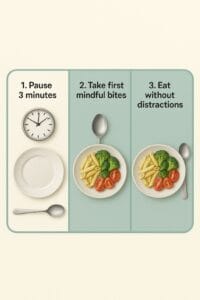 The majority of people eat while scrolling or watching something. The nervous system is alert and digestion is disrupted by this.
What makes it important
Distracted eating prevents the body from entering the’rest and digest’ mode. As a result, one may experience irritability, energy crashes, and overeating.
How to apply it
- Mindful first 3 minutes – no screens or conversation.
- Don’t place your phone on the table.
- Chew more slowly than usual.
Indian example
Whether it’s dal-chawal or idli, notice the aroma and warmth during the first few bites.
Refer to How to Improve Gut Health Without Probiotics.
External Reference – Mindful Eating: A Review (2019) — links mindful eating to improved digestion and lowered stress responses.
Section 6 — Mindfulness Habits #4: Take Micro-Pauses
 Mental overload is a result of the absence of intentional breaks throughout the day.
What makes it important
To reset your nervous system, it requires short signals like stillness, breathing, or a change in posture.
How to apply it
- Take advantage of transition moments, such as before opening a laptop or after meetings.
- Inhale 4, exhale 4, and repeat the 4-4 breath reset twice.
- Change your posture briefly – stand, roll your shoulders, and unclench your jaw.
Indian example
Pause for 3 seconds while waiting for the tadka to heat or after finishing an email.
Refer to How to Sleep Better Without Medication and How to Manage Stress Naturally Without Therapy
Section 7 — Mindfulness Habits #5: Reduce Sensory Clutter
 Every object and sound around you is processed by your mind, even without your awareness.
What makes it important
The presence of visual and auditory clutter causes irritability and mental fatigue.
What is the procedure for applying it?
- Make sure to clear one small visual area – either your desk or the corner of the dining table.
- Reduce the noise caused by TV, harsh fan speed, and loud traffic sounds.
- Shut down unnecessary tabs and apps.
Indian example
Clear half of the dining table you use for work. Use soft ambient music to mask noise.
Refer to Best Non-Toxic Cleaning Products for a Healthy Home
Section 8 —Mindfulness Habits #6: Create an End-Of-Day Shutdown Routine
 Many people carry daytime stress into the night because their brain doesn’t receive a clear signal that the day is done.
The reason why it matters
In order to transition from problem-solving to recovery, your mind must have closure.
How can I apply it?
- Choose a time that is realistic.
- Every day, complete three tasks in the same order: dimming the lights, charging the phone, and washing your face.
- Any remaining tasks that require attention?
If yes, please note one line for tomorrow.
Indian example
To help your system wind down, dimming the harsh white lights and switching to a warm bulb can be done.
Section 9 — Mindfulness Habits #7: Slow Your Breath When Emotions Rise
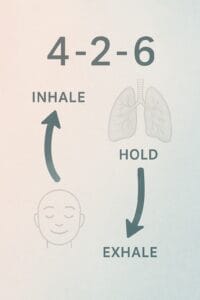 Your breathing may change automatically as a result of emotional surges.
What makes it important
- The nervous system is signaled safety by a longer exhale that reduces reactivity.
- The process of applying it
- Notice early signs of jaw tension, raised shoulders, and a faster heartbeat.
- The 4-2-6 breathing technique involves inhaling 4, holding 2, and exhaling 6.
- Relieve tension in your hands and face.
Indian example
Take a deep breath before responding to heated conversations, traffic frustration, or work pressure.
External Reference – Breathing Practices for Stress and Anxiety Reduction — review
Section 10 — Mindfulness Habits #8: Make One Daily Routine Mindful
 The majority of daily actions are performed on autopilot. By turning a routine into a mindful anchor, you can stabilize your day.
What makes it important
The use of predictable grounding points decreases mental drift and emotional reactivity.
How to apply it
- Choose a routine that includes bathing, chopping vegetables, and walking in the evening.
- Focus on sensory details – temperature, sound, and texture.
- Keep it for a maximum of 2–3 minutes.
Indian example
Chai-making with mindfulness is an effortless way to connect with the aroma, boil, warmth, and color.
Section 12 — Mindfulness Habits #10: End-Of-Day Reflection
 Most days end with distractions rather than awareness.
The reason why it matters
Emotional clarity is improved by reflecting and reducing rumination.
What are the steps to apply it?
- Pick one moment — after dinner, before showering, or before bed.
- Ask a total of three questions:
- What was a success?
- What needs to be improved tomorrow?
- Anything unresolved?
- Keep it brief and logical.
Indian example
Rather than scrolling, consider sipping warm milk or herbal tea while reflecting for one minute.
Refer to How to Sleep Better Without Medication and How to Manage Stress Naturally Without Therapy
Section 13 — Mindfulness Habits #11: Daily Mindful Gratitude
 It’s natural for your brain to notice problems more than positives.
What makes it important
Appreciation brings attention towards stability, which reduces stress.
How to implement it
- Identify three small things: chai aroma, sunlight, and a finished task.
- Say it or write it in one line.
- Keep it real.
Indian example
While preparing dinner, take note of the colors, aromas, and familiar sounds.
Section 14 — Supportive Tools & Products
Mindfulness Apps
 Headspace
Insight Timer
Focus Timer App
Supplements
Environmental Aids
Section 16 — Conclusion
 Mindfulness is not confined to long meditation sessions. What matters is the way you move through your day. These 11 habits can shift your mind from reactive to steady by making small, practical changes.
Pick one habit today – mindful mornings, mindful eating, or micro-pauses – and repeat them daily. Mental wellness is transformed faster by consistency than intensity.
If you want to go deeper, choose the next habit once the first one feels natural. Over time, these practices can shape your baseline mood, clarity, and emotional balance.







Sibani is the founder of The Calm Bloom, sharing mindful living tips, wellness guides, and practical routines for a balanced lifestyle.