
🌿 Section 1: Introduction — The Morning After the Feast
Last Sunday, I woke up with that familiar feeling of satisfaction and regret. The night before had been perfect. Pizza, dessert, and a little too much of everything I’d sworn I’d keep in moderation. I wasn’t physically sick, just feeling off. My body felt heavy, my face appeared puffy, and my stomach was in rebellion.
If you’ve ever promised yourself, ‘I’ll be good from tomorrow’ after a cheat day, you know this feeling. It’s not guilt exactly. It’s the uneasy awareness that your body’s balance has shifted.
I used to handle this in the wrong way for years. I would skip breakfast, push myself through a long workout, or only drink black coffee thinking I was ‘burning off’ last night’s mistakes. It was never effective. I’d end up feeling cranky, dehydrated, and still bloated. My body was not resetting, it was rebelling even harder.
I came to the realization that changed everything:
You can’t punish yourself to get back to balance. Resetting your body after a cheat day is important, not controlling it.
A true reset isn’t about restricting. It’s about gently helping your body recover from excess—hydrating, nourishing, and restoring balance. Listening is the key, not forcing.
💭 Why We Need to Stop Treating “Cheat” as “Failure”
The word “cheat” itself carries guilt. It implies you broke a rule, that food is something to earn or atone for. But food is not moral currency; it’s chemistry, energy, comfort, culture.
Cheat days aren’t evil—they’re human. You might have celebrated with family, travelled, or just needed a break. What matters isn’t what you ate, but how you respond afterward.
When you respond with understanding instead of guilt, your body recovers faster. Your digestion resets, your blood sugar levels stabilize, and that dull, bloated heaviness fades naturally within 24–48 hours.
🍽️ What’s Actually Going On
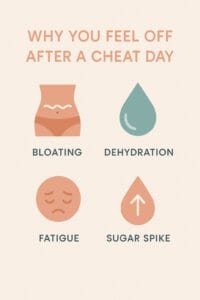
A cheat day floods your system with extra carbs, sodium, and sugar. Your glycogen stores fill up, pulling in water (about 3 grams for every gram of glycogen). That’s why you might gain 1–2 kg overnight—it’s not fat, it’s water.
Your digestion slows down, your gut bacteria get a little out of rhythm, and your sleep might suffer if you overate late. All of this is temporary—but only if you handle the next day wisely.
When I first started applying what I’m about to share, I noticed a major shift. No more guilt spirals, no frantic gym sessions, no skipping meals. Within a day, my body felt lighter, calmer, and more in sync.
🌱 The Promise

By the end of this guide, you’ll know exactly how to reset your body after a cheat day—not through crash detoxes or impossible discipline, but by working with your body’s natural systems.
We’ll look at what really happens after a cheat day (scientifically and practically), and then walk through step-by-step strategies:
How to start your morning for faster recovery
What foods and drinks genuinely help your system rebalance
How to handle digestion, water retention, and energy crashes
And most importantly, how to reset your mindset so one cheat day doesn’t turn into a cheat week
You’ll finish this article not just knowing what to do, but why it works.
Because the goal isn’t perfection—it’s awareness.
And every reset is just another chance to come back to balance.
🧠 Section 2: Why Cheat Days Affect Your Body
After a cheat day, most of us focus on what we see in the mirror—puffiness, bloating, maybe a bit of fatigue. But what’s happening inside your body is far more interesting, and understanding it helps you reset intelligently instead of emotionally.
I’m not talking about “detoxing” in the trendy sense. Your body already knows how to detox. The real question is—how do we support that natural process after we overload it?
⚖️ The Science Behind the Sluggishness
Let’s break it down simply. When you eat more sugar, refined carbs, or processed food than usual, a few key things happen:
1. Insulin Spikes and Sugar Crashes
High-carb, high-sugar meals push your blood glucose up quickly. Your pancreas releases insulin to shuttle that sugar into cells for energy. The problem? When there’s too much sugar, your body stores the excess as glycogen (short-term energy) and fat (long-term storage).
A few hours later, your blood sugar drops sharply. That’s why you feel tired, irritable, and oddly hungry again even after a massive meal.
Over time, constant spikes and crashes can mess with hunger hormones like leptin and ghrelin, making it harder to feel full or satisfied.
(Reference: WebMD – Blood Sugar and Energy Levels)
2. Water Retention and Temporary Weight Gain
This is the part that panics most people. You wake up the next day, step on the scale, and you’re suddenly 1–2 kilos heavier. You didn’t gain fat overnight—that’s physiologically impossible.
Every gram of glycogen binds to about 3 grams of water, and your cheat meal likely loaded you with sodium too. The combination means your body’s holding extra water, not fat.
When you drink enough fluids, move gently, and eat clean for a day or two, that “extra” weight disappears.
(Reference: Mayo Clinic – Sodium and Water Retention)
3. Digestive Overload
Your digestive system has its limits. After rich, heavy, or greasy food, your stomach slows down. You might feel bloated or uncomfortable because your gut is working overtime.
Cheat meals high in sugar and fat can also alter your gut microbiome temporarily. When that happens, you might notice irregular digestion, low energy, or even mild inflammation the next day.
(Internal link: How to Improve Gut Health Without Probiotics)
4. Inflammation and Energy Drain
Processed foods, trans fats, and alcohol trigger mild inflammation. Your body responds like it’s under stress—releasing cytokines and stress hormones. That’s why you might feel foggy or moody after a big indulgence.
When I started paying attention to this pattern, I realized the “post-cheat-day blues” weren’t just in my head. They were my body’s way of saying, “Slow down, I’m processing.”
🌿 Ayurveda’s Take: Agni and Balance

Modern nutrition explains the “what,” but Ayurveda explains the “why.”
In Ayurvedic terms, cheat days overload your Agni—your digestive fire. When Agni is strong, food gets digested smoothly. But when it’s burdened by excess or poor-quality foods, it weakens. That’s when Ama (toxins or undigested residues) build up, leading to fatigue, heaviness, and dull skin.
The goal isn’t to suppress appetite or fast aggressively; it’s to rekindle Agni gently. Warm fluids, light foods, and movement are all ways to do that.
When I began following this principle, my recovery days stopped feeling like punishment. Instead of fasting, I nourished. Instead of pushing harder, I rested smarter. And surprisingly, the reset happened faster.
🧘♀️ The Emotional Side
Physiologically, your body is just doing its job. The real battle happens in your mind.
When you view a cheat day as “failure,” your stress hormones rise. Cortisol increases bloating, slows digestion, and affects sleep. The guilt cycle literally delays physical recovery.
Resetting your body after a cheat day starts with resetting your mind about what happened. You didn’t mess up—you just shifted the balance, and you can shift it back.
💡 The Key Insight
What your body needs the next day isn’t deprivation—it’s direction.
You’ll reset faster when you:
Rehydrate and restore electrolytes
Reignite digestion (not shut it down)
Rebalance your gut bacteria
Reconnect with hunger and fullness cues
Release the guilt that stalls progress
Once you understand this, your cheat days stop being roadblocks and start becoming useful feedback.
🌞 Section 3: The Morning Reset Routine — Start Gently, Not Guiltily
The morning after a cheat day used to be my battlefield. I’d wake up bloated, half-determined, half-defeated. My first thought? “I need to undo the damage.”
That mindset made everything worse. I’d punish myself with black coffee, skip breakfast, or go straight into an intense workout. By noon, I’d crash—lightheaded, irritable, and craving sugar again.
Now, I do the opposite. I treat the next morning as a reset, not a reckoning.
The goal isn’t to burn off calories; it’s to help your system recover its rhythm.
Here’s how you can reset your body after a cheat day from the moment you wake up.
🥤 Step 1: Start with Hydration That Actually Works
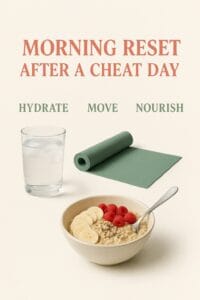
After a cheat day, your body is holding onto water because of sodium and glycogen buildup. Ironically, the best way to get rid of that water retention is by drinking more water.
Aim for about 500–700 ml right after waking up—enough to rehydrate but not so much that it dilutes stomach acid.
Try this simple mix:
Warm water + ½ lemon juice + pinch of rock salt or a few soaked chia seeds.
The lemon adds a mild alkaline effect and vitamin C, while the salt or chia restores electrolytes lost during sleep.
If plain water feels too boring, infuse it with mint, cucumber, or tulsi leaves. It signals freshness and primes digestion gently.
💡 Pro Tip: Sip, don’t gulp. Rapid water intake can trigger bloating instead of reducing it.
🍵 Step 2: Support Your Liver with a Gentle Detox Tea
Forget those extreme “detox” concoctions that claim to melt fat overnight. Your liver already knows how to detoxify—it just needs a break from overload.
That’s where something simple like [Affiliate: Herbal Detox Tea] comes in. Choose blends with tulsi, ginger, or dandelion root. These herbs mildly support liver enzymes and help flush out metabolic waste.
When I started replacing my morning coffee with a mild herbal tea after indulgent nights, I noticed a huge difference. No caffeine jitters, no acidity, and my bloating went down faster.
Have one cup mid-morning and another after lunch if you feel heavy.
(External reference: Mayo Clinic – Liver and Metabolism Support)
🚶♀️ Step 3: Move to Circulate, Not to Punish
The day after a cheat meal isn’t the time for high-intensity training. Your glycogen stores are already full, and your body needs gentle movement to circulate blood and aid digestion.
Go for movement that restores, not drains:
30-minute walk outdoors
15 minutes of yoga (Sun Salutations, gentle twists, or forward bends)
10 minutes of stretching with slow breathing
These movements stimulate your lymphatic system, which helps flush out excess fluids.
From experience, I’ve noticed that a 30-minute mindful walk with good music resets my mindset faster than any sweaty cardio session. You start feeling in control again—without overexerting yourself.
(Internal link: How to Manage Stress Naturally Without Therapy)
🍎 Step 4: Eat a Breakfast That Balances, Not Deprives
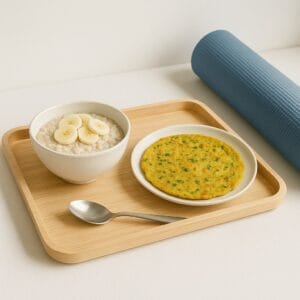
Skipping breakfast after overeating the night before feels logical—but it backfires. You end up hungrier later and reach for junk again.
Your morning meal should do three things:
Kickstart metabolism
Stabilize blood sugar
Support digestion
Balanced Breakfast Ideas (Indian & global options):
Oats porridge with cinnamon, apple slices, and a spoon of chia seeds.
Vegetable poha made with minimal oil, plus lemon juice and coriander for freshness.
Moong dal chilla with mint chutney — high in protein, light on the stomach.
Upma with vegetables and a side of herbal tea.
Smoothie bowl with spinach, banana, and almond milk if you want something quick.
Each of these meals gives you steady energy without overwhelming digestion.
💬 Personal Tip: I avoid dairy-heavy breakfasts the next day—it slows me down. Light, fiber-rich foods reset digestion more efficiently.
💭 Step 5: Check Your Mindset Before You Start the Day
You might still feel heavy or puffy in the mirror—that’s normal. Don’t let it decide how you treat yourself.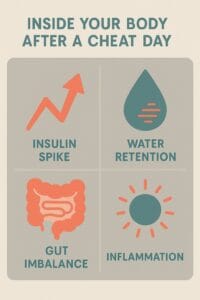
Before opening your phone or weighing yourself, take 3–5 deep breaths.
Remind yourself: “I’m not fixing a mistake. I’m supporting my body.”
This single shift stops the spiral that turns one cheat day into three.
Reset days are not about denial—they’re about direction. You’re teaching your body that balance follows indulgence, not guilt.
💡 Key Takeaways for the Morning Reset
| Goal | Action | Why it Works |
|---|---|---|
| Rehydrate | Lemon water or infused water | Flushes sodium, hydrates cells |
| Detox Support | [Affiliate: Herbal Detox Tea] | Aids liver & digestion |
| Circulation | Light yoga or walking | Improves blood and lymph flow |
| Stable Energy | High-fiber, low-fat breakfast | Balances sugar levels |
| Mindset | 3-minute breathwork or journaling | Lowers cortisol & emotional eating |
(External link: WebMD – Hydration and Metabolism)
🕛 Section 4: Midday & Evening Reset Routine — Balance, Don’t Overcorrect
By noon, your motivation from the morning often fades. Hunger creeps back, and you start thinking about another “small treat.” This is where the real reset happens — not in how clean your breakfast was, but in how steady you stay through the rest of the day.
Here’s how to rebuild your body’s internal balance during the second half of your reset day.
🍲 Step 1: Plan a Smart, Digestive-Friendly Lunch
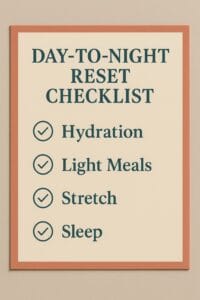
Lunch after a cheat day should be your most balanced meal — not the lightest. The goal is to stabilize insulin and help the gut recover.
Your system needs three things now:
Protein to rebuild tissues
Fiber to sweep away waste
Low-GI carbs to prevent another sugar crash
Balanced Lunch Options:
Brown rice + dal + sautéed vegetables — simple, grounding, high in fiber.
Quinoa khichdi with turmeric and ghee — soothing for the stomach, rich in amino acids.
Grilled paneer or tofu salad with olive oil and lemon dressing — protein-packed and cooling.
Vegetable soup + multigrain toast — if you’re still feeling bloated or heavy.
Avoid the temptation to “skip carbs.” The cheat day already disrupted your glucose rhythm — your body needs stability, not extremes.
(Internal link: How to Reduce Inflammation Through Diet)
💡 Pro Tip: Add a pinch of ajwain or cumin seeds in warm water 30 minutes after lunch. It prevents gas and helps digestion catch up.
☀️ Step 2: Stay Hydrated Without Overdoing It
People make two mistakes after overeating: either they overdrink water to “flush” the system or barely drink any because they feel bloated. Both are wrong.
Follow a hydration rhythm, not a target.
Here’s a reset-friendly hydration plan:
Morning: Lemon water or infused water
Mid-morning: Herbal Detox Tea ([Affiliate: Herbal Detox Tea])
Afternoon: Room-temperature water with a slice of cucumber or mint
Evening: One more cup of herbal tea or light soup
Avoid ice-cold water—it shocks digestion and delays fat metabolism.
(External link: Cleveland Clinic – Proper Hydration Habits)
🌿 Step 3: Midday Movement and Digestion Boost
Your energy may dip around 3 p.m. That’s your cue to move lightly, not caffeinate again.
Take a 10–15-minute walk or do simple torso twists and breathing. This mild activity:
Wakes up your lymphatic system
Prevents post-lunch sluggishness
Aids digestion naturally
If you’re working at a desk, stretch every hour. Even five minutes makes a difference in how your metabolism resets.
(Internal link: How to Stay Healthy Working a 9-to-5 Desk Job)
🕯️ Step 4: Evening Strategy — Light, Early, and Intentional

Dinner determines whether your body fully resets overnight or wakes up inflamed again. Keep it light, warm, and finished at least 2 hours before sleep.
Ideal Evening Meals:
Vegetable clear soup + handful of roasted chana
Moong dal soup with spinach
Stir-fried vegetables with tofu or paneer
Besan chilla with mint chutney
Khichdi with a spoon of ghee if digestion feels sluggish
Skip anything fried, creamy, or sugary. Even “healthy” desserts slow your recovery.
💭 Mindful Habit: Eat dinner without screens. Most people overeat because they’re distracted, not hungry.
(Internal link: How to Improve Gut Health Without Probiotics)
🌙 Step 5: Herbal Support Before Bed
Your reset day should end calmly — no harsh detoxes or supplements. One warm drink is enough to signal repair mode to your system.
Simple bedtime ritual:
1 cup of warm water + a pinch of turmeric + black pepper + honey (optional)
OR 1 cup of [Affiliate: Herbal Detox Tea] with chamomile or tulsi
Both blends help reduce water retention, calm your nervous system, and prepare you for deep sleep — which is when your body naturally rebalances insulin and cortisol levels.
(External link: Sleep Foundation – The Role of Sleep in Metabolism)
🧘♀️ Step 6: Evening Reflection — Reset Your Mind Before Sleep

Cheat days are rarely about food alone. They’re often triggered by stress, boredom, or emotional fatigue.
Before sleeping, ask yourself:
Was my cheat day emotional or social?
Did I actually enjoy it, or was it just automatic?
What helped me feel more balanced today?
Jot down the answers briefly. Awareness prevents guilt from turning into a pattern.
(Internal link: Emotional Wellness Through Writing)
💡 Key Takeaways for Midday & Evening Reset
| Time | Focus | What to Do | Why It Works |
|---|---|---|---|
| Lunch | Balance | Eat protein + fiber + low-GI carbs | Stabilizes blood sugar |
| Afternoon | Hydration | Sip water & herbal tea | Reduces bloat, aids metabolism |
| Midday | Light movement | Short walk/stretch | Improves digestion |
| Dinner | Early & warm | Easy-to-digest meals | Supports overnight recovery |
| Night | Reflection | Journaling + herbal tea | Calms mind & prevents repeat pattern |
🪷 Section 5: Mind-Body Connection & The 24-Hour Reset Framework
Most people think a “reset” is about eating right for one day. But the real reset happens between your thoughts, breath, and actions. After a cheat day, your body can recover quickly—but only if your mind stops fighting it.
I learned this the hard way. In the past, I’d punish myself with workouts, skip meals, or obsess over calories. The more I “fixed” my body, the worse I felt. It took time to realize that your body doesn’t need punishment; it needs partnership.
Here’s how to approach a full 24-hour reset—one that heals the physical and emotional side together.
🌤️ Morning: Release Guilt, Not Calories
The most important thing you do after a cheat day happens before breakfast—it’s how you talk to yourself.
If your first thought is, “I ruined everything,” you’ve already started your day with stress hormones. Cortisol triggers bloating, sugar cravings, and fatigue.
So instead of guilt, start with curiosity:
What did I eat yesterday that made me feel sluggish today?
Did I overeat because I was stressed or deprived?
What does my body actually need this morning—rest or movement?
This small shift changes how your metabolism responds. It turns a setback into feedback.
(Internal link: How to Manage Stress Naturally Without Therapy)
💡 Tip: Keep your breakfast calm and grounding—warm lemon water, a banana, or light oats with cinnamon. The goal is to wake up digestion gently, not shock it.
🧘♀️ Afternoon: Align Body Cues with Mindful Choices
By midday, your energy levels show how well your body is recalibrating. Instead of forcing yourself into strict rules, listen to what your system signals.
If you feel heavy or sleepy: your liver is still processing rich food. Choose lighter meals and avoid caffeine.
If you feel hungry and clear-headed: your metabolism is active again—eat a balanced meal to maintain rhythm.
This self-check prevents two extremes: under-eating and overeating.
It’s also a good time to move—not punish. A short yoga flow, a brisk 20-minute walk, or deep breathing resets your nervous system and supports digestion.
(External link: NCBI – The Gut-Brain Connection)
🌙 Evening: Ground Yourself and Reconnect
The end of your reset day is about peace, not control. You’ve nourished, hydrated, and moved—now it’s time to settle.
Here’s a short, mindful wind-down:
Warm bath or foot soak with Epsom salt or a few drops of lavender oil.
Gratitude journal entry—focus on what felt good today, not what went wrong.
Cup of [Affiliate: Herbal Detox Tea] while reading or meditating quietly.
Sleep early—deep rest restores your body’s natural hormone rhythm.
Sleep is the ultimate detox tool. You can drink all the green juices you want, but if you don’t sleep, your body can’t reset cortisol, hunger hormones, or cellular repair.
(Internal link: How to Sleep Better Without Medication)
🔁 24-Hour Reset Framework Summary
Here’s a simple framework I follow (and teach clients to use) whenever I have a cheat day:
| Time | Focus | What to Do | Mind-Body Goal |
|---|---|---|---|
| Morning | Rehydrate + Reflect | Warm water, journaling, light breakfast | Reset digestion & mindset |
| Midday | Balance Meals | Fiber, protein, hydration | Stabilize blood sugar |
| Afternoon | Gentle Movement | Walk, yoga, deep breathing | Reignite metabolism |
| Evening | Light Meal + Reflection | Herbal tea, gratitude journal | Reduce stress & support sleep |
This is not a “detox day.” It’s a recalibration day—a reminder that your body is resilient and adaptable when treated with consistency instead of criticism.
💭 When You Slip Again (Because You Will)

Let’s be honest—you’ll have another cheat day. And that’s fine.
The goal isn’t to never indulge; it’s to know how to recover without panic.
When you approach food with curiosity instead of guilt, the “cheat” loses its power.
Eventually, you stop needing to reset because your everyday rhythm already feels balanced.
🌸 Closing Thought

Your body is always on your side. Even after you overeat, it’s working to find equilibrium again. You don’t have to fight it—you just have to help it.
So next time you have a cheat day, skip the guilt trip. Start with warm water, breathe, eat clean for one day, and watch how quickly your body remembers balance.
Start with one small change today — and trust your body to meet you halfway.







Sibani is the founder of The Calm Bloom, sharing mindful living tips, wellness guides, and practical routines for a balanced lifestyle.