Self-Improvement & Mindfulness
Why Rest Doesn't Feel Restful Anymore
Feeling tired even after sleeping 8 hours? Learn why rest doesn’t feel restful anymore and discover simple lifestyle changes that can improve your energy naturally.
-
 By
Sibani
By
Sibani - August 4, 2026
- 10 Min Read

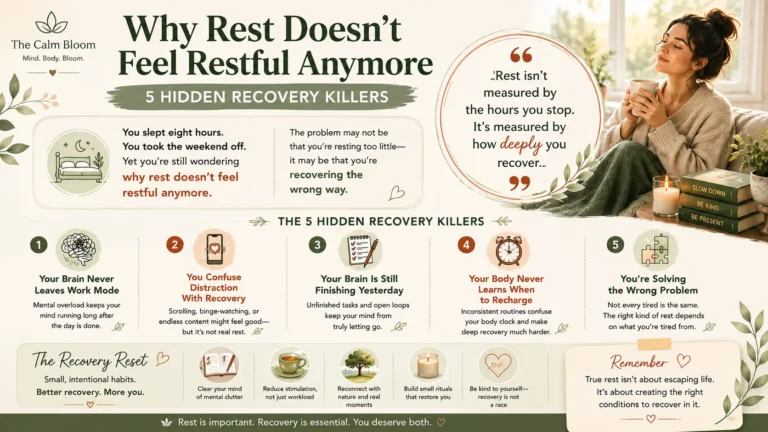
You get a full night’s sleep, but you still wake up feeling tired. By the afternoon, your energy has already started to fade, even though you went to bed on time.
Sleep isn’t the only thing that helps your body recover. Everyday habits, stress, nutrition, screen time, and even your bedroom environment can affect how refreshed you feel the next morning.
This article looks at some of the common reasons your body may not be recovering properly and the practical changes that can help you wake up feeling more energized.
In This Article
- 1 The Biggest Myth About Rest
- 2 Recovery Killer #1: Your Brain Never Clocks Out
- 3 Recovery Killer #2: You Mistake Distraction for Recovery
- 4 Recovery Killer #3: Your Mind Is Still Finishing Yesterday
- 5 Recovery Killer #4: Your Body Never Finds a Rhythm
- 6 Recovery Killer #5: You're Choosing the Wrong Type of Rest
- 7 FAQ
- 8 Final Thoughts
The Biggest Myth About Rest
We’ve all been told the same thing: Work hard → Rest → Feel better.
Sounds simple.
But if that always worked, millions of
people wouldn’t wake up exhausted after
8 hours of sleep.
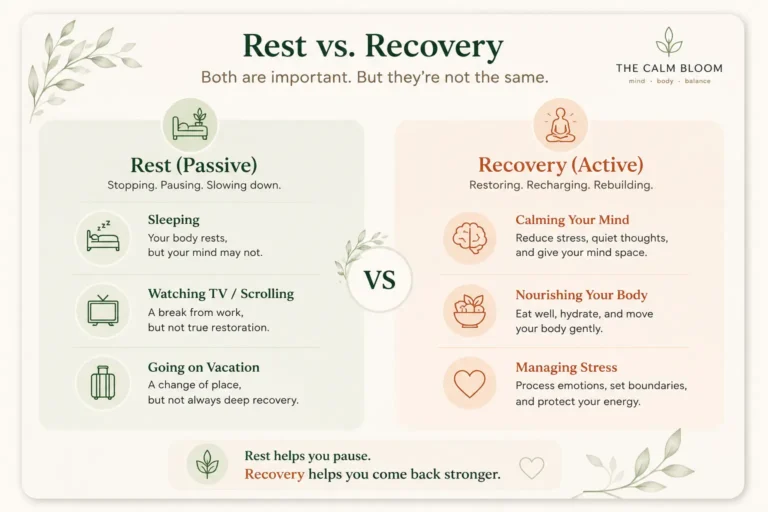
Rest is passive.
Recovery is active.
Many people searching for why rest doesn’t feel restful anymore assume they simply need more sleep. In reality, recovery depends on much more than the number of hours you spend in bed.
Think of Your Energy Like a Bucket.
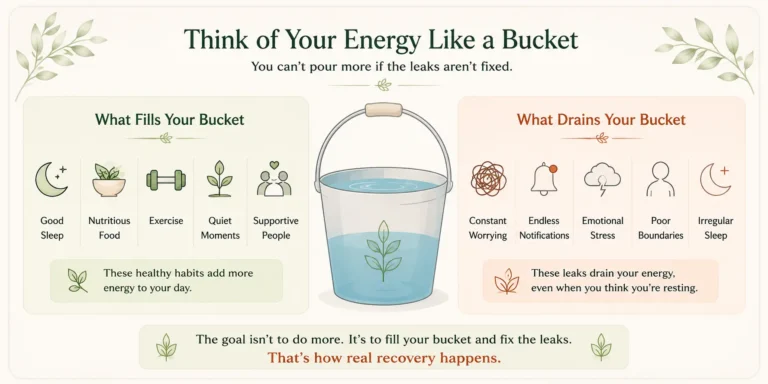
You can’t pour more into your bucket if the leaks aren’t fixed.
The Calm Bloom Insight
The problem isn’t that you’re not resting enough.
The real issue is that your energy is leaking faster than it can recover.

Understanding why rest doesn’t feel restful anymore starts with identifying the hidden habits that quietly drain your energy throughout the day.
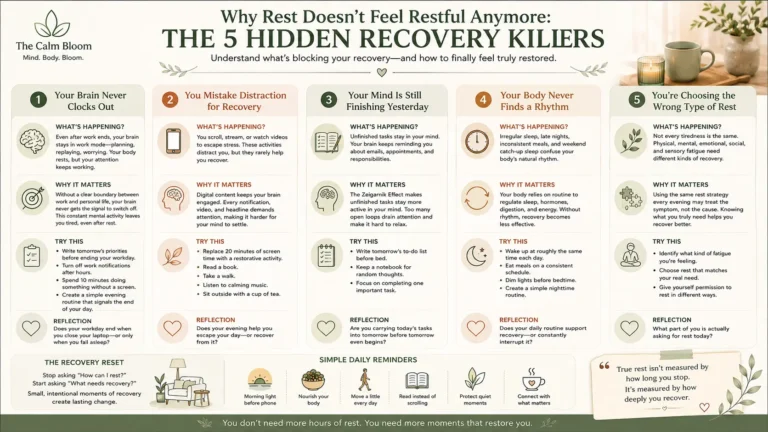
Recovery Killer #1: Your Brain Never Clocks Out
You close your laptop, but your mind is still at work. Planning, replaying, worrying – your brain keeps running in the background ,making it hard to truely rest.
What’s happening?
Even after work ends, your brain often stays in work mode. Instead of recovering, it continues planning tomorrow, replaying conversations, and thinking about unfinished tasks. Your body may be resting, but your attention is still working.

Why it matters
Without a clear mental boundary between work and personal life, your brain never gets the signal that it’s safe to switch off. Over time, this constant mental activity leaves you feeling tired, even after an evening of rest.
Try this
- Write tomorrow’s priorities before ending your workday.
- Turn off work notifications after hours.
- Spend 10 minutes doing something without a screen.
- Create a simple evening routine that signals the end of your day.
Reflection
Does your workday end when you close your laptop—or only when you fall asleep?
Small boundary, big difference.
Your brain needs a clear cue that the workday is over.
Protect your evening to protect your energy.
Recovery Killer #2: You Mistake Distraction for Recovery
Scrolling, streaming, and endless notifications may help you to escape for a while – but they rarely help you recover. Your brain stays stimulated, even when you think you are relaxing
What’s happening?
After a busy day, it’s easy to reach for your phone, stream another episode, or scroll through social media. These activities may distract you from stress, but they rarely help you recover from it.
Why it matters
Digital content keeps your brain engaged. Every notification, video, and headline demands attention, making it harder for your mind to settle into genuine rest.
Try this
Replace 20 minutes of screen time with one restorative activity:
- Read a few pages of a book.
- Take a slow walk.
- Listen to calming music.
- Sit outside with a cup of tea.
- Stretch before bed.
Reflection
Does your evening help you escape your day—or recover from it?
Recovery isn’t about doing nothing.
It’s about choosing activities that lower the demands on your mind and body.
Recovery Killer #3: Your Mind Is Still Finishing Yesterday
Unfinished tasks don’t appear when the day ends. Your brain keeps bringing them up, making it harder to relax and rest.
What’s happening?
Unfinished tasks don’t disappear when the day ends. Your brain keeps reminding you about emails, appointments, conversations, and responsibilities because it naturally seeks closure.
Why it matters
Psychologists call this the Zeigarnik Effect—our tendency to remember unfinished tasks better than completed ones. Too many open mental loops quietly drain attention and make it difficult to relax.
Try this
- Write tomorrow’s to-do list before bed.
- Keep a notebook nearby for random thoughts.
- Focus on completing one important task instead of starting several.
Reflection
Are you carrying today’s tasks into tomorrow before tomorrow even begins?
Release to Rest.
Write it down, let it go.
Your mind doesn’t need to remember everything.
Recovery Killer #4: Your Body Never Finds a Rhythm
Late nights, irregular meals, weekend catch-up sleep, and inconsistent routines confuse your body’s natural clock, making recovery harder.
What’s happening?
Your body thrives on routine. When sleep, meals, and daily habits change constantly, your internal clock struggles to know when to be alert and when to rest.
Why it matters
Your body relies on regular patterns to regulate sleep, hormones, digestion, and energy. When those rhythms constantly change, recovery becomes less effective.
Try this
- Wake up at roughly the same time each day.
- Eat meals on a consistent schedule.
- Dim lights before bedtime.
- Create a simple nighttime routine.
Reflection
Does your daily routine support recovery—or constantly interrupt it?
Constancy is calming.
Small constant habits teach your body that it ‘s safe to rest and restore.
Recovery Killer #5: You're Choosing the Wrong Type of Rest
Not every kind of tiredness has the same cause. Physical, mental, emotional, social, and sensory fatigue all need different forms of recovery.
What’s happening?
Different types of fatigue – physical, mental, emotional, social, sensory, and decision fatigue – require different kinds of recovery. Using the same solution every time rarely works.
Why it matters
When every evening ends the same way—usually with more screen time—you may be treating the symptom instead of the cause. Understanding what is actually draining your energy helps you recover more effectively.
Try this
Before deciding how to rest, ask yourself:
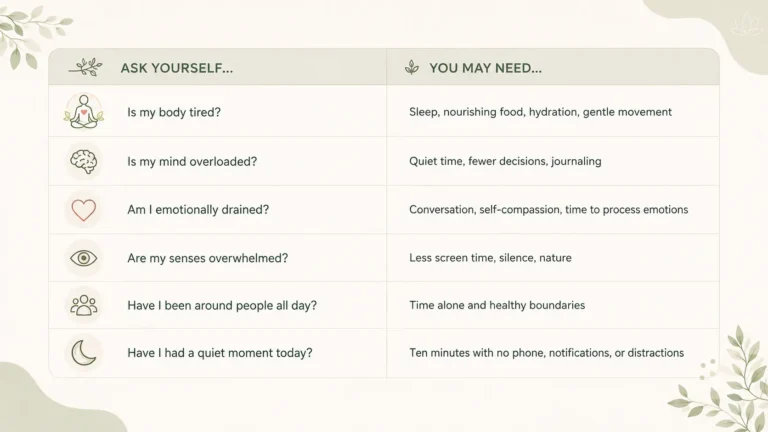
- Is my body tired?
- Is my mind overloaded?
- Am I emotionally drained?
- Have I had too much screen time?
- Do I need quiet—or connection?
Choose your recovery based on your answer.
Reflection
What part of you is actually asking for rest today?
Rest with intention, not just more time .
Understand what you need, and your rest will finally feel restorative.
Now that we’ve explored why rest doesn’t feel restful anymore, let’s look at how to recover more effectively.
The Recovery Reset: Match Your Rest to Your Fatigue
The biggest mistake most of us make is treating every kind of tiredness the same way.
When we’re exhausted, we usually choose the quickest solution—sleep longer, scroll through our phones, or wait for the weekend. Sometimes that helps. Often, it doesn’t.
 The first step to better recovery isn’t finding more time to rest. It’s identifying what actually feels exhausted.
♣ Recovery Check In
♣ Build Your Personal Recovery Menu
A to-do list tells you where your energy goes.
A recovery menu reminds you how to get it back.
Choose one small habit based on what you need today.
Physical Recovery
* Get enough sleep.
* Drink water.
* Stretch or take a short walk.
Mental Recovery
* Write tomorrow's to-do list.
* Read instead of scrolling.
* Spend ten quiet minutes without a screen
Emotional Recovery
* Talk to someone you trust.
* Practice self-compassion.
Sensory Recovery
* Dim the lights.
* Put your phone away.
* Spend time outdoors or in silence.
Social Recovery
* Protect your alone time.
* Say no when you need rest.
* Choose meaningful conversations over constant interaction.
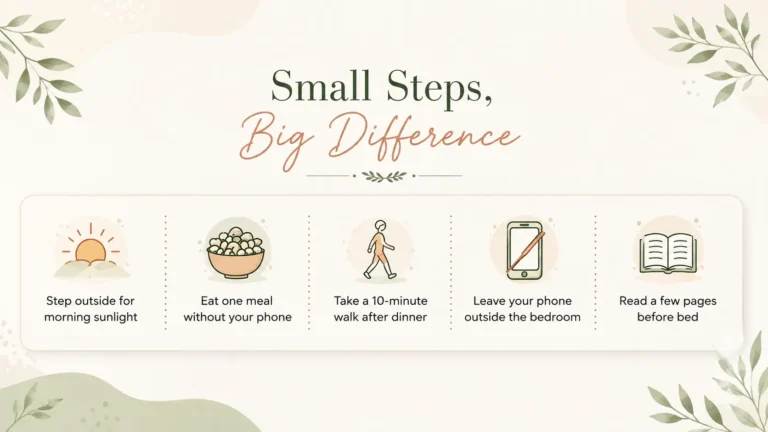
♣ Small Habits That Help You Recover
Recovery doesn’t happen in one weekend. It grows through small habits repeated consistently.
♣ A Better Question to End the Day
Instead of asking:
How many hours did I sleep?
Ask yourself:
- Did I have one quiet moment today?
- Did I move my body?
- Did I spend time away from screens?
- Did I connect with someone who matters?
- Did I give myself permission to slow down?
If you answered “yes” to even a few of these, you’re probably recovering better than you think.
Final Thoughts
If this article leaves you with one idea, let it be this:
Not all tiredness is the same.
A full night’s sleep can restore your body, but it won’t always ease a busy mind, heavy emotions, or constant digital stimulation.
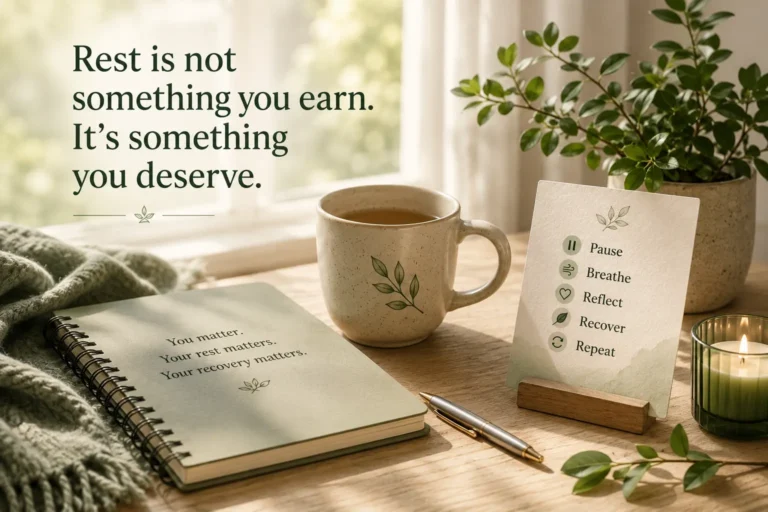
The next time you feel exhausted, pause before reaching for the quickest solution. Instead, ask yourself:
- What is actually draining my energy?
- What kind of recovery do I need today?
- What kind of rest have I been overlooking?
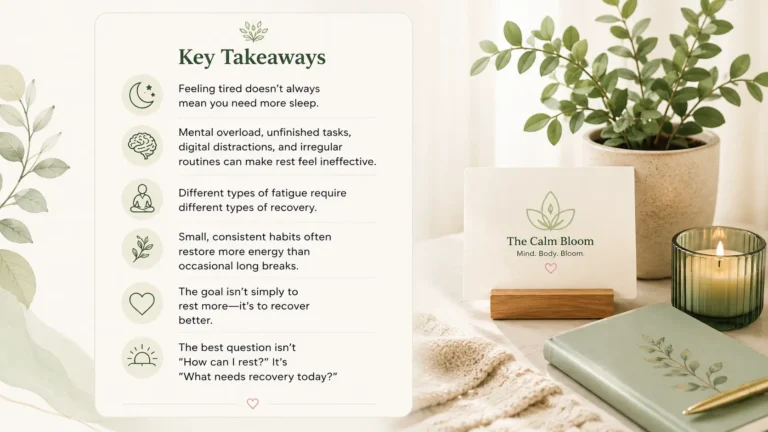
Recovery isn’t about adding more hours to your day. It’s about making the time you already have more restorative.
If you’ve been wondering why rest doesn’t feel restful anymore, remember that recovery is about matching the right kind of rest to the right kind of fatigue.
Start with one small change, stay consistent, and let recovery become part of your daily routine—not something you save for weekends or holidays.
FAQ
Why do I still feel tired after sleeping 8 hours?
Sleep restores physical energy, but it doesn’t always reduce mental overload, emotional stress, or constant stimulation. If those remain, you may still wake up feeling tired.
Why doesn't rest feel restful anymore?
Rest becomes less effective when your mind never switches off, your routine is inconsistent, or you’re constantly surrounded by screens, notifications, and unfinished tasks. Recovery requires more than simply taking a break.
Is scrolling on my phone a form of rest?
It may help you unwind, but it usually keeps your brain engaged. Activities like walking, reading, stretching, or spending time outdoors are often more restorative.
What's the difference between rest and recovery?
Rest is taking a break from activity.
Recovery is restoring the physical, mental, and emotional energy you’ve used throughout the day.
You can rest without fully recovering.
How can I recover more effectively?
Start by identifying the type of fatigue you’re experiencing.
- Physical fatigue → Sleep and movement
- Mental fatigue → Quiet time and fewer decisions
- Emotional fatigue → Reflection or conversation
- Sensory fatigue → Less screen time and more quiet
Matching your recovery to your fatigue is often more effective than simply resting longer.
Learn More
For evidence-based guidance, you can explore:
- CDC — Healthy Sleep
- American Psychological Association — Stress
- World Health Organization — Physical Activity
Continue Your Wellness Journey
If this article resonated with you, you may also enjoy these guides on The Calm Bloom:
 The Silent Burnout Nobody Talks About
  How to Start a Morning Routine for Mental Clarity
Sibani is the founder of The Calm Bloom, sharing mindful living tips, wellness guides, and practical routines for a balanced lifestyle.