How to Balance Hormones, Boost Energy & Stay Fit Without Extreme Dieting
Working 9–9, surviving on coffee, and wondering why your energy crashes every afternoon? Learning how to balance hormones with a busy schedule can transform your metabolism, cravings, and overall health without extreme diets.
“Your schedule may be demanding, but with the right habits, your hormones and energy don’t have to suffer.”
Table of Contents
If you begin your day with coffee, have snacks throughout the day, and end the day by scrolling on your phone, you do not have “broken” hormones. You have hormonally-disrupted stressors.
Long hours at work, variable meal timing, inappropriate caffeine consumption times (near bedtime), and lack of adequate sleep result in chronic and predictable hormonal disturbances:
– Unstable blood sugar
– Elevated cortisol
– Reduced insulin sensitivity
– Increased hunger hormones
– Decreased recovery potential
This is your physiology at work, not simply your lack of willpower.
If long office hours leave you feeling exhausted, you may also find it helpful to read our guide on staying healthy during long workdays: How to Stay Healthy Working a 9-to-5 Desk Job.
The fix is not to follow stricter diets or work harder, but to implement stability into the systems your body relies on to function properly.
Let’s explain this simply.
If you recognize your situation, read on:
Be truthful:
Are you:
- Not eating before you drink coffee?
- Are you rushing or skipping breakfast?
- Are you sitting for 8-10 hours a day?
- Do you experience cravings between the hours of 4-6 pm?
- Are you only getting around 6 hours of sleep per night?
- Are you mentally alert but physically tired?
If you have a similar pattern as listed above, you’re creating stress hormones at higher rates and decreasing your metabolic flexibility.
With raised cortisol levels due to not eating breakfast and continual blood sugar swings, fat loss slows, cravings increase, and your PMS may worsen. Over time, these effects build up.
Before you adjust calories or exercise, get yourself stable.
How a 9-9 Schedule Affects Your Hormones
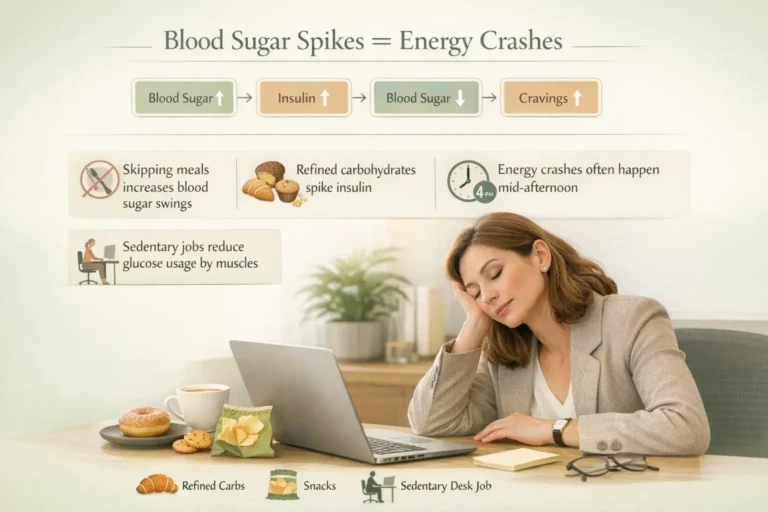
1. Spikes in Blood Sugar = Crashes in Energy (Balance Hormones With a Busy schedule)
When you skip meals or use too many refined carbohydrates you create a cycle:
1. Blood sugar levels go up
2. Insulin levels go up
3. Blood sugar levels go back down
4. Cravings for food go up
By constantly spiking your blood sugar, literally “playing with fire,” you are reducing your insulin sensitivity. When people work at sedentary jobs, they are limiting how much glucose can be cleared by the muscles.
This will contribute to feeling tired at 4 p.m., and is not necessarily a “motivation” issue, but rather a matter of poor glucose control.
2. Caffeine has pronounced effects on cortisol production.
(Balance Hormones With a Busy schedule)
Cortisol’s natural cycle includes a significant peak on waking, which is amplified by any caffeine consumed upon waking.
High levels of stress, coupled with high caffeine consumption through the chronic use of caffeine, may lead to:
- Anxiety
- Insomnia
- Irregular cycles
- Weight gain around the abdomen
Harvard Health Publishing states: “Chronic stress can cause a disturbance in the balance of metabolic and reproductive hormones.”
Coffee isn’t a problem; chronically being overstimulated is.
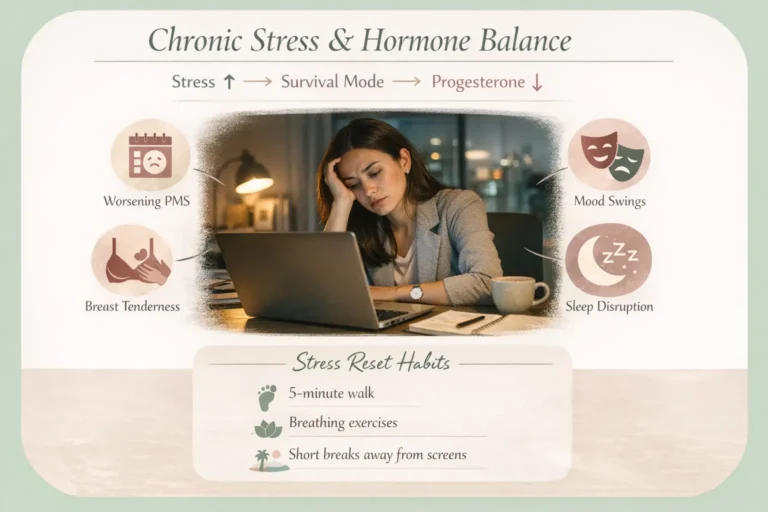
3. The connection between chronic stress and progesterone.
(Balance Hormones With a Busy schedule)
Under prolonged stress, the body will prioritize survival functions over reproductive signaling leading to decreased progesterone production in many women.
Possible signs of decreased progesterone production include:
- Increased severity of PMS symptoms
- Increased moodiness or irritability
- Sleep disruption
- Breast tenderness
This is not a failure of hormonal function but an adaptive function of the body.
Chronic stress is one of the biggest disruptors of hormonal balance. You can learn more practical strategies in our article on How to Manage Stress Naturally Without Therapy.
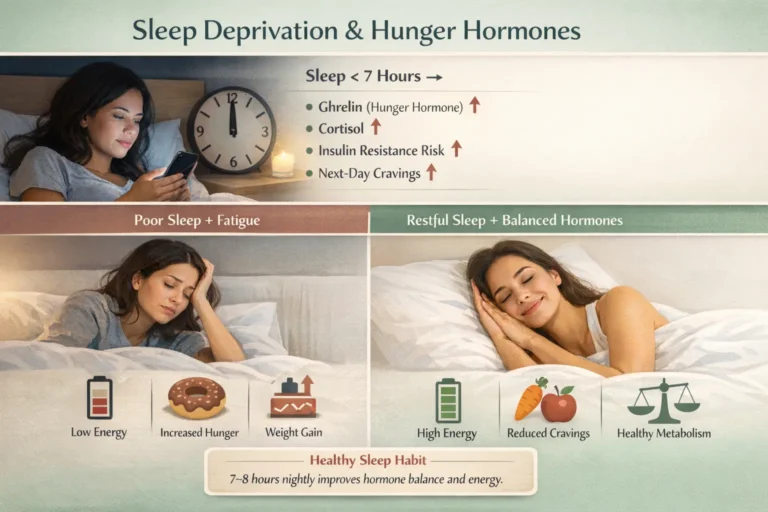
4. Hunger Hormones and Sleep Deprivation (Balance Hormones With a Busy schedule)
Consistent sleep deprivation (less than 7 hours total) can lead to an increase in the
- hormone Ghrelin (hunger hormone),
- Cortisol
- and the risk of insulin resistance.
Just the act of not getting enough sleep will lead to an increase in caloric intake the following day because of the biology of how the body works.
Quality sleep plays a huge role in regulating hormones, appetite, and energy levels. If you struggle with falling asleep or staying asleep, read our guide on How to Sleep Better Without Medication.
You cannot out-exercise the effects of poor sleep.
Why Hormones are More Important Than Calories
The math behind caloric intake based on calories consumed works in controlled conditions, but there is nothing controlled about daily life.
When the levels of cortisol are high, and the levels of insulin continue to be elevated due to constant snacking, then fat oxidation will drop significantly. Chronic stress can also cause the conversion of T4 to T3, which is needed for your thyroid to be functional, to slow as an adaptation because of the conservation of energy.
As progesterone levels fall in relation to estrogen levels, water retention and mood swings become pronounced. You cannot fix these hormones by increasing restrictions on caloric intake but rather by achieving stability in your body.
Step 1: Stabilizing Your Nutrition Without Increasing Time
Three Meals a Day:
Three meals, spaced 4–5 hours apart, and not grazing in between; each meal should consist of about:
- 25–35g protein,
- complex carbohydrate source that is high in fiber,
- healthy fat, and
- micronutrient dense foods.
A day at work might look like:
- breakfast: eggs with sautéed vegetables, and a piece of fruit;
- lunch: grilled chicken or tofu with rice or quinoa, vegetables, and olive oil;
- dinner: salmon or dal, sweet potato or roti, and greens.
This method allows you to keep your blood sugar stable and reduce your chances of binge eating.
Eating Protein After 60–90 Minutes of Waking Up (Balance Hormones With a Busy schedule)
For women under extreme stress, waiting to eat can increase how much cortisol runs through their bodies.
You should consume at least 25g of protein during your first meal of the day. Examples include Greek yogurt, scrambled eggs or tofu, protein smoothie, and cottage cheese.
Making this change will help reduce the chances that you will experience a crash at mid-morning.
Better Snack Options for the Office (If Necessary)
You could choose a stabilizing snack if you have to go for an extended period of time without eating:
- nuts with a piece of fruit,
- roasted chana,
- Greek yogurt,
- hummus and carrots,
- a low sugar protein bar, etc.
Don’t eat ultra-processed, high-sugar debitage food options, as these will spike your blood insulin levels.
Fiber and Healthy Fats are Very Important (Balance Hormones With a Busy schedule)
Fiber promotes a healthy gut and helps the body clear estrogen. You should eat approximately 25–35g of fiber each day.
Healthy fats provide the building blocks (or raw materials) to make hormones, such as:
- olive oil,
- avocado,
- chia seeds,
- fatty fish.
The combination of low-fat dieting combined with prolonged stress is not healthy for anyone.
Supporting digestion also helps regulate metabolism and hormones. You may also find our guide on How to Improve Gut Health Without Probiotics helpful.
Step 2: Coffee: Get It Back in Your Life
Quit along with caffeine? Nope! Just make sure to time it so that you can drink coffee appropriately.
Setting Boundaries
Follow these simple guidelines for drinking coffee:
- – Wait at least 60-90 minutes after you wake to drink coffee.
- – Only up to 200-400 mg or 1-3 cups per day.
- – No coffee after 2 pm.
If you feel tired every day, assess your food choices before increasing the amount of coffee you consume.
Try taking a short walk, drinking cold water and/or taking a few deep breaths to calm the nervous system as opposed to just having a second coffee shot.
Step 3: Move Your Body at Work
Long workouts aren’t necessary, but you do need an adequate amount of muscle stimulus combined with enough blood flow to and from these areas.
20-Minute Strength Program (3 Times a Week):
Alternate Days
Day 1
– Squats
– Push-ups
– Rows
– Plank
Day 2
– Lunges
– Glute Bridge
– Shoulder Press
– Side Plank
For all movements do 3 sets at a moderate intensity throughout.
Strength training can improve insulin sensitivity and support metabolic health significantly more than doing any type of high-intensity exercise daily.
Moving Around While You’re at Work.
Try to move your body (not sitting) every 2-3 hours:
- – Do 10-15 squats with only your body weight.
- – Hold 1-minute stretch.
- – Walk for just 5 minutes.
Sedentary time decreases your body’s ability to tolerate glucose; therefore, doing short duration “burst” movements will help restore that tolerance when done in between two longer durations of overall physical activity.
Step 4: Use Sleep to Reset Hormones (Balance Hormones With a Busy schedule)
Long-term, getting six hours of sleep won’t work.
All of the studies show that sleeping for less than seven hours results in higher levels of hunger hormones and an increased stress response.
Basic Rules
- – Reduce ambient light after 8 PM.
- – Do not use screens for at least one hour before going to bed.
- – Go to bed and wake up at the same time every day.
If you do nothing else, then focus on fixing your sleep.
Step 5: Stress Reduction That Can Be Realistically Done(Balance Hormones With a Busy schedule)
You are likely not going to meditate for 45 minutes a day. That is okay.
Instead, use micro recovery.
Two-Minute Reset
– Inhale for four seconds.
– Hold for four seconds.
– Exhale for six seconds.
– Repeat for a total of five times.
Exhaling for a longer time period helps activate your parasympathetic nervous system.
Sunlight + Movement
Going outside for 5 minutes decreases stress markers more effectively than scrolling through social media.
Stress could be what is blocking your fat loss, as it is often times a hidden problem that you aren’t aware of.
Stress needs to be lowered before you start to lose weight.
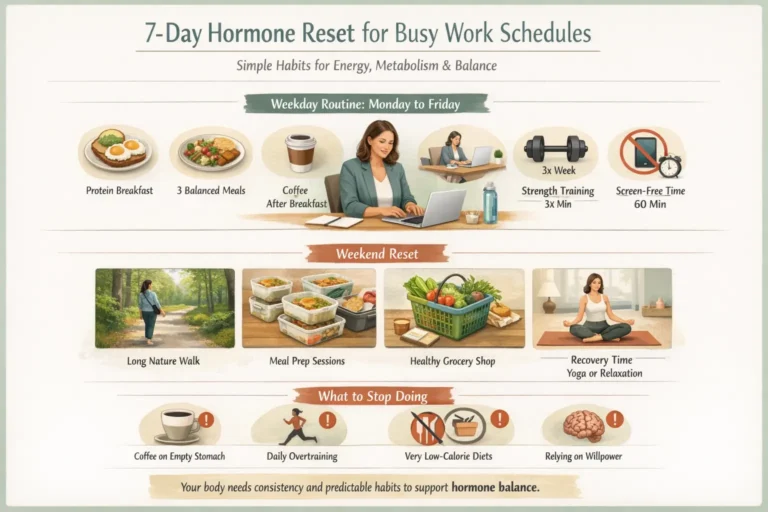
A Realistic 7-Day Reset Program
(Balance Hormones With a Busy schedule)
Monday – Friday
- Protein-based breakfast
- 3 Structured Meals
Mid Morning Coffee - 5 Minute movement breaks throughout day
- 20 Minute Strength Training 3 x’s per week
- Screen free time 60 minutes prior to bed
The weekends would consist of:
- A longer walk outside
- Batch prep protein
- Grocery store reset
- 1 Intentional Recovery Activity
Nothing extreme, only consistency!
What you will stop doing:
- Fasting with coffee when under Stress;
- Exercising 7 days per week under-sleep;
- Ultra Low Calorie Dieting;
- Relying on Will Power;
Your Body requires predictability!
FAQ For Balance Hormones With a Busy schedule
Final Thoughts
More strict discipline is not your answer.
You need:
- Consistent dinners
- Smart caffeine use
- Short strength training
- Adequate sleep
- Daily stress management
Having a demanding job/career does not have to come at a cost to your metabolic health.
However, it does require structure in your life.
Begin with one adjustment to your habits this week, not 10.
Compound interest is built with stability.

Sibani is the founder of The Calm Bloom, sharing mindful living tips, wellness guides, and practical routines for a balanced lifestyle.