Section 1: Introduction
Every morning, I used to rush through my skincare routine: cleanser, serum, sunscreen, done. It appeared to be effective, but there was a problem. Although my skin appeared fine on the surface, it didn’t feel healthy. The dullness, tightness, and random breakouts made me realize I wasn’t nurturing my skin; I was just managing it.

That’s when I started exploring holistic skincare products — the kind that don’t stop at ‘good ingredients’ but support skin health from the inside out. The connection between skincare and lifestyle includes clean air, sleep quality, diet, stress, and even emotional energy. As my understanding of that link increased, my skin began to reflect my overall well-being.
Today, holistic skincare is not just a cosmetic trend. It’s a mindset – choosing products that work with your body, not against it. They care about your skin barrier, use natural or bio-compatible ingredients, and frequently consider environmental sustainability.
I’ll guide you through this post:
- Why do most of us struggle with skin imbalance even when using good products?
- The root cause behind it is deeper than clogged pores.
- A list of holistic skincare essentials that truly make a difference
- The process of creating a calm and sustainable skincare space at home
By the end, you’ll have a practical roadmap to choose holistic skincare products that fit your values and your skin – not just a marketing label.
Section 2: The Core Problem — Why Our Skin Feels Disconnected from Our Well-being
It’s strange how we often treat our skin like a separate entity – something to fix, polish, or cover – instead of the living organ it is. I used to believe that if I just found the ‘perfect’ serum, everything would fall into place.
The truth was both simpler and more uncomfortable: my skin wasn’t the issue, it was my approach that was.
We live in a world that rewards speed – quick showers, 5-step routines, and overnight results. In that rush, we forget that the skin is part of a larger ecosystem: the air in our home, the food on our plate, the tension in our shoulders, and the way we sleep. Each of these factors has a subtle impact on how the skin behaves.
Stress, sleep, and skin imbalance
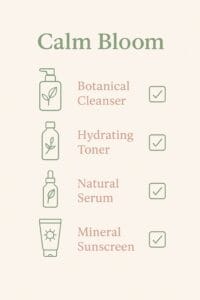 When I started sleeping less and working late under harsh fluorescent lights, my skin didn’t just look tired; it felt inflamed. Science has a good understanding of this. The Mayo Clinic‘s research indicates that stress can lead to the release of cortisol, a hormone that increases oil production and inflammation, resulting in breakouts, sensitivity, and premature ageing. As time passes, the skin barrier becomes weaker, allowing pollutants and bacteria to penetrate more easily.
Environmental overload
Our homes, the spaces where we think we’re safe, can actually strain our skin. Air-conditioned rooms, blue light exposure, and synthetic fragrances add a low-level of stress to your body that your body constantly manages. A study published in NCBI highlights the impact of indoor pollution and volatile compounds in cleaning and beauty products on the skin’s natural microbiome balance. The reason for switching to non-toxic, fragrance-free, or naturally derived holistic skincare products is to reduce this invisible pressure.
Diet and hydration
Your plate is mirrored in your skin. Dullness and dryness are common symptoms of a diet that is high in processed food or low in omega-3 fats. I noticed a noticeable difference when I began including turmeric, nuts, and leafy greens regularly. You can read more about this connection in [How to Reduce Inflammation Through Diet] — it’s a simple, eye-opening guide.
Holistic skincare is not just about topical care. It’s all about slowing down, establishing a peaceful atmosphere, and feeding your body in the same manner as you feed your mind. The root cause isn’t bad skin. The disconnect exists between routine and awareness, product and purpose, skin and self.
Section 3: My Tried-and-True Holistic Skincare Ritual — 8 Essentials That Actually Changed My Skin
For years, I collected products like trophies. Serums lined my shelf, but none seemed to connect with what my skin actually needed. It wasn’t until I slowed down and started treating skincare as a ritual — not a race — that everything began to shift. What follows isn’t a shopping list; it’s a set of practices and products that taught me how to listen to my skin again.
1. Cleansing with Intention — The Foundation of Renewal
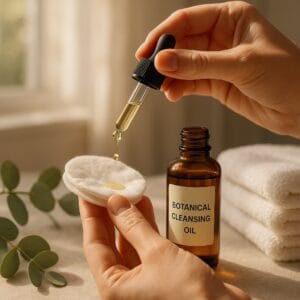 Every evening, I start with a gentle oil cleanser. I warm it between my palms, breathe in the faint botanical scent, and press it into my face — not scrub, just hold. This single act signals my body to unwind. Look for cleansers that use jojoba, chamomile, or squalane oil. They dissolve sunscreen and city dust without stripping the skin.
Why it works: These oils mimic your skin’s natural sebum, helping balance oil production and maintain the acid mantle.
Affiliate placeholder: [Affiliate: Botanical Cleansing Oil]
Internal link: For similar grounding rituals, read [How to Do a Digital Detox for Mental Health] — your skin benefits when your mind slows down too.
2. The Gentle Second Cleanse — Balancing Purity and Comfort
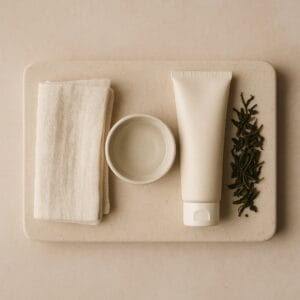 Mornings, I reach for a mild cream or foam cleanser. My skin is combination type — oily in the T-zone, dry around the cheeks — so I learned the hard way that harsh foams only make it worse. Now, I use a pH-balanced, fragrance-free cleanser made with oat or green tea extract.
Why it works: A balanced pH (around 5.5) protects your skin barrier and keeps beneficial bacteria intact.
External link: Learn more about pH balance and the microbiome on NCBI.
Affiliate placeholder: [Affiliate: Green Tea Balancing Cleanser]
3. Hydrating Mist — Instant Reset for Stressed Skin
 Between Zoom calls or after yoga, I spritz a rose and aloe hydrating mist. It’s not about the mist itself but the pause it represents — a reminder to breathe and reset. I keep one on my desk, one by my bed.
Why it works: Humectants like glycerine and aloe vera attract water into skin cells; rose hydrosol soothes redness.
Internal link: See How to Start a Morning Routine for Mental Clarity for ideas on integrating this pause into your day.
4. Serum Therapy — Targeted Nourishment with Minimal Ingredients
 I used to stack multiple serums, thinking more was better. Now, I use one — a niacinamide + hyaluronic acid serum. It’s light, absorbs fast, and focuses on barrier support rather than chasing glow.
Why it works: Niacinamide (vitamin B3) regulates oil, strengthens the barrier, and reduces redness; hyaluronic acid locks in hydration.
Affiliate placeholder: [Affiliate: Niacinamide + Hyaluronic Serum]
External link: For ingredient safety and evidence, see WebMD.
5. Moisturizer as a Shield — Repair and Protect
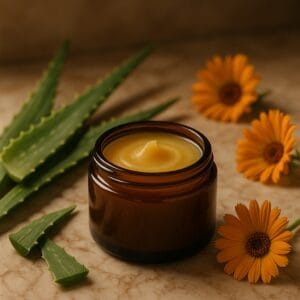 Evening moisturizing became my favorite step once I stopped seeing it as a chore. I use a ceramide-rich cream, warm it slightly in my palms, and press it in slowly. The scent is neutral — comforting without being perfumed.
Why it works: Ceramides and peptides rebuild the lipid barrier, improving elasticity and preventing water loss.
Affiliate placeholder: [Affiliate: Ceramide Repair Cream]
Internal link: For holistic night routines, visit [How to Sleep Better Without Medication] — quality rest amplifies skin repair.
6. Natural Oils — The Finishing Touch for Balance
On dry days or when my skin feels tense, I seal in moisture with two drops of marula or rosehip oil. These oils feel alive — they change texture as they melt into the skin. I treat this as a mini meditation, not just skincare.
Why it works: Cold-pressed oils contain antioxidants like vitamin E and essential fatty acids that heal micro-damage and reduce inflammation.
Affiliate placeholder: [Affiliate: Organic Rosehip Oil]
7. Mindful Masking — Reset for Skin and Spirit
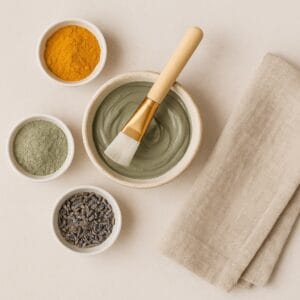 Once or twice a week, I mix a clay and honey mask. The clay draws impurities; the honey keeps it from drying too tight. I put on calm music and just sit — no phone, no multitasking.
Why it works: Bentonite or kaolin clay absorbs excess sebum; honey is antibacterial and humectant-rich.
Internal link: If you enjoyed this ritual, you’ll like [Best Non-Toxic Cleaning Products for a Healthy Home] — the same care you give your skin should extend to your environment.
Affiliate placeholder: [Affiliate: Raw Honey Clay Mask]
8. Inner Skincare — Supporting the Skin from Within
This is the step most people skip. I drink warm water with lemon every morning, take an omega-3 supplement, and eat more plants than I ever used to. But it’s not about perfection — it’s about consistency. The difference shows in skin texture, energy, and mood.
Why it works: Omega-3s reduce inflammation and improve skin barrier resilience; antioxidants from fruits and vegetables combat oxidative stress.
Internal link: See [How to Improve Gut Health Without Probiotics] to understand why internal balance equals better skin.
Affiliate placeholder: [Affiliate: Plant-Based Omega Supplement]
These eight steps became less about vanity and more about rhythm — the rhythm of caring without rushing, of feeding the skin the same way you’d feed a relationship. That’s the quiet truth behind holistic skincare: your products only work as deeply as your habits allow.
Section 4: The Science and Philosophy Behind Holistic Skincare
Holistic skincare doesn’t start in your bathroom — it starts in your environment. I learned this the hard way when my skin broke out every summer, no matter how clean my diet or careful my routine was. The real culprit wasn’t a product. It was my space — the dry AC air, the harsh blue light from my laptop, and my habit of skipping hydration when I worked late.
Holistic skincare asks a deeper question: What around me is my skin absorbing every day?
1. Air Quality — The Invisible Aggressor
Most urban homes in India are filled with fine particulate matter from traffic, dust, and even indoor cooking. Over time, these pollutants cling to skin and trigger oxidative stress, dullness, and inflammation.
Studies published by NCBI show that exposure to PM2.5 (microscopic air pollutants) increases signs of aging and pigmentation, even in younger adults.
Here’s what helped me:
I started keeping indoor plants like peace lilies and snake plants near my desk. They filter formaldehyde and benzene from the air.
I invested in an air purifier near my bed — not fancy, just functional. Within weeks, my morning congestion disappeared, and my skin felt calmer.
And I now wipe my face with micellar water every evening, even if I skip makeup. Pollution residue builds up invisibly.
Internal link: For more on creating a toxin-free home, read [Best Non-Toxic Cleaning Products for a Healthy Home].
2. Blue Light and Screen Stress
 Blue light from phones and laptops doesn’t just mess with sleep; it also affects your skin barrier. According to the Mayo Clinic, prolonged exposure can increase free radical production and pigment unevenness.
My solution wasn’t a miracle cream — it was adjusting habits.
I installed blue-light filters on my devices and use a warm light lamp at night instead of the overhead white LEDs.
I added a vitamin C serum (daytime antioxidant protection) and apply a mineral-based SPF even indoors.
When I’m working late, I diffuse lavender oil — it reminds me to slow down and blink more often (less eye strain = less squinting = softer fine lines).
Internal link: You can also read [How to Stay Healthy Working a 9-to-5 Desk Job] — it pairs perfectly with this digital skincare awareness.
Image prompt: A person working late on a laptop, warm desk lamp glow, glasses on, calm environment — realistic work-from-home setup.
3. Humidity and Hydration — Microclimate for the Skin
Your skin’s barrier loves stability. Too dry, and it cracks; too humid, and it sweats out essential minerals. Many homes in India swing between both extremes — dry winters and sticky monsoons.
I keep a humidifier running at night when AC is on and a dehumidifier pouch during monsoon. My skincare routine shifts too — heavier creams in winter, lightweight gels in summer.
In dry air: Add hyaluronic acid and occlusive oils like jojoba to trap moisture.
In humid air: Stick with gel moisturizers and gentle exfoliation to prevent clogged pores.
Affiliate placeholder: [Affiliate: Compact Bedroom Humidifier]
External link: Research from WebMD supports that maintaining optimal humidity (40–60%) reduces trans-epidermal water loss and supports skin healing.
4. Light, Scent, and Mindset — Sensory Anchors for Skincare
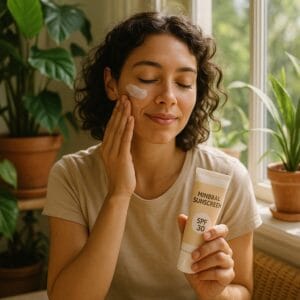 Your skin responds not just to touch, but to your nervous system. The lighting, scent, and even background sounds during your skincare ritual can shift your cortisol levels, which in turn affect oil production and inflammation.
I now dim the bathroom light, light a sandalwood candle, and use a calm playlist when cleansing at night. It’s a multisensory signal that says: It’s safe to relax now. My skin follows suit — redness reduces, sleep improves, and I wake up with less puffiness.
This is why I believe skincare and environment are inseparable. Your nervous system is part of your skin’s ecosystem.
Internal link: Explore this mind-body link in [How to Manage Stress Naturally Without Therapy] — it explains how cortisol and inflammation impact not just mood, but skin health too.
5. Why Holistic Skincare Isn’t About Perfection
If there’s one truth I’ve learned, it’s that your skin will always reflect your lifestyle. Not your genetics, not your product shelf — your habits.
Holistic skincare means building a rhythm that includes your surroundings, emotions, and routines. Some days you’ll forget sunscreen; some nights you’ll crash without cleansing. That’s human. What matters is the awareness — knowing your skin is part of a much bigger feedback loop with your environment.
When that connection clicks, skincare stops feeling like maintenance. It becomes a form of respect.
Section 5: Quick Takeaway — The Clean Beauty Starter Checklist
If you’re just starting your holistic skincare journey, don’t get lost in endless product reviews or influencer routines. Begin simple. Build slowly. Choose products that feel like care, not correction.
Here’s a checklist I wish I had when I started — clear, mindful, and practical.
🌿 Clean Beauty Starter Checklist
1. Gentle Oil Cleanser (Night Ritual)Look for cold-pressed plant oils like jojoba or squalane. Double as a mini massage for lymphatic drainage.
2. Mild Morning Cleanser (Day Refresh)
Use a pH-balanced cream or foam cleanser with oat or green tea extract. Protects your microbiome.
3. Hydrating Mist (Midday Reset)
Keep rose or aloe mist handy. Use it between tasks, after workouts, or during long screen hours.
4. Targeted Serum (Minimal but Powerful)
One serum that strengthens your barrier — niacinamide or vitamin C works for most skin types.
5. Barrier Moisturizer (Night Repair)
Choose a ceramide or peptide-based formula. The goal is strength, not shine.
6. Natural Oil (Protective Finish)
Two drops of marula or rosehip oil before bed. Locks in hydration and reduces micro-tears.
7. Weekly Mask (Mindful Reset)
Use clay and honey together. Treat it as a meditation, not a treatment.
8. Inner Nutrition (The Real Glow Source)
Add omega-3s, colourful vegetables, and enough water. No product can mimic internal balance.
How to Begin
Start with one new habit, not eight. Maybe it’s cleansing slowly at night. Maybe it’s switching your harsh face wash for a gentle one. Over time, your routine will evolve naturally.
What matters is rhythm — showing up for your skin in a way that calms your body too. That’s what makes holistic skincare different: it heals from both sides of the mirror.
Internal link suggestions:
[How to Boost Your Immune System Naturally at Home] — for nutrition-backed glow.
[How to Start a Morning Routine for Mental Clarity] — to build consistency.
[Best Non-Toxic Cleaning Products for a Healthy Home] — extend your care beyond skincare.
External reference reminder:
Cite WebMD or Mayo Clinic for ingredient safety and barrier science.
Closing Line
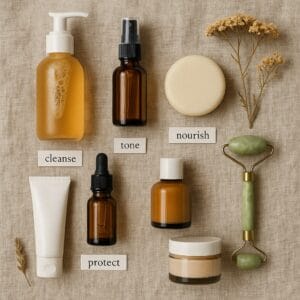 Skincare doesn’t have to be a performance. It can be quiet, sensory, and deeply personal — a few mindful minutes that remind you your body and environment are always in conversation. Start there, and you’ll already be ahead.






Sibani is the founder of The Calm Bloom, sharing mindful living tips, wellness guides, and practical routines for a balanced lifestyle.