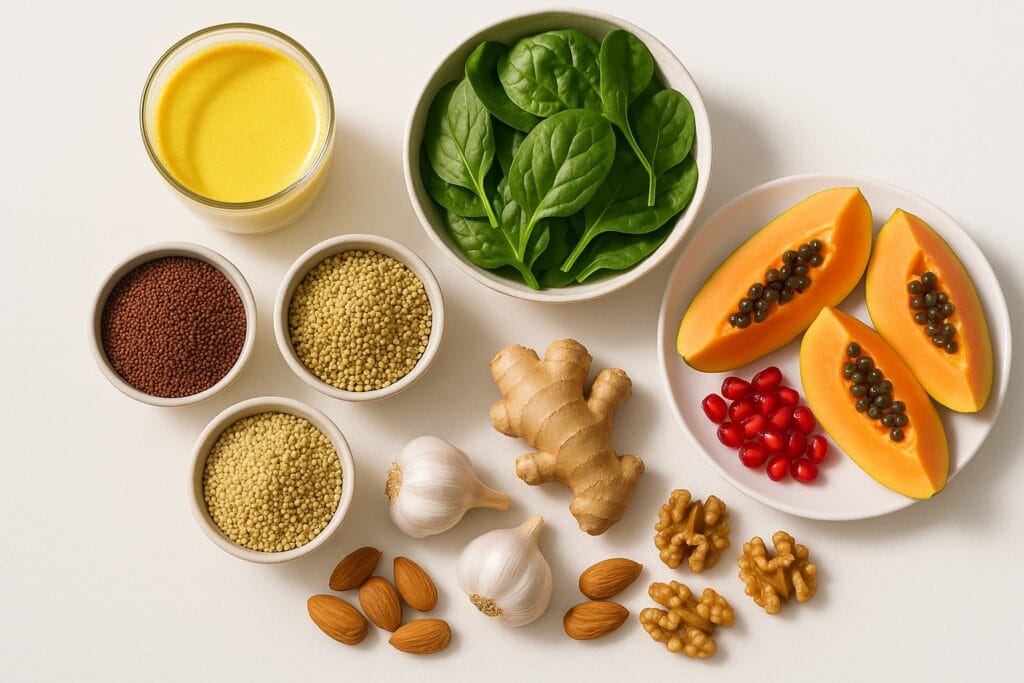
Introduction: Why Everyday Nutrition Shapes How You Feel
For most of my adult life, I thought “eating healthy” meant avoiding junk food and drinking enough water. I believed small things like skipping breakfast or surviving on chai and biscuits during workdays didn’t matter much. But when fatigue became constant, focus dropped, and stress felt heavier than usual, I realized something basic was off — I was feeding my body, not nourishing it.
That realization changed everything.
Healthy eating isn’t about dieting, restriction, or fancy ingredients. It’s about building a relationship with food that supports your energy, mood, and resilience — every single day. The truth is, nutrition quietly decides how well you think, feel, and perform. From your morning clarity to your night-time sleep quality, everything traces back to what you eat and how consistently you eat it.
This guide brings all of that together — not in a rigid, “eat this, avoid that” way — but as a complete blueprint for balanced, real-world nutrition that works for everyday Indian life.
Why This Matters More Than Ever
 Our lives have changed faster than our eating habits. Most of us are juggling jobs, families, and stress levels that never switch off. Food has become more about convenience than nourishment. A skipped meal here, a processed snack there — and slowly, your body loses its natural rhythm.
You might not notice it immediately, but the signs build up:
You need caffeine to get through the day.
You feel tired even after 8 hours of sleep.
Your mood dips for no clear reason.
You’re either always hungry or never hungry at all.
These aren’t random issues — they’re nutritional imbalances showing up as everyday struggles. What your body really needs is not another “diet,” but a stable foundation of nutrient-rich meals that align with your body’s needs and routine.
What You’ll Learn in This Guide
This isn’t another wellness blog that tells you to eat kale salads and quinoa bowls. It’s a grounded, science-backed, and practical guide that focuses on the realities of Indian nutrition.
You’ll learn how to:
Build balanced meals that energize you through long workdays.
Fuel focus and productivity with simple meal timing and composition tweaks.
Support gut health naturally — using traditional foods, not expensive supplements.
Reduce inflammation and fatigue by making small, consistent food swaps.
Create a mindful kitchen and pantry that helps you eat better without extra effort.
This is about everyday wellness, not short-term fixes.
How It Fits Into Your Wellness Journey
Food connects directly to everything else you do to stay well. For instance:
If you’re trying to build immunity, start with Best Immune-Boosting Superfoods.
If you want to improve digestion, explore Improve Gut Health Without Probiotics.
If your goal is to reduce inflammation, see Reduce Inflammation Through Diet.
And to make this easier, learn how to Build a Healthy Pantry From Scratch so that good choices are always within reach.
All these pieces connect back to one principle: balanced nutrition is the foundation for sustainable wellness. Every system in your body — from your immune function to your sleep — depends on it.
The Calm Bloom Philosophy: Balance, Not Perfection
At The Calm Bloom, our goal isn’t to make you chase unrealistic standards. It’s to help you reconnect with your body’s natural intelligence through mindful choices. Whether you’re vegetarian, juggling long workdays, or just starting to pay attention to your meals, the approach stays the same — simple, evidence-based, and flexible.
So, if you’re ready to move beyond diet trends and finally understand how to eat for energy, balance, and mental calm, this guide will walk you through everything step by step.
Why Nutrition Matters for Everyday Wellness
 When most people say they want to “eat better,” they usually mean losing a few kilos or cutting junk food. But the real reason nutrition matters runs much deeper. Every bite you take either supports your body’s balance or adds to its burden. Food is information — it tells your cells how to behave, how much energy to produce, and how well to defend you from stress and disease.
If you constantly feel tired, bloated, moody, or mentally foggy, you’re not just “stressed” or “lazy.” You’re undernourished in a modern world full of food.
1. Nutrition Is the Foundation of Everyday Functioning
You can think of wellness as a house built on three pillars: nutrition, movement, and rest. Without proper nutrition, the other two crumble.
Your body rebuilds itself daily using the raw materials from your diet:
Proteins repair muscles, enzymes, and hormones.
Carbohydrates fuel your brain and physical activity.
Fats support cell walls, hormones, and nutrient absorption.
Micronutrients (vitamins, minerals, and antioxidants) regulate everything from oxygen transport to immune defense.
Even mild nutrient deficiencies can affect your focus, mood, and long-term health. For example:
Low iron leads to fatigue and poor concentration.
Inadequate magnesium causes anxiety and muscle tension.
Missing B-vitamins affects metabolism and energy.
Deficient omega-3s are linked to poor memory and inflammation.
This is why people often say, “I’m eating enough but still tired.” Calories aren’t the problem — nutrient quality is.
2. The Modern Nutrition Paradox: Overfed Yet Undernourished
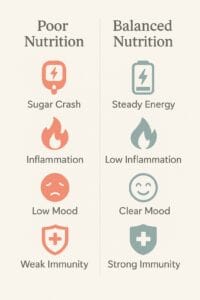 Most modern diets — even those that look “healthy” — lack real diversity. Convenience foods, refined grains, and ultra-processed snacks dominate the plate. You may feel full, but your cells are starving.
Common daily patterns that quietly sabotage wellness:
Refined carbohydrates (white bread, noodles, biscuits) cause blood sugar spikes, then sudden energy crashes.
Hidden sugars in packaged foods overload your liver and disrupt insulin balance.
Industrial oils like sunflower, soybean, and palm increase omega-6 intake, triggering low-grade inflammation.
Low fiber intake from minimal vegetables and whole grains weakens gut flora.
Excess caffeine overstimulates the adrenals, leading to chronic fatigue.
You can’t “out-supplement” these habits. As WebMD explains, micronutrient imbalance from poor diet is one of the biggest drivers of modern lifestyle disorders — from metabolic syndrome to chronic stress.
3. The Science Behind Food and Daily Wellness
Food doesn’t just fill you up; it regulates how you feel and function. Here’s how proper nutrition affects key aspects of daily life:
a. Energy Production
Your body converts carbs, fats, and proteins into ATP (cellular energy).
Complex carbs (like oats, millets, and brown rice) give steady energy.
B-vitamins, magnesium, and iron act as cofactors in this conversion process.
When any of these are missing, your energy dips — no matter how much you eat.
b. Mental Clarity and Mood
Your brain uses nearly 20% of your daily calories. It needs stable blood sugar and adequate fatty acids to stay sharp.
Omega-3 fats (from walnuts, flaxseed, and fish) improve concentration.
Amino acids from protein build neurotransmitters like serotonin and dopamine.
Low blood sugar or skipped meals often trigger irritability and poor focus.
c. Immunity and Recovery
The immune system runs on nutrients, not wishes.
Vitamin C, zinc, and selenium help white blood cells fight infection.
Protein rebuilds damaged tissue after illness or exercise.
A healthy gut microbiome — supported by fiber and fermented foods — trains your immune response.
d. Hormonal and Metabolic Balance
Insulin, cortisol, thyroid hormones, and sex hormones all depend on nutritional signals.
High-sugar diets increase insulin resistance.
Inadequate protein and healthy fats disrupt estrogen balance.
Skipping meals raises cortisol, your stress hormone.
Consistent, balanced meals stabilize these systems and prevent the rollercoaster effect — constant hunger, anxiety, and cravings.
4. Why Indian Diets Often Miss the Mark
Indian meals can be incredibly nourishing when done right — but modern habits have altered traditional wisdom.
Excess carbs: Too much rice, roti, and potatoes with minimal vegetables or protein.
Refined oils: Heavily used in street food and home cooking.
Low protein intake: Especially among vegetarians, where dal and paneer alone aren’t enough.
Micronutrient gaps: Widespread deficiencies of Vitamin D, B12, calcium, and iron.
The solution isn’t giving up cultural food — it’s rebalancing it.
Add a bowl of sautéed vegetables or sprouts beside your dal-chawal.
Use cold-pressed oils (like mustard, sesame, or coconut) instead of refined.
Combine grains and pulses (like khichdi or rajma-chawal) for complete protein.
Include probiotics (curd, kanji, homemade pickles) to aid digestion.
According to the National Institute of Nutrition (ICMR), most Indians consume more calories from carbs than recommended and less from protein and fat, which leads to long-term fatigue and poor muscle tone.
5. The Long-Term Impact of Poor Nutrition
 Ignoring nutritional balance doesn’t just make you sluggish — it sets off a chain of internal issues:
Chronic inflammation: Leads to early aging, joint pain, and metabolic disorders.
Weakened immunity: Increases frequency of infections.
Insulin resistance: A pre-stage to diabetes.
Gut dysbiosis: Triggers bloating, poor digestion, and mood swings.
Hormonal imbalance: Especially in women, affecting menstrual cycles, weight, and mood.
These aren’t random problems — they’re symptoms of long-term nutrient neglect. The good news is the body responds quickly when fed right. Within 2–3 weeks of consistent, balanced meals, energy, skin, and sleep quality often improve dramatically.
6. The Core Takeaway
Nutrition isn’t a temporary project. It’s the everyday maintenance that keeps every system in tune. When you eat balanced, wholesome food:
You wake up with steady energy.
You think more clearly and stay calmer.
You recover faster from stress and illness.
Wellness isn’t built in the gym or during meditation—it’s built first in the kitchen
Building Balanced Meals for Everyday Wellness
 A healthy meal isn’t about eating less. It’s about eating right — with balance, variety, and timing.
The goal is to nourish your body throughout the day without energy crashes, cravings, or that post-lunch slump most of us know too well.
When you learn how to structure your plate, your body naturally starts to regulate energy, hunger, and focus. You’ll eat when you’re hungry, stop when you’re satisfied, and feel full of steady energy instead of sluggishness.
1. The Balanced Plate Formula
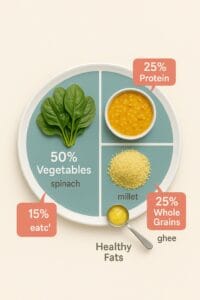
Think of your plate as a nutritional pie chart — each food group plays a specific role.
| Component | Portion | Function | Indian Examples |
|---|---|---|---|
| Protein | ¼ plate | Repairs tissues, builds hormones, keeps you full | Dal, paneer, tofu, eggs, fish, sprouts |
| Healthy Carbs | ¼ plate | Provides stable energy and fiber | Brown rice, millets, chapati, quinoa, oats |
| Vegetables | ½ plate | Adds vitamins, minerals, antioxidants | Bhindi, palak, lauki, beans, carrots, salad |
| Healthy Fats | 1–2 tsp | Supports hormones and nutrient absorption | Ghee, coconut oil, olive oil, nuts, seeds |
Your goal isn’t to measure obsessively — it’s to eyeball portions and build a colorful, balanced plate most of the time.
For a deeper breakdown on how these nutrients support immunity, explore Best Immune-Boosting Superfoods. You’ll see how everyday ingredients like turmeric, amla, and garlic strengthen your defense system.
2. Protein: The Missing Nutrient in Most Indian Diets
Protein is often the first nutrient Indians fall short on — especially vegetarians.
Low protein means:
Poor muscle recovery
Constant fatigue
Slow metabolism
Cravings for sugar or caffeine
According to ICMR, the average Indian consumes only half the recommended protein intake.
Here’s how to fix that:
Include at least one protein source in every meal — dal, curd, paneer, eggs, fish, lentils, tofu, or sprouts.
Combine grains and pulses (like khichdi, rajma-chawal, idli-sambar) for complete amino acids.
Add seeds (chia, flax, sunflower) to smoothies or breakfast bowls for an extra boost.
If you want to go deeper into pantry essentials, check out Build a Healthy Pantry From Scratch, which lists affordable protein staples to keep stocked at home.
3. Carbs: Don’t Fear Them — Choose Them Wisely
 Carbohydrates have been unfairly demonized, but they’re your body’s main energy source. The problem isn’t carbs themselves — it’s the type and timing.
Choose complex carbs like millets, oats, quinoa, and brown rice over refined white rice or bread.
Pair carbs with protein or fiber to slow glucose release.
Avoid eating large carb-heavy meals late at night when your metabolism slows down.
A smart approach is to “layer” your carbs — start meals with salad or protein to stabilize blood sugar before your rice or roti.
If bloating or heaviness after carb-rich meals is common, read Best Foods for Reducing Belly Bloat. It explains what to pair with starchy foods to improve digestion naturally.
4. Fats: The Hormone Balancers
Healthy fats keep your hormones in check, help absorb vitamins (A, D, E, K), and support brain health.
Eliminating them completely leads to poor skin, low energy, and even mood swings.
Good fat sources:
Ghee or cold-pressed oils for cooking
Nuts (almonds, walnuts, pistachios)
Seeds (flaxseed, pumpkin, sesame)
Avocados (when available)
Fatty fish like salmon or rohu
Avoid reheating oils or using refined vegetable oils — these promote inflammation. To understand how inflammation affects your health, read Reduce Inflammation Through Diet.
5. Micronutrients: The Silent Drivers
Macronutrients (protein, carbs, fats) get all the attention, but micronutrients are the real engines behind your body’s functions.
They support metabolism, brain health, immunity, and hormonal balance.
Common deficiencies in India include:
Vitamin D: due to limited sun exposure.
Iron: especially in women.
Vitamin B12: due to vegetarian diets.
Calcium: from low dairy or leafy greens.
Focus on variety — colourful vegetables, seasonal fruits, whole grains, and traditional ingredients like ragi, amaranth, and drumstick leaves.
6. How to Build a Day of Balanced Meals
Here’s a simple structure for daily nutrition:
| Time | Meal | Focus | Example |
|---|---|---|---|
| Morning | Breakfast | Protein + complex carbs | Vegetable omelette + toast, or poha with sprouts |
| Midday | Lunch | Balanced plate | Brown rice + dal + sabzi + curd |
| Evening | Snack | Fiber + protein | Fruit + handful of nuts or roasted chana |
| Night | Dinner | Light protein + veggies | Paneer bhurji + sautéed vegetables or khichdi + salad |
If you tend to skip breakfast or eat late dinners, it’s time to fix your meal timing. Stable eating patterns support your gut and sleep cycle, as explained in How to Sleep Better Without Medication.
7. Practical Add-Ons

Hydration: Start mornings with water, not caffeine. Herbal teas or infused water are good mid-day options.
Mindful eating: Don’t multitask during meals — focus on chewing and slowing down.
Batch cooking: Pre-chop veggies, cook dal in bulk, and prep overnight oats to make weekdays easier.
Smart swaps: Replace white sugar with jaggery, refined oils with ghee, and deep-fried snacks with roasted ones.
8. Affiliate Product Placeholders
Here are suggested affiliate product placeholders (to add links later):
These are small investments that make meal planning easier and more consistent.
Foods That Fuel Energy and Focus
When people think of “energy,” they usually imagine caffeine or sugar rushes. But real, sustained energy doesn’t come from coffee refills or energy drinks. It’s the result of balanced nutrition that supports your body’s natural rhythms, blood sugar stability, and mental focus throughout the day.
I learned this the hard way when I used to skip breakfast, live on tea and biscuits, and then crash by 3 p.m. Once I started focusing on foods that stabilize my energy — not just spike it — my focus and productivity completely changed.
Here’s what truly fuels your mind and body for the long run.
🍚 1. Complex Carbohydrates: The Steady Fuel Source
 Carbs aren’t your enemy — refined carbs are. Whole, complex carbs break down slowly, providing steady glucose to your brain and muscles.
Best sources:
Oats, millets, brown rice, quinoa, and whole wheat rotis
Root vegetables like sweet potatoes and beets
Seasonal fruits like bananas, apples, and guavas
Quick tip: Combine complex carbs with healthy fats and protein for stable energy. For example, have a bowl of poha with peanuts or millet khichdi with ghee and lentils.
🔗 Build a Healthy Pantry from Scratch – for stocking energizing staples like oats, millets, and nuts.
🥜 2. Protein for Sustained Alertness
Protein isn’t just for gym-goers — it’s vital for brain chemicals like dopamine and norepinephrine, which help you stay alert and motivated.
Smart protein choices:
Lentils, chickpeas, paneer, tofu, eggs, and fish
Mixed nuts, seeds, and Greek yogurt
Meal tip: Add at least one protein source to every meal — it slows down digestion, keeps you full, and prevents energy crashes.
🔗 Internal link idea: Adaptogens for Hormonal Balance – some adaptogenic herbs like ashwagandha and maca also support better energy balance and endurance.
💡 Affiliate placeholder: [Affiliate: Organic Plant-Based Protein Powder]
🍓 3. Micronutrient Powerhouses for Mental Clarity
Your brain depends on certain vitamins and minerals to function efficiently. Deficiencies — especially in B vitamins, iron, magnesium, and omega-3s — can make you feel foggy, tired, or irritable.
Best nutrient-dense foods:
Leafy greens (spinach, moringa, methi)
Nuts and seeds (almonds, pumpkin seeds, flaxseeds)
Fatty fish like salmon or vegetarian options like chia seeds
🔗 Boost Your Immune System Naturally at Home – many of these same foods support both immunity and focus.
💡 Affiliate placeholder: [Affiliate: Omega-3 Fish Oil / Vegetarian DHA Capsules]
☕ 4. Caffeine with Care: Smarter Stimulation

Caffeine can boost focus — but overdo it, and you’ll get anxiety, dehydration, or afternoon crashes. Instead of relying on strong coffee, try:
Green tea: Contains L-theanine, which improves focus without jitters.
Matcha: Slower caffeine release, steady energy.
Herbal teas: Tulsi, ashwagandha, or ginseng for calm alertness.
🔗 Digital Detox for Mental Health – pairing mindful breaks with moderate caffeine helps restore natural energy cycles.
💡 Affiliate placeholder: [Affiliate: Organic Matcha Green Tea Powder]
🍫 5. Natural Energy Boosters (No Sugar Rushes)
When you crave something sweet, go for foods that naturally balance energy:
Dates and nuts: Ideal pre-workout or mid-day snack.
Dark chocolate (70%+): Improves blood flow to the brain.
Banana with nut butter: Great quick fuel before workouts or meetings.
🔗 Internal link idea: Best Foods for Reducing Belly Bloat – how these light, energy-friendly snacks also support better digestion.
💡 [Affiliate: Dark Chocolate 80% Cocoa / Organic Date Energy Bites]
Mindful Eating Habits and Meal Planning for Everyday Wellness
 Eating healthy isn’t just about what you eat — it’s also how you eat. Most people focus on superfoods and supplements, but the truth is, your eating habits often matter more than your ingredient list. You can eat the best foods in the world, but if you eat them while distracted, stressed, or in irregular patterns, your body won’t absorb nutrients properly.
I’ve seen this in myself — on rushed workdays, I’d eat lunch at my desk, barely noticing the taste, and end up bloated and fatigued. When I started practicing mindful eating and simple meal planning, my digestion and focus improved dramatically.
Here’s how you can do the same.
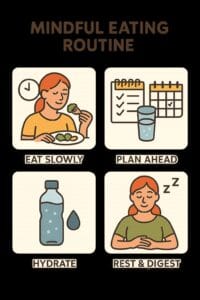
🕯️ 1. Eat with Awareness, Not Autopilot
Mindful eating simply means being present with your food. It’s not a diet — it’s a habit that trains you to eat slower, chew better, and truly enjoy what you eat.
Simple ways to start:
Put away your phone or TV while eating.
Take a few deep breaths before your first bite.
Focus on texture, aroma, and flavor.
Stop eating once you feel comfortably full, not stuffed.
You’ll not only digest better but also recognize emotional or stress-driven eating patterns.
🔗 Manage Stress Naturally Without Therapy – stress often drives overeating or cravings, and learning to calm your mind helps you reconnect with hunger cues.
🧘♀️ 2. Sync Your Meals with Your Body’s Natural Clock
Your body follows a circadian rhythm, and your digestion works best when aligned with it.
Morning: Eat a nutrient-rich breakfast to stabilize blood sugar.
Afternoon: Make lunch your largest meal; digestion is strongest.
Evening: Keep dinner light and eat 2–3 hours before bed.
This rhythm supports your energy, metabolism, and sleep quality. Ayurveda also follows a similar pattern — eating heavy meals after sunset burdens your system.
🔗 Morning Routine for Mental Peace – pairing a calm start with a balanced breakfast sets the tone for your entire day.
🍱 3. Plan Ahead to Avoid Poor Food Choices
Meal planning doesn’t need to be complicated. It’s about reducing decision fatigue and staying consistent.
Practical ways to plan:
Batch cook grains and lentils: Make a big pot of brown rice, dal, or quinoa for quick weekday meals.
Pre-cut veggies: Store them in airtight containers for easy stir-fries or salads.
Prepare healthy snacks: Keep roasted chana, nuts, and fruit handy for mid-day hunger.
If you’re new to meal prep, start small. Plan just your breakfast or lunch for the week and build up gradually.
🔗 Stay Healthy Working a 9-to-5 Desk Job – practical meal prep ideas for busy schedules and limited break times.
4. Balance Taste and Nutrition — Don’t Punish Yourself
 Healthy food should taste good. If your meals feel like punishment, you won’t stick to them. The key is to combine nutrient-dense ingredients with enjoyable flavors.
Try this approach:
Add herbs and spices like turmeric, cumin, coriander, and curry leaves — they’re packed with antioxidants.
Use ghee or cold-pressed oils in moderation for better flavor and nutrient absorption.
Include a small sweet treat (like dark chocolate or dates) so you don’t feel deprived.
🔗 Reduce Inflammation Through Diet – how anti-inflammatory spices can make your meals healthier and more flavorful.
💡 Affiliate placeholder: [Affiliate: Organic Cold-Pressed Coconut Oil]
🧃 5. Hydration and Digestion Go Hand in Hand
You can eat perfectly but still feel sluggish if you’re dehydrated. Hydration helps move nutrients, regulate temperature, and support digestion.
Best practices:
Start your day with warm water + lemon or soaked chia seeds.
Sip water throughout the day instead of gulping large amounts.
Avoid drinking too much during meals (it dilutes digestive enzymes).
For variety, infuse your water with mint, cucumber, or tulsi for gentle detox support.
🔗 Best Foods for Reducing Belly Bloat – hydration plays a direct role in reducing bloating and improving digestion.
💡 Affiliate placeholder: [Affiliate: Glass Infuser Water Bottle]
🍽️ 6. Create a Calm Eating Environment
How you eat matters as much as what you eat. A peaceful setting allows your body to rest and digest.
Simple rituals to try:
Eat in a clean, quiet space — even a small corner with natural light works.
Play soft instrumental music to relax your nervous system.
Express gratitude before eating; it mentally shifts you from stress to nourishment.
🔗 Internal link idea: Healthy Home Cleaning Products – a clean, toxin-free space also supports mindful living and better eating habits.
💬 Key Takeaway

Mindful eating isn’t about rules or restrictions. It’s about awareness, rhythm, and respect for your body’s needs. You don’t have to overhaul your life — start by slowing down, planning one meal ahead, or eating your lunch without distractions.
Once you build small mindful habits, your nutrition automatically improves — because you begin to listen to your body instead of fighting it.
If you’re ready to deepen this practice, explore How to Start Journaling for Emotional Wellness — journaling can help you uncover emotional triggers that affect your eating patterns.
Supplements and Superfoods — When Nutrition Needs a Boost
 Even with a balanced diet, it’s not always easy to meet every nutritional need. Busy schedules, limited seasonal produce, and soil depletion can make it harder to get all your vitamins and minerals from food alone. That’s where supplements and superfoods come in — not as shortcuts, but as support systems to fill nutritional gaps.
I used to assume supplements were only for athletes or people with medical conditions. But when I began tracking my meals and energy levels, I realized I was consistently low on iron and B12 — even with a vegetarian diet. Adding the right supplements made a clear difference in my focus and stamina.
Here’s how to approach supplementation and superfoods with clarity, not hype.
💊 1. When Supplements Actually Help
Supplements are meant to supplement a healthy diet, not replace it. You might need them if you:
Follow a restrictive diet (like vegan or dairy-free).
Have specific deficiencies confirmed by blood tests.
Live in low-sunlight areas or experience chronic fatigue.
Have hormonal imbalances, poor digestion, or high stress levels.
The most common deficiencies among Indian adults are:
Vitamin D (due to indoor lifestyle and pollution)
Vitamin B12 (especially among vegetarians)
Iron (common in women)
Omega-3 fatty acids (low in most Indian diets)
Practical tip: Always get your blood work done before taking any supplement. Over-supplementation can be just as harmful as deficiency.
🔗 How to Sleep Better Without Medication – certain deficiencies like magnesium or B-complex can impact sleep quality and recovery.
🥥 2. Everyday Superfoods That Actually Deliver
The word “superfood” is often overused, but some foods do earn that title because of their dense nutritional profile and bioactive compounds.
Here are a few that genuinely support everyday wellness:
✅ Indian Superfoods Worth Adding
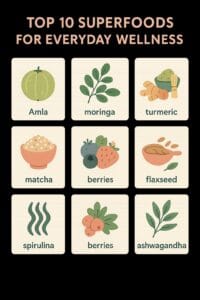
Amla (Indian Gooseberry): Rich in Vitamin C, boosts immunity, skin health, and digestion.
Moringa (Drumstick leaves): High in iron, calcium, and antioxidants — a powerhouse for vegetarians.
Turmeric: Reduces inflammation and supports joint and gut health.
Flaxseeds & Chia Seeds: Excellent plant-based omega-3 sources.
Ashwagandha: Balances stress hormones and improves energy levels.
🔗 Adaptogens for Hormonal Balance – covers how herbs like ashwagandha and maca support both mood and energy.
💡 Affiliate placeholders:
🍓 3. Global Superfoods with Real Benefits
 Some global superfoods have earned their place for good reason — they’re nutrient-dense and convenient to include.
Try these:
Spirulina: High-protein algae that supports detox and energy.
Matcha: Provides antioxidants and stable caffeine release.
Cacao nibs: Iron and magnesium-rich alternative to sugary chocolate.
Quinoa: Complete plant protein with fiber and minerals.
Berries (blueberries, goji): Packed with polyphenols that protect against oxidative stress.
🔗 Best Immune-Boosting Superfoods – discover how some of these foods overlap with immunity and mental wellness.
💡 Affiliate placeholders:
🧬 4. How to Choose the Right Supplement
The supplement industry is crowded and confusing. Here’s how to make smart, safe choices:
Read the label: Avoid artificial colors, preservatives, or fillers.
Check certification: Look for FSSAI, GMP, or ISO certification in India.
Prefer whole-food-based formulas: They’re better absorbed.
Stay skeptical of “miracle claims”: Supplements should enhance, not replace, a solid diet.
If you’re overwhelmed, start with one — not five. For example, focus on a multivitamin if your diet is inconsistent, or an omega-3 supplement if you rarely eat fish.
🔗 Himalayan Organics Multivitamin Review – a detailed breakdown of one of the cleanest multivitamin options for Indian consumers.
🌞 5. Superfood Blends and Smoothies: Quick Ways to Power Up
You don’t have to eat spoonfuls of powder to benefit. The easiest way to include superfoods is through smoothies, bowls, or warm tonics.
Sample ideas:
Morning: Banana , spinach , chia & peanut butter smoothie.
Midday: Moringa , lemon & honey water.
Evening: Golden milk with turmeric , ashwagandha & cinnamon.
These simple blends can enhance nutrient absorption and fit easily into daily life.
🔗 Sustainable Fitness Routine for Beginners – great companion read if you’re pairing superfoods with physical wellness.
💡 Affiliate placeholders:
🧘♂️ Key Takeaway
Supplements and superfoods are not a substitute for real food — they’re a bridge when your lifestyle or environment makes nutrition gaps unavoidable. Use them intentionally, not impulsively.
Think of it like this: your plate is the foundation; supplements are the polish.
Start with a blood test, identify your weak points, and then support your body with trusted, minimal, high-quality additions.
And if you want to start naturally before turning to supplements, check out Improve Gut Health Without Probiotics — because nutrient absorption begins with a healthy gut.
Bringing It All Together — Creating a Sustainable Nutrition Routine
Eating healthy isn’t about chasing perfection — it’s about building consistency you can live with. The truth is, you don’t need a complicated diet, imported superfoods, or color-coded meal plans. You just need a clear understanding of your body, a few foundational habits, and a willingness to stay consistent even when life gets busy.

When I first started adjusting my nutrition, I made every mistake possible — cutting carbs completely, overdoing protein shakes, skipping meals, and expecting instant results. It took time to learn that wellness isn’t about strict rules but steady rhythm. Once I focused on balance, everything changed.
Let’s put everything you’ve learned into an easy, repeatable routine.
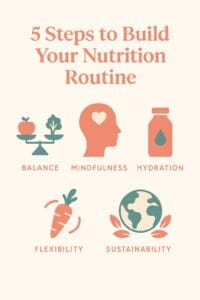
🧭 1. Build Your Personal Nutrition Framework
Think of your nutrition plan like a house. You don’t decorate before you lay the foundation. Here’s your structure:
| Foundation | What It Means | Simple Actions |
|---|---|---|
| Whole Foods First | Prioritize fresh, real foods over processed | Shop for fruits, vegetables, grains, pulses every week |
| Balanced Plate | Include complex carbs, lean protein, healthy fats | Use the “½ veggies + ¼ grains + ¼ protein” rule |
| Mindful Eating | Eat slowly and with intention | No screens during meals, chew thoroughly |
| Hydration | Support digestion and focus | Carry a reusable water bottle; infuse with herbs or citrus |
| Smart Supplements | Fill real nutrient gaps only when needed | Get tested before starting any supplement |
🔗 Build a Healthy Pantry from Scratch – a practical guide to setting up your kitchen for this framework.
🥣 2. Small Steps > Sudden Overhauls
Big overnight changes don’t last. Small, repeated actions do. Start with one area each week.
Example habit roadmap:
Week 1: Eat breakfast before 9 a.m.
Week 2: Add one leafy green to your daily meal.
Week 3: Replace one sugary drink with infused water.
Week 4: Batch-cook one grain or protein on weekends.
Within a month, your body will begin to feel lighter, more focused, and balanced — without extreme effort.
🔗 Morning Routine for Mental Peace – helps you pair mindful nutrition with calm mornings.
🍃 3. Stay Flexible — Not Fearful
Perfectionism kills progress. Some days you’ll eat clean, some days you’ll eat cake — and both are fine. What matters is your return point.
Instead of guilt, practice gentle course correction:
If you overeat, balance the next meal with fiber and hydration.
If you skip meals, don’t double up — just get back to rhythm.
If you feel drained, review your sleep and stress levels before blaming food.
This mindset helps you sustain healthy eating for years, not weeks.
🔗 Manage Stress Naturally Without Therapy – because emotional balance is inseparable from healthy eating.
🧘♀️ 4. Pair Nutrition with Rest and Movement
Nutrition alone can’t carry your wellness journey. Movement, rest, and stress management amplify everything.
Move daily: Even a 30-minute walk supports digestion and insulin balance.
Sleep deeply: Your body repairs and metabolizes nutrients during rest.
Stay grounded: Mindful breathing before meals improves digestion and calm.
🔗 Best Yoga Poses for Lower Back Pain – gentle routines that pair well with your nutrition plan.
🌼 5. Long-Term Sustainability
The goal isn’t to “be on a diet.” It’s to live in a way that makes you feel energetic, clear-headed, and emotionally balanced every day.
That’s sustainable wellness — where food becomes fuel, not fixation.
💬 Final Thought:
Start small, stay consistent, and keep learning. Every meal is an opportunity to nourish, not restrict. Listen to your body more than internet trends. Your wellness journey isn’t a straight line — it’s a lifelong practice.
If you want to go deeper into this journey, explore Best Wellness Books for Personal Growth — they’ll help you stay motivated and grounded as your habits evolve.
🌟 Closing CTA

Take one small step today:
✅ Choose one meal to make fully mindful.
✅ Swap one processed item for a whole food.
✅ Drink one extra glass of water.
Consistency builds momentum. And momentum creates change.
Your nutrition doesn’t need to be perfect — it just needs to be yours.







Sibani is the founder of The Calm Bloom, sharing mindful living tips, wellness guides, and practical routines for a balanced lifestyle.