Introduction: The Watch That Promised to Fix My Routine
A few years ago, I found myself checking my phone for the tenth time that morning—tired, distracted, and already stressed before the day began. I’d been promising myself to “get healthier,” but between work deadlines and endless scrolling, I wasn’t tracking anything that actually mattered—like my sleep, heart rate, or stress levels.
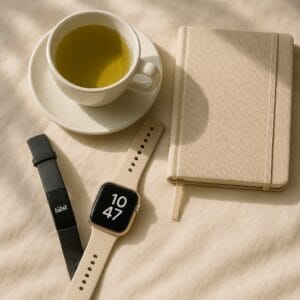
That’s when I bought my first fitness tracker. I started with a [Affiliate: Fitbit Charge 6], drawn by its simplicity and long battery life. Later, I upgraded to an [Affiliate: Apple Watch Series 9], convinced that more features meant better results. But the truth? The difference between the two went deeper than just specs or design—it was about how each one shaped my awareness of my body and daily habits.
If you’ve ever wondered which one actually helps you live better, not just move more, this post will make your decision easier. I’ll walk you through how Fitbit and Apple Watch approach wellness tracking—how they measure stress, sleep, mindfulness, and recovery—and which one aligns best with your lifestyle.
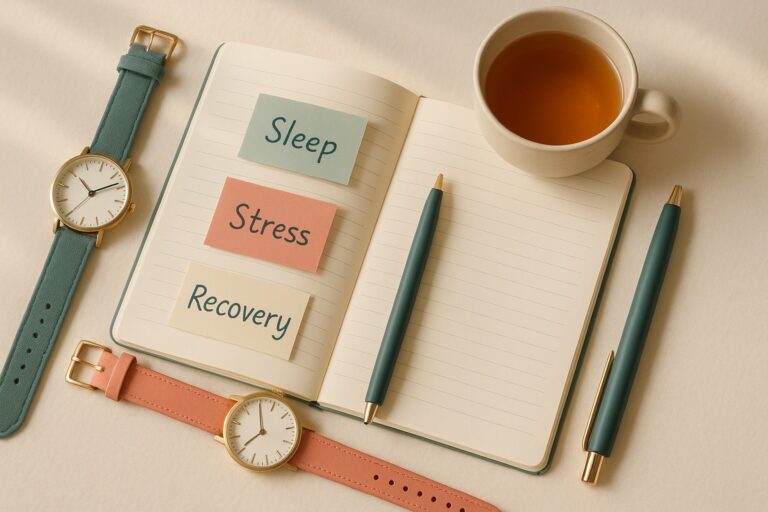
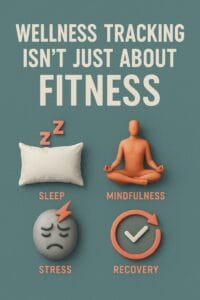 Before we compare, let’s be clear: wellness tracking is not about hitting 10,000 steps or burning calories. It’s about understanding your body’s signals before burnout hits, improving your sleep quality, and learning when to rest or move.
If you struggle with mental fatigue or constant digital stress, read my post on How to Manage Stress Naturally Without Therapy for simple daily reset rituals that pair well with smartwatch reminders.
Similarly, for anyone trying to fix erratic sleep cycles, you might find my guide on How to Sleep Better Without Medication useful—it explains small night-time adjustments that complement what wearables track.
According to the Mayo Clinic, activity trackers can encourage consistent habits when used mindfully, but they’re most effective when combined with self-reflection and lifestyle changes. That’s where your device—whether Fitbit or Apple Watch—becomes more than a gadget; it becomes a gentle accountability partner.
Over the years, I’ve realized one key thing—wellness devices don’t change you; awareness does. The watch is just a mirror. What you do with the data decides your growth.
So, let’s unpack how each of these smart devices—Fitbit vs Apple Watch for wellness tracking—helps you build that awareness.
The Real Goal: Wellness Tracking (Not Just Steps or Calories)
When I began using a smartwatch, I was obsessed with tracking my steps and calories. Every evening, I would open the app just to see if I had earned my dinner. It took me months to realize that wellness tracking isn’t about earning food or chasing numbers; it’s about learning what’s really happening inside your body.
If you’ve ever wondered why you feel tired even after eight hours of sleep or why your energy crashes mid-afternoon, it’s not something a step counter alone can explain. True wellness tracking connects the dots between sleep quality, stress response, heart rate patterns, hydration, and emotional balance.
 Why This Matters More Than Fitness Metrics
Fitness trackers were designed to measure movement. Wellness trackers, on the other hand, measure restoration. They help you see how your body responds to both physical and emotional load.
When I began checking my heart rate variability (HRV)—a key metric found in both Fitbit and Apple Watch—I realized how directly stress affected me. On days filled with back-to-back Zoom calls, my HRV plummeted, even if I hadn’t skipped my walk. Once I started using mindfulness reminders, journaling before bed, and short breathing breaks, my HRV stabilized.
That’s when I understood that wellness is not a workout plan—it’s recovery awareness.
If you’re constantly chasing productivity, your body ends up in a low-grade stress loop. Devices like Fitbit and Apple Watch can help you break that loop by tracking subtle changes in your resting heart rate, sleep cycles, and stress levels throughout the day.
A 2023 study published in the National Center for Biotechnology Information (NCBI) found that consistent use of wearable health trackers improved users’ self-awareness and stress management—especially when paired with mindful routines rather than strict exercise goals.
How Fitbit and Apple Watch Interpret “Wellness”
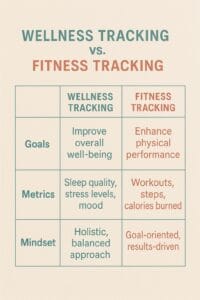 Fitbit uses its Readiness Score to tell you whether your body needs rest or movement based on your sleep, activity, and HRV. If you’ve had a poor night’s sleep or a stressful day, it gently suggests lighter activity or meditation.
Apple Watch, on the other hand, focuses on closing rings—movement, exercise, and stand goals—but integrates this with mindfulness reminders, guided breathing, and Heart Rate Variability insights inside the Apple Health app. It’s more structured and gamified, which some find motivating, but it can also push you to “perform” rather than “tune in.”
Personally, I found Fitbit to be more forgiving. It doesn’t guilt you for skipping a day. It simply tracks and helps you reflect. Apple Watch, though, made me more consistent—it felt like a friendly but persistent coach tapping my wrist to get moving.
Depending on your personality, both approaches can support wellness. The key is to use the data as feedback, not pressure.
If you’re struggling to build consistent habits or feel disconnected from your body, you might find my article on How to Stay Healthy Working a 9-to-5 Desk Job useful. The small changes listed there—like mindful hydration or 10-minute movement breaks—pair perfectly with what both Fitbit and Apple Watch measure.
In an Indian Context
Here’s a simple example. After lunch, many of us take short walks—something we call pet-pooja walk. Fitbit tracks these as light activity, while Apple Watch logs them as low-intensity movement. If you eat traditional Indian meals like dal-rice or chapati-sabzi, your body’s glucose and heart rate responses can vary widely depending on portion size and stress levels. A smartwatch can help you notice these patterns over time, which is a real step toward mindful eating.
Wellness tracking is about understanding these subtle signals—how your lifestyle, food, and emotions interact daily.
Fitbit: Simplicity, Mindfulness & Habit Building
When I first used a [Affiliate: Fitbit Charge 6], what stood out wasn’t the technology—it was the quietness. There were no flashy notifications, no temptation to check messages, no pressure to perform. Fitbit simply tracked, reflected, and reminded. That simplicity became a kind of mindfulness.
After a few weeks, I noticed a pattern. My sleep score dropped sharply on days when I worked late and skipped my evening walk. My stress management score improved on mornings when I did five minutes of deep breathing before checking emails. These weren’t new discoveries—I’d always known stress and sleep were linked—but seeing them mapped out so clearly made it impossible to ignore.
1. Fitbit’s Approach to Wellness
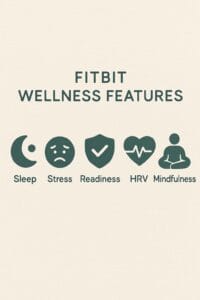
 Fitbit’s philosophy is rooted in consistency and awareness rather than performance. Its core features—sleep tracking, stress score, heart rate variability (HRV), and readiness score—encourage balance instead of burnout.
Sleep Tracking: Fitbit is one of the most accurate in its class. It doesn’t just tell you how long you slept—it shows your sleep stages (light, deep, REM) and how your body recovered overnight.
Stress Management: It measures electrodermal activity (tiny changes in skin response) and combines that with your heart rate and activity data to create a daily stress score.
Readiness Score: This feature uses your rest, activity, and HRV data to suggest whether you should push harder or take it easy.
I like how the Fitbit app translates complex data into gentle guidance. Instead of pushing you to close rings or hit targets, it helps you listen.
2. Why Fitbit Works for Mindful Living
Fitbit suits people who value quiet structure—those who want wellness reminders without distraction. If you practice yoga, walk after meals, or follow Ayurvedic routines, Fitbit complements these habits naturally.
For instance, when I started doing short post-dinner walks to improve digestion (a traditional Indian habit), my Fitbit tracked these as light activity. Over time, it showed how consistent light movement improved my resting heart rate and sleep quality.
If your goal is to manage daily stress or reduce digital overload, Fitbit integrates beautifully with a routine that includes journaling, hydration, and small acts of mindfulness. (For practical ideas, read How to Do a Digital Detox for Mental Health).
According to WebMD, consistent activity tracking—even simple daily movement—helps reinforce positive feedback loops, encouraging healthier habits over time. Fitbit’s minimal interface supports this loop without overwhelming you.
3. Indian Lifestyle Integration
 Fitbit aligns well with our rhythm of life here in India—especially if you prefer low-intensity but consistent movement. Whether it’s walking around your housing society, doing light stretches between chores, or meditating before bed, Fitbit recognizes these efforts and converts them into measurable wellness progress.
Another underrated feature is its battery life—most models last up to 6–7 days on one charge. That matters when you’re already juggling multiple devices. You can even wear it during yoga nidra or sleep meditation without worrying about daily charging, which is where the Apple Watch struggles a bit (more on that later).
4. Who Fitbit Is Best For
People who prefer less screen time and more body awareness
Those starting a health journey and wanting gentle accountability
Anyone drawn to mindfulness, minimalism, and steady habit-building
If your goal is to manage anxiety, fatigue, or chronic stress, pairing Fitbit with your emotional wellness routine makes sense. (You can also explore How to Manage Stress Naturally Without Therapy for supporting practices that go hand-in-hand with Fitbit tracking.)
Affiliate Mentions
[Affiliate: Fitbit Charge 6] — best overall for everyday wellness tracking
[Affiliate: Fitbit Inspire 3] — lighter, budget-friendly option
[Affiliate: Fitbit Versa 4] — smartwatch feel with longer battery life
Apple Watch: Smart Ecosystem & Motivation Through Data
When I switched from a Fitbit to an [Affiliate: Apple Watch Series 9], the difference was instant. My wrist suddenly became a command canter—messages, calls, reminders, weather, workouts—all there. It was sleek, fast, and deeply connected to my phone.
But here’s the real surprise: what looked like a productivity device turned out to be one of the best wellness tools I’d used—if I learned to set boundaries.
1. Apple’s Approach to Wellness
 Apple Watch takes a more integrated and data-driven approach than Fitbit. It’s not just a tracker; it’s part of a larger ecosystem that syncs with your iPhone, iCloud, and Health app.
Its wellness features are broad and powerful:
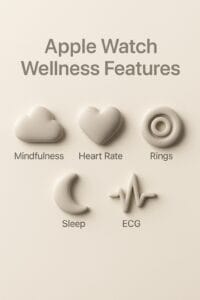
Mindfulness App: Offers guided breathing and reflection sessions that can lower stress levels in minutes.
Heart Rate and HRV Tracking: Apple Watch constantly monitors your heart rate, heart rate variability, and notifies you about irregular patterns that may indicate stress or fatigue.
Sleep Tracking: Tracks sleep duration and stages but also connects to your bedtime routine, automatically silencing notifications and dimming the screen.
Blood Oxygen and ECG: These medical-grade features (available on higher models) can detect early signs of potential issues like irregular heart rhythm or low oxygen levels—helpful for those with chronic fatigue or anxiety-related symptoms.
Apple doesn’t present data as quietly as Fitbit—it motivates you with movement rings, achievements, and daily reminders. That can feel energizing if you’re goal-oriented, or stressful if you’re already stretched thin.
2. How Apple Watch Builds Motivation
I found that the Apple Watch thrives on consistency through gamification. The three rings—Move, Exercise, and Stand—are visual nudges to stay active and mindful throughout the day.
One day, after closing my rings for a full week, I realized I was naturally walking more and standing up between writing sessions. It wasn’t about competition with others but rather about showing up for myself.
The Mindfulness app deserves special mention. On high-stress workdays, those one-minute reminders to breathe acted like small resets. It’s not exaggerated to say that those micro-pauses prevented full-blown burnout.
If you’re exploring ways to stay mentally balanced while juggling screen-heavy routines, read my post on How to Stay Healthy Working a 9-to-5 Desk Job. The structure of your day directly affects how your Apple Watch interprets your recovery and readiness data.
According to the Mayo Clinic, regular mindfulness practice—even short sessions guided by reminders—helps lower blood pressure, reduce anxiety, and improve focus. Apple’s ecosystem supports exactly that kind of structured repetition.
3. Practical Integration in an Indian Lifestyle
 Apple Watch works well for users who already live inside the Apple ecosystem (iPhone, iPad, Mac). But even in a typical Indian lifestyle, it fits surprisingly well—especially for those balancing sedentary work and fitness goals.
For example, you can set stand reminders every hour, perfect for people who spend long hours at a desk or during chai breaks. It can log workouts ranging from morning yoga to evening walks after dal-chawal.
However, one downside: battery life. The Apple Watch needs daily charging, which means you might miss continuous sleep tracking if you forget to top it up. Compared to Fitbit’s 6–7 days of backup, this is a small but noticeable inconvenience.
Another observation—the Apple Watch’s constant connectivity can become a distraction if not managed intentionally. I had to disable message notifications and limit alerts to wellness apps. Once I did that, the Watch became more of a wellness partner than a work reminder.
4. Who Apple Watch Is Best For
People who want a smart, all-in-one wellness ecosystem
Those who enjoy seeing metrics, progress, and achievements
iPhone users who want tighter data integration and intelligent reminders
Individuals who like structured motivation rather than quiet reflection
If you enjoy tracking progress and using data to improve habits, you’ll appreciate how Apple Watch visualizes your growth. But if your goal is peace and disconnection, you’ll need to customize your notifications carefully.
You can balance both sides—read my post on How to Start a Morning Routine for Mental Clarity for a structure that syncs perfectly with Apple’s reminders and daily summaries.
Affiliate Mentions
[Affiliate: Apple Watch Series 9] — best for iPhone users seeking deep health insights
[Affiliate: Apple Watch SE (2nd Gen)] — budget-friendly, reliable wellness features
[Affiliate: Apple Watch Ultra 2] — for fitness professionals or outdoor enthusiasts
Fitbit vs Apple Watch: The Honest Breakdown
By now, it’s clear that both Fitbit and Apple Watch can help you live healthier—but in very different ways. Fitbit works like a quiet wellness coach. Apple Watch feels more like a smart performance trainer.
After using both for months, I realized that what you value most—simplicity or depth, reflection or motivation—will determine which one fits your life better.
Here’s a realistic look at how they compare across wellness-focused features.
1. Feature Comparison Table
| Category | Fitbit | Apple Watch |
|---|---|---|
| Design & Comfort | Lightweight, minimal screen, no distraction | Premium design, vivid display, heavier feel |
| Ease of Use | Simple, intuitive app | More complex, integrates deeply with Apple ecosystem |
| Sleep Tracking | Extremely detailed, shows stages and recovery | Basic but improving; limited by battery life |
| Stress & Mindfulness | Dedicated stress score and guided breathing | Mindfulness app with daily breathing reminders |
| Heart Health | HRV, resting HR, readiness score | HRV, ECG, Blood Oxygen, irregular rhythm alerts |
| Battery Life | 6–7 days average | 1–1.5 days average |
| Ecosystem | Independent, works with Android & iOS | Deeply tied to iPhone ecosystem |
| Motivation Style | Reflective, habit-based | Gamified, goal-driven (rings, badges) |
| Price Range (India) | ₹8,000 – ₹18,000 (depending on model) | ₹25,000 – ₹80,000+ |
| Ideal For | Minimalists, mindfulness seekers | Data-driven users, Apple ecosystem fans |
2. Comfort and Design
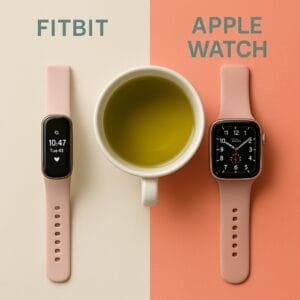 Fitbit feels almost invisible on your wrist. You forget you’re wearing it. That’s a big plus for anyone who prefers calm tracking without constant pings.
Apple Watch, however, feels more like a mini smartphone on your wrist—sleek and stylish, but heavier. During yoga or sleep, it’s noticeable. For casual users, Fitbit wins comfort-wise. For professionals who need multifunctionality, Apple takes the lead.
3. Wellness Accuracy: Sleep, Stress & Recovery
Sleep is where Fitbit shines. Its long battery life allows for uninterrupted tracking, and the sleep-stage data is both detailed and practical. You can literally see how your bedtime habits affect your next morning’s readiness score.
Apple Watch tracks sleep, but frequent charging interrupts data continuity. It compensates with additional features like Blood Oxygen Monitoring and Heart Rate Notifications—ideal if you have health conditions that need attention.
If your goal is relaxation, Fitbit’s stress management and mindfulness tracking are simpler and more intuitive. But if you’re tracking health markers over time (e.g., blood oxygen or ECG), Apple Watch gives you clinical-level precision.
4. Motivation and Habit Formation
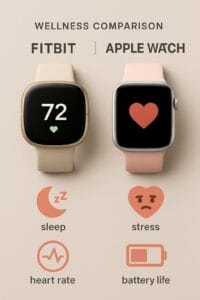 Fitbit quietly reinforces habits. You’ll find yourself walking more or sleeping earlier without being nagged.
Apple Watch is all about movement now. The “rings” system can be addictive—but also incredibly effective for structured progress.
Personally, I use Apple Watch when I need a push and Fitbit when I need awareness. Both work if you understand your temperament.
If you tend to burn out easily or feel pressured by metrics, read How to Manage Stress Naturally Without Therapy before setting aggressive goals. The insights there pair well with either device’s mindfulness reminders.
5. Data, App Experience & Integration
Fitbit’s app is calm, uncluttered, and focused purely on health data. Apple’s Health app integrates multiple dimensions—sleep, workouts, mindfulness, screen time—but can feel overwhelming.
For iPhone users, the seamless integration of notifications, Siri, and reminders makes Apple Watch a holistic wellness system. For Android users, Fitbit wins easily.
According to NCBI research, consistent self-tracking—regardless of platform—improves behavioural adherence, but users who personalize alerts and track emotional patterns see the most sustained results. That aligns perfectly with how both Fitbit and Apple Watch encourage awareness differently.
6. Battery Life and Reliability
This one’s straightforward: Fitbit lasts almost a week per charge, even with sleep and stress tracking. Apple Watch rarely lasts beyond 36 hours.
If you’re someone who forgets to charge devices (like I do), Fitbit will suit your rhythm better.
7. Price and Long-Term Value
In India, Fitbit offers solid wellness tracking even under ₹10,000, making it more accessible. Apple Watch, while pricier, delivers a full health and productivity package if you already own an iPhone.
If your goal is long-term habit formation, Fitbit offers better value. If your goal is deep health insights and motivation through design, Apple Watch justifies its premium.
Which One Is Best for Wellness Tracking (Final Verdict — The Real-World Decision)
When you compare Fitbit vs Apple Watch for wellness tracking, you’re not just choosing a gadget — you’re choosing a wellness mindset. The real difference is how each device changes your relationship with your body, movement, and rest.
Let’s unpack that with real-world context, not just specs.
1. Fitbit: The Calm, Mindful Companion
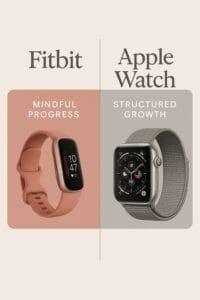 Fitbit focuses on awareness over analytics.
If you want your tracker to gently guide you instead of bossing you around, this is the one.
Why it works well for wellness:
The Daily Readiness Score tells you whether to rest or push harder, which helps prevent burnout.
Stress Management Score uses heart rate variability and skin temperature — simple but powerful indicators of how your body reacts to emotional load.
Sleep Stages & Sleep Score give clear insights without overwhelming graphs.
The Fitbit app interface feels calming. There’s less visual clutter, and the tone is supportive rather than competitive.
Its battery life (5–7 days) encourages a continuous tracking rhythm — something that improves data accuracy over time.
When I wore my Fitbit consistently, I started noticing patterns — how even small sleep debt affected my focus, or how a rushed lunch spiked my stress levels. It made me pause and adjust, not chase metrics.
Fitbit wins for:
Beginners and mindful users
Those prioritizing balance, rest, and recovery
People who want long battery life and less distraction
Recommended picks:
[Affiliate: Fitbit Charge 6 on Amazon India] — Ideal for wellness beginners
[Affiliate: Fitbit Versa 4] — More display features, still focused on health
2. Apple Watch: The Ambitious System
 Apple Watch is like a wellness lab on your wrist. It’s perfect if you thrive on goals, structure, and measurable progress.
Why it stands out:
The Activity Rings system gamifies consistency. Closing them daily actually reinforces movement and standing habits.
Heart rate tracking, ECG, and blood oxygen monitoring are clinically reliable for early health awareness.
The Mindfulness app integrates brief breathing exercises and reflection reminders.
Workout integration is unmatched — it automatically detects runs, yoga, or walks and records heart rate zones in real time.
Syncs effortlessly with iPhone’s Health app, which centralizes all your wellness data.
Apple Watch feels like having a personal trainer and productivity coach in one.
But there’s a flip side — constant notifications and goal reminders can become mentally draining if you don’t set boundaries.
Apple Watch wins for:
People who respond to data-driven accountability
iPhone users who already use Apple Health
Those who want health precision with lifestyle convenience
Recommended picks:
[Affiliate: Apple Watch SE (2nd Gen)] — Affordable entry into Apple’s system
[Affiliate: Apple Watch Series 11] — Premium experience for serious users
3. The Honest Comparison: Fitbit vs Apple Watch (2025 Summary)
| Feature | Fitbit | Apple Watch |
|---|---|---|
| Best For | Calm, consistent wellness tracking | Active, performance-driven users |
| Stress Tracking | Deep metrics (HRV, temperature) | Basic mindfulness reminders |
| Sleep Insights | Detailed and intuitive | Accurate but more clinical |
| Battery Life | 5–7 days | 18–36 hours |
| Distraction Level | Minimal | High (depends on settings) |
| App Integration | Fitbit App | Apple Health Ecosystem |
| Overall Feel | Supportive and simple | Ambitious and high-tech |
Verdict:
If your goal is inner balance, go with Fitbit.
If your goal is external performance, go with Apple Watch.
4. My Recommendation (Real-World Scenario)
You’re an office worker juggling deadlines, want to reduce fatigue → Fitbit Charge 6.
You’re a wellness blogger or fitness enthusiast tracking multiple metrics → Apple Watch Series 9.
You’re new to wellness tracking, easily distracted by tech → Fitbit Versa 4.
You’re already in the Apple ecosystem, use Apple Music or iCloud → Apple Watch SE.
And whichever you buy, wear it for at least 90 consecutive days before judging its effect.
Data without consistency is noise.
5. Internal Reading for Better Results
Once you’ve picked your tracker, your next step isn’t “tracking more.”
It’s using that data to change habits. Start with these posts:
How to Start a Morning Routine for Mental Clarity — Use your sleep data to design calmer mornings.
How to Do a Digital Detox for Mental Health — Balance tracking with tech-free breaks.
How to Manage Stress Naturally Without Therapy — Match your stress-tracking insights with real coping tools.
How to Sleep Better Without Medication — Turn sleep metrics into real recovery habits.
These posts complement your wearable’s features perfectly.
6. External Reference
A 2024 meta-analysis from the Journal of Medical Internet Research confirmed that consistency beats complexity in wearable use. People who use basic trackers daily saw greater long-term health improvements than those with advanced smartwatches who used them inconsistently.
(Source: JMIR Study)
Closing Thoughts: Awareness Beats Analytics
 The best device is the one that helps you slow down and listen to your body.
Whether that comes through Fitbit’s calm coaching or Apple Watch’s precise tracking doesn’t matter. What matters is how consistently you use it to build small, sustainable habits.
If you start today — just one change — track your sleep for a week, walk without checking your phone, and see how you feel instead of how many calories you’ve burned.
That’s the essence of wellness tracking — awareness that leads to action.




Sibani is the founder of The Calm Bloom, sharing mindful living tips, wellness guides, and practical routines for a balanced lifestyle.