Cycle Syncing for Beginners: A Practical Guide to Eating and Training With Your Hormones.
One week you feel unstoppable—next week you can’t climb stairs. It’s not laziness. It’s your hormones.
“Cycle syncing shows you how to finally work with your body instead of fighting it.”
Why Cycle Synchronization Exists (And Why Women Feel Broken Without It)
If you’ve ever wondered why you feel unstoppable one week and bloated, irritated, and fatigued the next, the answer is hormonal timing. Women are not meant to eat, exercise, work, and recuperate in the same manner every single day.

However, a male hormonal model—stable, linear, and unchanging—is the foundation of nearly every diet, exercise regimen, productivity system, and health strategy.
Women don’t run on a 24-hour cycle. Their hormone levels fluctuate over a period of around 28 days, and those fluctuations vary:
- Energy
- Hunger
- Metabolism
- Strength output
- Sleep needs
- Inflammation
- Stress tolerance
- Mood and emotional resilience.
Fighting these swings causes burnout. Working with them means making progress.
Cycle syncing isn’t about controlling hormones. It’s about changing your eating, exercise, and lifestyle habits so you can stop fighting biology and start treating symptoms that have never responded to calorie cutbacks, harsher exercises, or forced motivation.
This guide is the most basic beginning point possible. No complicated charts. No fixation with hormones. Just a structure that works in real life.
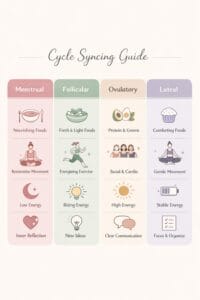
Cycle Syncing Chart: An Overview of Your Month
Before you change anything, use this as the main visual.
Phase | Typical Days | Hormone Pattern | Energy Trend | Main Focus |
|---|---|---|---|---|
Menstrual | 1–5 | Estrogen and progesterone low | Low | Rest, minerals, warmth |
Follicular | 6–14 | Estrogen rising | Medium → High | Build, plan, train |
Ovulatory | 14–16 | Estrogen peak | Highest | Perform, socialize |
Luteal | 17–28 | Progesterone rising | Medium → Low | Stabilize, recover |
Hormonal variations are confirmed to occur during these phases (Cleveland Clinic, 2023; NIH, 2022). What varies from woman to woman is intensity, not pattern.
Cycle syncing is most effective when the chart directs rather than dictates decisions.
What Cycle Syncing Actually Means (Without the Wellness Noise).
Cycle synchronization is the process of changing lifestyle factors to meet hormonal capacity. It is not four separate diets, nor is it an excuse to avoid workouts for an entire month.
It is:
- Eating to keep blood sugar stable when hormones make you more sensitive to stress
- Training harder while recovering capability is highest.
- Prioritizing rest when inflammation peaks.
- Listen to hunger fluctuations rather than fighting them.
Hormones affect fuel consumption, perceived exertion, cortisol response, and thermoregulation. The proper lifestyle rhythm reduces symptom load—not by modifying hormones, but by lowering the stress and inflammation that accompany them (Kirschbaum et al. 1999).

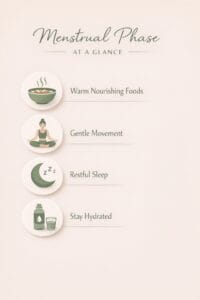
Phase 1: Menstrual Phase (Days 1–5)
What’s Happening?
Estrogen and progesterone levels fall dramatically. Inflammation increases. The need for iron increases.
Most Common Symptoms:
- Fatigue
- Cramps
- Low motivation.
- Brain fog
- Heightened emotions
Underfeeding and extensive training exacerbate the situation.
Nutrition Focus
- Iron-rich meals.
- Warm prepared meals.
- Hydration + Electrolytes
- Anti-inflammatory spices
Example meals:
- Lentil soup with rice
- Spinach Dal + Ghee
- omelette plus toast
Workout Focus
- Walking
- Mobility
- Yoga or Stretching
Phase summary
This is not a “get disciplined” zone. This week is all about healing.
When fatigue spikes early cycle, using strategies from How to Reduce PMS Naturally can reduce cramping and mood disruption.”
Phase 2: Follicular Phase (Days 6–14)
What’s Happening?
Estrogen levels grow. Insulin sensitivity improves. Mood and energy levels increase. Recovery improves.
How Most Women Feel
- Confidence building
- steady hunger
- Clearer thinking.
- Stronger workouts
Nutrition Focus
Lean proteins
- Vegetables plus fiber
- Fermented foods.
- Solid carbohydrates
Example meals:
- Yogurt Bowl with Fruit and Seeds
- Chicken/Paneer Salad
- Stir-fry with rice.
Workout Focus
This is your best training opportunity for the month.
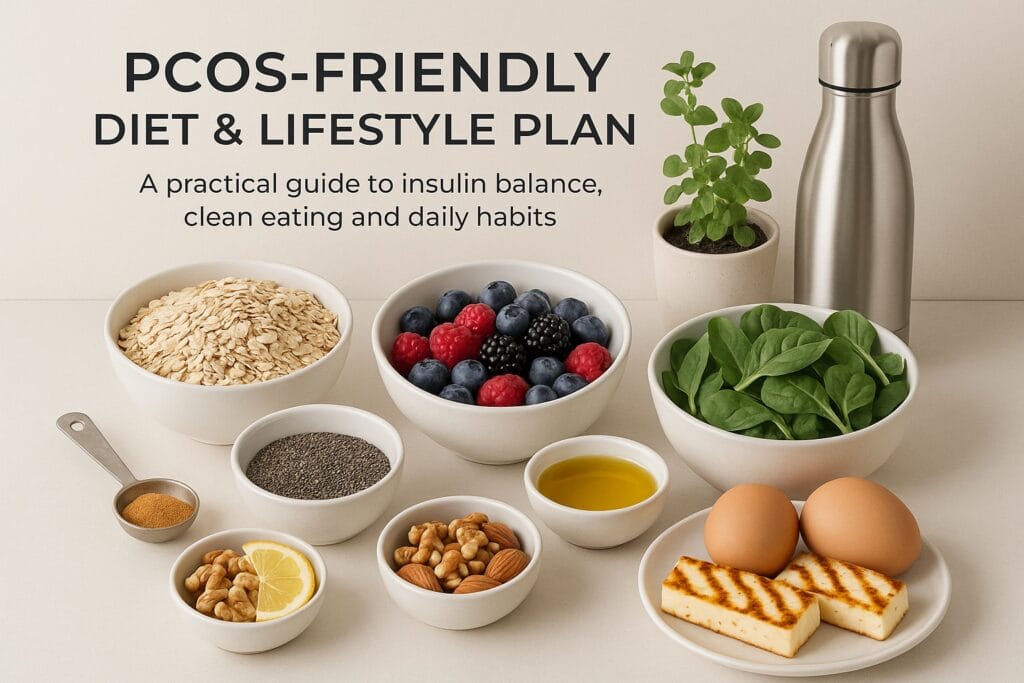
For women managing PCOS or insulin resistance, the follicular nutrition guidelines connect closely to our PCOS-Friendly Diet & Lifestyle Plan.

Phase 3: Ovulatory Phase (Days 14–16)
What’s Happening?
Estrogen levels peak. LH spikes. Neuromuscular efficiency improves.
How Women Typically Feel
- Stronger
- More social.
- Mentally sharp
- Appetite is slightly decreased
Nutrition Focus
- Do not skip meals.
- Get enough protein.
- Stay hydrated.
This period feels straightforward, yet undereating here sets the stage for luteal desires later.
Workout Focus
- Heavy lifts.
- HIIT
- Explosive sessions
If you want to pursue public relations, do so here.
If appetite drops here, follow principles explained in our How Sleep Affects Hormones article for recovery support

Phase 4: Luteal Phase (Days 17–28)
What’s Happening?
Progesterone rises. Body temperature rises. Cortisol sensitivity increases.
What Women Feel
- Increased hunger
- Bloating
- Irritability
- Lower stress tolerance.
Nutrition Focus
- Complex carbohydrates
- Protein with each meal.
- Magnesium foods
- Warm comfort food.
Calorie requirements rise by 100-300 kcal/day (Webb, 1986). Fighting hunger increases desires and raises the chance of bingeing.
Workout Focus
- Moderate loads.
- Lower intensity
- Longer rest.
- Pilates/Low Impact
Most women burn out by exerting “willpower.”
If cravings escalate, see Best Foods for Hormone Balance for magnesium & protein options to stabilize hunger.
Cycle-Syncing Meal Plan (Beginner Version)
You do not need a thousand recipes. You require phase-appropriate structure.
Menstrual
- Warm soups and stews.
- lentils
- spinach
- ginger/turmeric
Follicular
- Yogurt
- Salads
- Paneer/Chicken
- Beans with Rice
Ovulatory
- smoothies
- Grain bowls
- Vegetables with Protein
Luteal
- Oats plus nuts
- Sweet potatoes
- Khichdi
- Dark chocolate.
For more information, visit the
Cycle Syncing Workout Plan
Cycle syncing is not training less; it is training smarter.
Phase Best Approach
Menstrual Walking and mobility.
Follicular Strength and cardio
Ovulatory HIIT with power lifts.
Luteal Pilates with reduced volume.
According to research, individual variance exists, although perceived effort, temperature regulation, and fatigue tolerance are phase-dependent.
This detailed instruction connects to a hormone-friendly exercise routine.
Cycle Syncing for Weight Loss
Cycle syncing does not reduce fat by “hacking hormones.” It promotes weight loss through:
- Preventing binge-restricted cycles
- Stabilizing appetite
- Increasing workout consistency.
- Reducing sleep disruption
- Reducing inflammation
- Lowering cortisol levels
Weight loss is easier when the metabolism isn’t fighting persistent stress.
- Coming soon: A hormone-friendly weight loss guide for women.
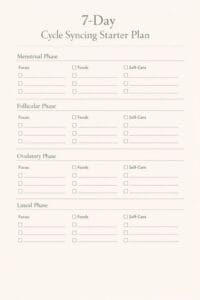
The 7-Day Cycle Syncing Starter Plan
No applications. There’s no need to worry about timing. No spreadsheets.
Days 1–2 (menstrual)
- Warm food.
- Evening walks
- Early sleep
Days 3–4 (Menstrual to Follicular)
- Protein with each meal.
- Gentle Yoga/Stretching
Days 5–7 (Follicular)
- Begin strength training.
- Increase carbohydrates.
- Track hunger and energy.
This promotes rhythm awareness without causing overload.
A downloadable template will be available soon.
Beginner Mistakes to Avoid
- Undereating during the luteal period.
- Training at maximum effort throughout the month.
- Copying influencer charts.
- neglecting sleep and stress
- Expect speedy fixes.
Cycle synchronizing operates in cycles, not days.
When Cycle Syncing Is Not Enough
Cycle syncing aids in symptom control, but you require medical assistance if you have:
- PCOS
- Thyroid diseases
- PMDD
- irregular/absentee periods
Explore : Thyroid-Friendly Foods and Habits.
Affiliate Support Section (Purpose, not Pressure)
Magnesium Glycinate (Link)
- Helps with cravings, irritability, and sleep.
- Avoid if you have kidney illness and see your doctor.
Iron(Link)
- Supports menstrual tiredness recovery, but only if lacking and tested.
Omega-3 (Link)
- Helps with inflammation and cognitive fog.
Cycle Journal (Link)
- Focus on pattern awareness rather than obsession.
Transparency matters to us. This article contains affiliate links, meaning we may earn a commission if you purchase through them. This helps support The Calm Bloom and allows us to continue creating evidence-based women’s wellness content—without influencing our recommendations.
FAQ Section
Food, workouts, and habits are adjusted to correspond with hormonal stages.
Two or three full cycles.
Not necessary. Begin with phase patterns.
Yes, utilize symptoms, not calendar dates.
References
- Cleveland Clinic (2023) Nutrition and exercise across menstrual cycle.
- Harvard Health Publishing (2023) Exercise and female hormones.
- Kirschbaum, C. et al. (1999) Menstrual cycle impact on cortisol response.
- McNulty, K. et al. (2020) Menstrual cycle and exercise performance.
- NIH (2022) Nutrition + menstrual health research.
- Oosthuyse, T. & Bosch, A. (2010) Insulin sensitivity + exercise metabolism.
- Webb, P. (1986) Energy expenditure variations across cycle.
Final Thought
Cycle synchronization is not about doing more.
It’s about giving up the struggle with your own biology.
Symptoms decrease when diet, exercise, and expectations align with hormonal reality. The pace of progress feels more consistent. Consistency becomes feasible.
That is the true gain.


Sibani is the founder of The Calm Bloom, sharing mindful living tips, wellness guides, and practical routines for a balanced lifestyle.