Introduction: My Story with Bloating and What Finally Worked
For many years, I believed that feeling bloated after meals was just part of my body’s function. No matter how healthy I thought my meals were, whether it was roti, sabzi, dal, or even fruit, I would often end up with that familiar tightness in my stomach. The discomfort was not severe, but it was enough to make me want to lie down after lunch. My excuses included my posture, my busy schedule, and even my hormones. The reality was straightforward: my digestive system required assistance, not restriction.
Like many others, I experienced periods of cutting out foods, skipping dinner, or drinking unending “detox” teas that promised to flatten my stomach overnight. None of it was lasting. What finally made a difference was shifting my focus from what to avoid to what to include. I began to pay attention to foods that aid in the efficient digestion of meals, fluid balance, and digestive system calmness. That’s when I realized that some of the best foods for reducing belly bloat were already sitting in my kitchen. Simple, traditional, and time-tested.
My complete guide to those foods and the habits that make them work is included in this post. I will provide an overview of the Indian equivalents, their scientific basis, and how to incorporate them into your daily meals—not as a diet, but as a means of achieving a lighter, more energetic, and comfortable feeling in your body.
What exactly is belly bloat?

To start with, let’s clarify that bloating is not always caused by fat. The issue lies in gas, water, and the way your digestive system is functioning. Eating healthy and exercising regularly can still make you feel bloated if your digestive system isn’t able to break down food smoothly.
deeper look at gut balance.
This is what occurs inside your body. The digestion process begins in your gut with the help of enzymes and bacteria as you ingest food. Eating a meal that is too heavy, oily, or quickly slows down the process. Food stays in the stomach longer, causing gas to build up and causing you to feel puffed up or distended. If your diet is high in salt or you sit for long hours, water retention can make things worse for some people.
In India, our meals are frequently high in carbohydrates and prepared with oil or ghee. Although it’s not necessarily harmful, if the balance of fiber, spice, and hydration is off, it can cause digestive overload. I observed that pairing heavy foods with cooling, water-rich ingredients, such as cucumber raita or lauki sabzi, significantly reduces bloating.
Bloating can be caused by poor eating habits, late dinners, or even stress. Digestion can be affected by emotional stress due to the close connection between the gut and brain. When you feel anxious or rushed, your body diverts blood from the digestive system. Eventually, that results in a cycle of discomfort and sluggishness.
If you’ve experienced this, recognize that it’s not only in your head. Your body is telling you that it requires balance, not punishment. Food can aid you in reaching your destination, which is great news.
An Indian viewpoint on digestion
Our traditional food wisdom is centered on balance, with hot and cold foods, light and heavy combinations, and meal timing. Ayurveda explains how agni, the digestive fire, governs our food processing. When digestion slows due to overeating or irregular meals, bloating follows.
You don’t have to strictly follow Ayurvedic rules to benefit from this principle. Sipping warm water with lemon in the morning or eating cooked vegetables instead of raw salads at dinner can be a simple way to ease digestion. I learned that my body responds better to gentle, cooked meals in the evening, such as moong dal khichdi, laski curry, or clear soups.
From a scientific standpoint, this also makes sense. Warm food and liquids are beneficial for enzyme activity, whereas fermented and fibrous foods nourish good bacteria in the gut. The gas and inflammation that cause bloating are reduced by them together.
So, the real goal isn’t to “detox” but to support your gut daily with foods that calm, hydrate, and nourish it. That’s what the next section covers—categorized foods that naturally reduce belly bloat and keep your digestive system strong.
Deeper look at gut balance.
Medical explanation of common digestive triggers.
Research-backed gut health insights.
- NIH on Gut Microbiome and Digestion
Understanding belly bloat – Why it happens and how food can help.
I had the misconception that bloating was something I had to endure for years. My stomach would swell like a balloon after every meal, even when I hadn’t eaten much. It was uncomfortable and sometimes painful, and to be honest, it had an impact on my confidence. It took me a while to understand that bloating isn’t always related to overeating. Your digestive system’s response to what and how you eat is a common factor.
What’s actually happening inside your body?
Bloating is simply the accumulation of gas, air, or fluid in your digestive system. The breakdown of food by your gut bacteria results in the release of gases such as hydrogen and methane. It’s normal to experience gas, but if your digestion slows, or you eat foods that don’t agree with you, it’s harder to get rid of it. It remains trapped, causing a heavy and stretched feeling.
The interesting part is that your body often gives you clues before bloating gets bad, like burping after certain foods, frequent constipation, or a sluggish appetite. Ignoring these signals can lead to a worsening situation over time.
In India, Ayurveda frequently describes bloating as an imbalance of Vata dosha, which implies an excessive amount of air and movement in the digestive tract. Whether or not you subscribe to Ayurveda, this concept is in line with modern gut science: excessive irregularity, dryness, and stress can cause digestive issues.
Causes that are common and may go unnoticed
These are some triggers that can lead to bloating for numerous individuals:
- Eating too fast results in more air being swallowed.
- Your digestive rhythm can be disrupted by irregular meal timings.
- Water retention can be caused by excessive processed food due to the high sodium and additives.
- Water is necessary to move food and gas through your intestines, so don’t skip it.
- Overindulging in raw foods: While raw salads are healthy, they can be difficult to digest for certain individuals.
- Common yet often unnoticed causes of lactose or gluten sensitivity.
I realized that fixing bloating isn’t about avoiding entire food groups. It’s about learning what your body can handle, then slowly improving digestion with the right foods.
The reason why food is the most natural fix
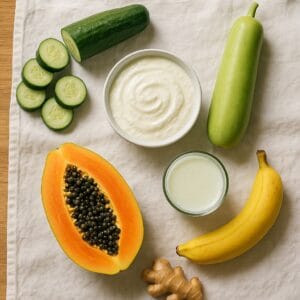
Food is more effective than quick remedies like antacids or digestive tablets. Your belly will naturally feel lighter when you consume foods that support your gut bacteria, reduce inflammation, and move things along gently.
For instance:
- Cucumber and laski (bottle gourd) are effective in reducing water retention.
- Ginger and fennel seeds have a stimulating effect on digestion.
- Friendly bacteria can be introduced by introducing curd and buttermilk.
- Banana and papaya have a soothing effect on the digestive lining.
It’s not about eating less; it’s about eating smartly and in a balanced way.
I will break these down into four simple food categories that you can incorporate into your day, and show you how to combine them in an Indian-style routine that works.
Reducing belly bloat naturally through 4 food categories
Eventually, I began to pay attention to my gut and discovered that it wasn’t just what I was eating, but how those foods worked together. Your digestive system can be soothed by certain foods, while others help to hydrate and flush toxins, and a few can gently re-balance your gut bacteria. Your belly will slowly feel flatter and lighter without any extreme measures when you combine all of them correctly.
Let’s examine the four primary food groups that have a positive impact.
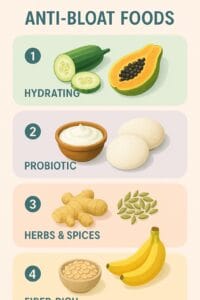
1. Hydrating and Detoxifying Foods
Your stomach may feel puffy or swollen when your body retains too much water. The trick is not to cut down on water, but to eat foods that help your body release it naturally.
Best Choices
- Cucumber is cooling and water-rich, and helps flush out sodium.
- Lauki (bottle gourd) is easy to digest and great for light dinners.
- Watermelon is high in potassium, which balances sodium and prevents water retention.
- Coconut water is a natural source of electrolytes that keep digestion smooth.
- Jeera Water (Curry Water) is a simple Indian detox drink that supports digestion.
My goal is to include at least one of these at every meal. For example, adding cucumber raita to lunch or sipping coconut water in the mid-morning makes a real difference.
Simple Tip:
If you wake up bloated, make sure to skip tea or coffee first thing in the morning. Begin your day with warm water and a pinch of turmeric or cumin instead of anything else. It signals your gut to gently wake up.
Indian Twist:
Take a look at our summer classics, lauki sabzi, chaas, and fresh fruit bowls. The reason older generations don’t complain about bloating is not just due to their lightness.
2. Probiotic and Fermented Foods
To keep digestion smooth and reduce gas buildup, a healthy gut requires good bacteria. Bloating is a result of food fermenting inside your stomach when your gut flora is unbalanced. Restoring that balance is aided by probiotic foods.
Best Choices
- In Indian homes, curd (Dahi) is the most readily accessible probiotic.
- To prevent bloat, add roasted jeer and a pinch of black salt to chaas (buttermilk).
- Idli and dosa batter undergoes natural fermentation and is easily digestible.
- Homemade pickles or kanji can be beneficial in small amounts to promote good gut flora.
Within a week, my digestion improved when I switched from aerated drinks to chaas for lunch. It’s a refreshing and light option that works better than packaged probiotics.
Pro Tip:
Avoid sugar-flavoured yogurts or commercial probiotic drinks. The sugar content is often higher than the benefits.
3. Soothing Herbs and Spices
This is where Indian kitchens excel. Our daily spices are a quiet healer that help reduce gas, improve metabolism, and soothe inflammation.
Essential Spices for Relieving Bloat
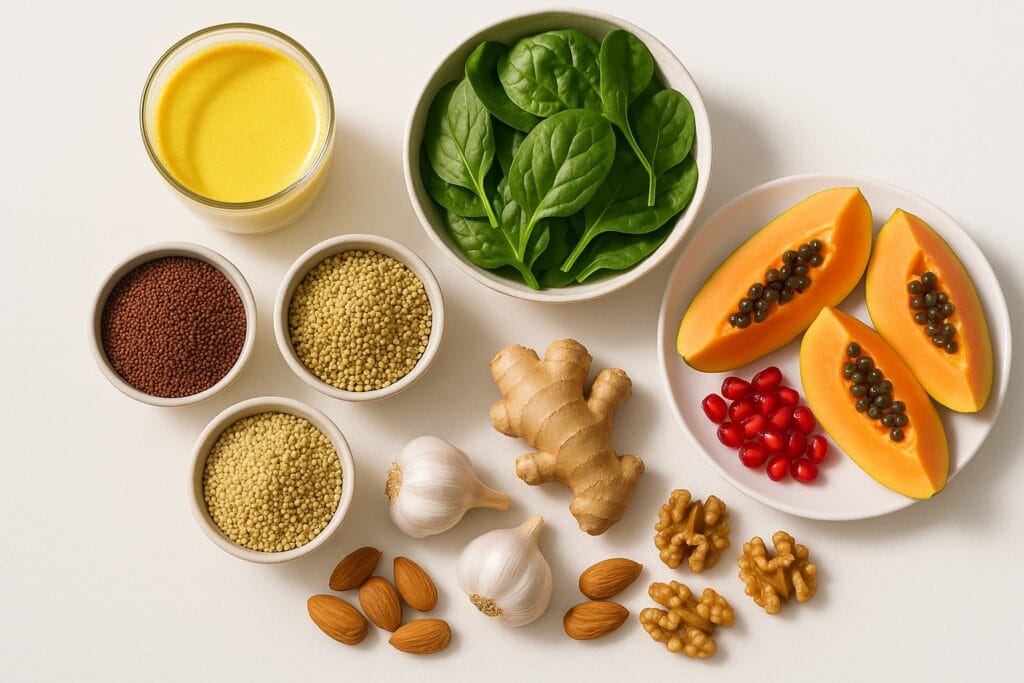
- Ginger stimulates digestive juices and reduces gas.
- Fennel seeds (Saunf) are an essential post-meal ingredient that soothes the stomach.
- Heavy foods can be broken down by Ajwain (Carom Seeds).
- Cumin (Jeera) has the ability to boost digestion and decrease water retention.
- Turmeric is anti-inflammatory and supports liver function.
You don’t have to use all of them daily; Just pick two or three that fit your meals. For example, I include crushed ginger in my morning tea, cumin in my tadka, and fennel water after dinner.
Indian Twist:
Give this simple anti-bloat tea a shot:
Bring water to a boil and stir in 1 teaspoons of cumin, fennel, and ajwain. Allow it to simmer, filter, and sip it warm after meals. It’s soothing, particularly after a heavy lunch.
4. Fiber-Rich and Gut-Calming Foods
 Fibre keeps your digestion moving and prevents constipation, which is a major cause of bloating. But it’s important to go slowly. Getting too much fiber too quickly can cause problems, so it’s important to strike a balance.
Best Choices
- Papaya contains enzymes that help break down proteins.
- Banana is rich in potassium and helps with fluid balance.
- Oats are gentle on the stomach and keep you full.
- Dal and lentils are a great source of soluble fiber. Just soak them well before cooking.
Fiber can be added to your diet without adding weight by eating leafy greens such as spinach or methi (fenugreek).
Having a small bowl of papaya in the evening or a banana for breakfast is a fantastic way to eat. When I started replacing processed snacks with fruits, I noticed a natural improvement in my digestion.
Pro Tip:
Always drink enough water with fiber-rich foods. Fiber absorbs water, so staying hydrated keeps digestion smooth.
The Anti-Bloat Meal Plan for a One-Day Indian
After understanding which foods reduce bloating, I realized that the next step is practical application. Knowing the foods is one thing, but incorporating them into your daily meals without feeling like you’re on a strict diet is another. Over time, I have created a routine that is gentle, balanced, and satiates my hunger while also calming my stomach.
The routine for mornings (7:00–8:00 AM)
Warm Jeera water
Begin your day with a glass of warm water that’s infused with 1<unk>2 teaspoons of cumin seeds. I drink this slowly, allowing the heat to awaken my digestive system. By flushing overnight toxins and preparing my gut for the day, it helps me get ready for the day.
For an extra touch, add a few slices of papaya or a small banana. The body is hydrated and digestion is gently stimulated by both fruits.
Breakfast will be served from 8:30 to 9:30 AM
Idli with mint-coriander chutney and curd.
Idles that are soft and steamed have been naturally fermented, are light, and easy to digest. Pairing them with homemade chutney adds flavour without adding heaviness. Probiotics are introduced into plain curd to keep the gut bacteria happy.
A substitute is Moong dal cheela with a hint of ginger chutney. Soluble fiber is provided by lentils, and ginger aids digestion.
It is recommended to eat slowly, chew well, and sip warm water if needed. Mindful eating prevents excessive air swallowing, which can contribute to bloating.
A snack during the middle of the day (11:00 AM–12:00 PM)
Watermelon or Muskmelon Bowl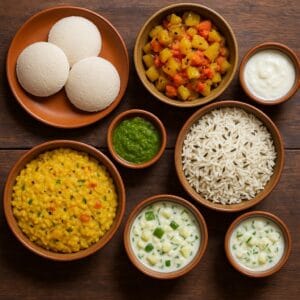 A fruit snack that is hydrating keeps you energized without being too heavy on your stomach. To enhance digestion and decrease water retention, add a pinch of black salt and roasted cumin powder.
Tender coconut water is an alternative beverage for electrolytes and light hydration.
We will be having lunch from 1:00–2:00 PM
Lauki is made with Lauki, Tomato Sabzi, Jeera Rice, and Curd
- Lauki is light and cool, which naturally reduces bloating.
- Jeera rice is simple and easy to digest.
- Curd provides probiotic support for gut bacteria.
You can add a small spoon of naturally fermented pickle if you like. Without adding weight, it stimulates digestion and adds flavour.
Tip :Avoid eating too much. Fill half of the plate with vegetables, a quarter with rice, and a quarter with protein (dal or lentils). Drinking chaas after lunch helps prevent puffiness in the afternoon.
Snack in the afternoon (4:00–5:00 PM)
The choice of tea is between Green Tea and Ginger-Fennel Tea
The use of warm teas can help with digestion and reduce bloating. Add some soaked almonds or roasted chickpeas to enhance the protein content.
The evening is between 6:00 and 7:00 PM
Papaya or Banana Smoothie
A small smoothie made with papaya, banana, and yogurt can keep the gut happy while also providing soluble fiber. For additional digestive support, I frequently include a pinch of cinnamon or fennel powder.
Dinner will take place from 7:30–8:30 PM
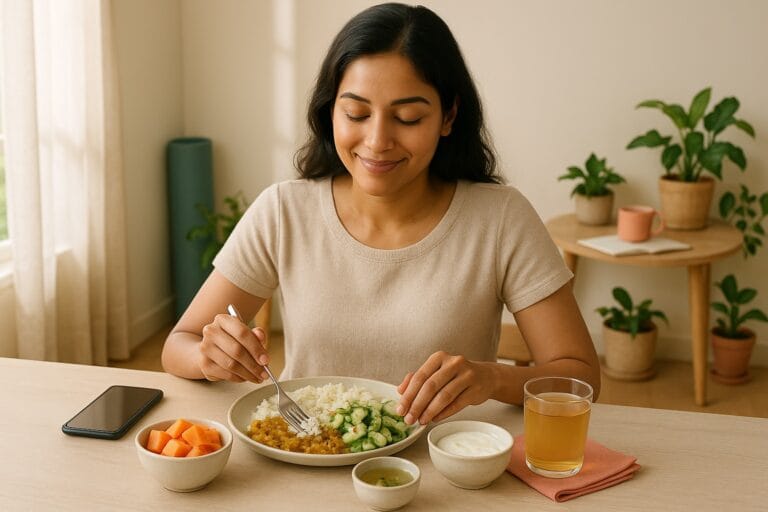
Moong Dal Khichdi, mint chutney, and cucumber raita.
Khichdi is light, soothing, and easy to digest. The meal is hydrated and balanced with the addition of cucumber raita, and the cooling digestive support of mint chutney.
Make dinner simple and finish it at least 2 hours before bedtime. Overnight bloating can occur due to eating late or heavy meals.
The daily habits that support these meals
- Proper chewing helps digestion by reducing swallowed air.
- Hydrate between meals: Avoid drinking large quantities of water during meals; sip steadily instead.
- Gentle movement can help digestion by taking a 10-15 minute walk after lunch.
To manage stress, try deep breathing or short meditation sessions that can soothe the gut-brain axis.
Within a week, my bloating decreased significantly after following this simple daily routine. My stomach felt lighter; meals were more pleasurable, and I felt more energetic throughout the day.
Common mistakes that cause bloating and lifestyle changes
Identifying foods that reduce bloating is one thing, but if your digestion is constantly sabotaged by habits, even the healthiest meals won’t be effective. Over the years, I have noticed that small everyday mistakes often cause the worst bloating, even when I am eating well. Recognizing and adjusting these habits resulted in a significant improvement.
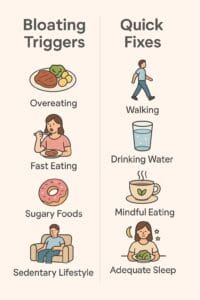
1. Eating Too Quickly
Rushing through meals was a simple trigger that I struggled with. During our hectic lives, it’s effortless to grab food and eat while checking our phones or working at our desks. Eating quickly can cause you to swallow more air, resulting in gas buildup and bloating.
What I changed: I began dedicating at least 20-25 minutes for lunch and dinner, chewing slowly, and savouring each bite. My stomach felt lighter, and I was surprised by my satisfaction with smaller portions.
It’s important to put your phone away and concentrate on your plate. The importance of mindful eating is equal to that of the food itself.
2. Overeating, Even Healthy Foods
Excessive consumption of even the ‘best foods for reducing belly bloat’ can lead to discomfort. For example, eating too much papaya, curd, or khichdi in one sitting can overwhelm the digestive system, leading to gas and heaviness.
I started paying attention to my body’s signals and stopped when I felt 80% full, saving the rest for later if necessary. Although it’s a small change, it has a significant impact on bloating.
3. Drinking Too Much Water During Meals
Although staying hydrated is crucial, I used to drink a lot of water before meals, believing it would aid in digestion. Instead, it depleted stomach acids, slowed digestion, and occasionally caused puffiness.
Drinking water in small amounts while eating and staying hydrated between meals is a better practice. Drinking warm beverages such as jeer water or ginger tea is a great way to aid in digestion.
4. Ignoring Food Combinations
Even if each item is healthy, certain food combinations can cause bloating. For example:
- Milk and raw fruits are mixed together
- Lentils paired with a lot of fried foods
- Spicy meals are served with cold drinks
Gas can be produced in the stomach by fermentation of these combinations. I began to notice which combinations were irritating my digestion and gradually adjusted them.
5. Sedentary Lifestyle
Sitting for extended periods, particularly after meals, has a negative impact on digestion. I found that a short walk, even five minutes, after lunch or dinner helped move things along. The use of gentle stretching or yoga can also help to reduce trapped gas and improve circulation.
Lifestyle tweaks that enhance anti-bloat foods.
- Gentle movement, such as daily walks, yoga poses like pawanmuktasana, or light stretching, can help prevent gas build up.
- Stress triggers digestive slowdowns. To reshape my gut-brain axis, I employ deep breathing, journaling, or brief meditation.
- Bloating is increased and digestion is affected by irregular sleep schedules. Consistent sleep helps regulate appetite and digestion by regulating hormones.
- To avoid overnight bloating, it’s important to finish dinner at least 2–3 hours before bedtime.
For stress-digestion connection.
Advice on meal habits and lifestyle.
Research-backed insights
 Bloating doesn’t have to be a daily discomfort. By including the right foods, eating mindfully, and adjusting small habits, you can take control of your digestion naturally. Start small—maybe add one hydrating food, one fermented dish, or a simple digestive tea today. Over time, these changes stack up and create real, lasting relief.
Remember, it’s not about a strict diet. It’s about understanding your body, enjoying your meals, and feeling lighter and more comfortable in your own skin. If I can do it, anyone can. Start with one step today, and notice how your belly—and your energy—feel calmer by tomorrow.

How to Balance Hormones With a Busy Schedule
Home How to Balance Hormones, Boost Energy & Stay Fit...
Read More
How to Reduce Phone Addiction.
Home Reduce Phone Addiction : 10 Realistic Strategies That Actually...
Read More
AI and Mental Clarity
editorial minimalist illustration, cognitive pause, negative space, cool neutral palette,...
Read More
How to Improve Fertility Naturally
Home How to Improve Fertility Naturally: What Actually Affects Ovulation,...
Read More
Sibani is the founder of The Calm Bloom, sharing mindful living tips, wellness guides, and practical routines for a balanced lifestyle.