AI and Mental Clarity: How AI Use Affects Focus, Judgment, and Cognitive Effort
AI and mental clarity are often confused.
AI makes thinking faster, but speed is not the same as clarity. Over time, the difference matters more than most people realize.
“Efficiency can increase output, but clarity depends on how much thinking you keep for yourself.”
Table of Contents
Introduction
AI tools are now an integral part of everyday thought. They are used for writing, summarizing, planning, deciding, and even reflecting. The popular notion is that this saves mental energy and promotes clarity. This is just partially true.
AI consistently boosts productivity. Mental clarity is distinct. Clarity is not related to speed or production. It is about internal coherence, the ability to hold ideas, consider possibilities, accept uncertainty, and rely on your own judgment under duress.
When used improperly, AI decreases cognitive effort in the short term but gradually decreases focus, memory, and judgment confidence. Many people feel productive but mentally disjointed, active but unclear. AI and mental clarity can coexist when tools are used purposefully to enhance thinking rather than subtly replace it.

This article describes how using AI impacts mental clarity, why the pattern occurs, how it manifests in day-to-day living, and what is beneficial. Don’t panic. Do not adore technology. Just a clear picture of what is going on and what has to be done about it.
AI and Mental Clarity – Why does this pattern exist?
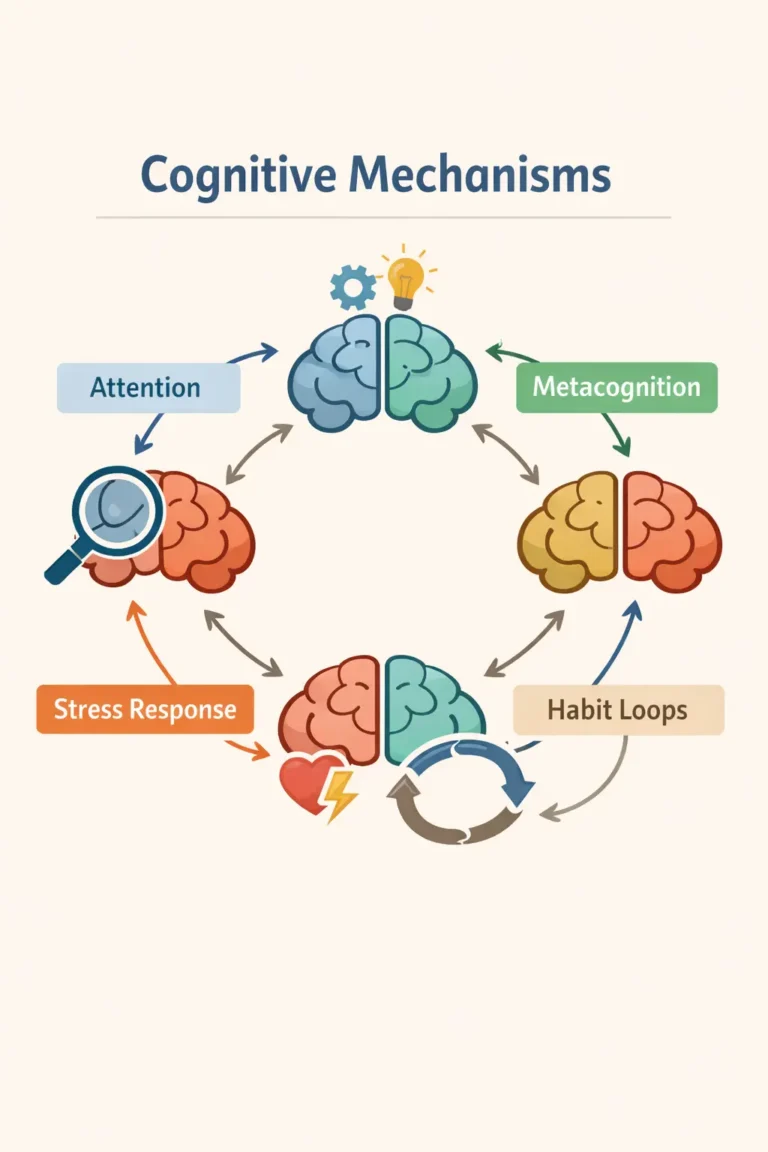
AI has an impact on mental clarity via attention, stress reaction, habit formation, and metacognition. The problem isn’t a loss of intelligence. It’s how frequently we delegate involvement rather than work.
The following key mechanisms are in play:
Cognitive offloading
AI reduces the amount of time the brain spends practicing writing, remembering, and problem-solving. Although this is effective in the short term, excessive use impairs mental acuity.
Attention Fragmentation
Switching between prompts, outputs, revisions, and notifications develops superficial attention. Sustained focus becomes more difficult when the brain adapts to constant context changes.
Reduced error feedback.
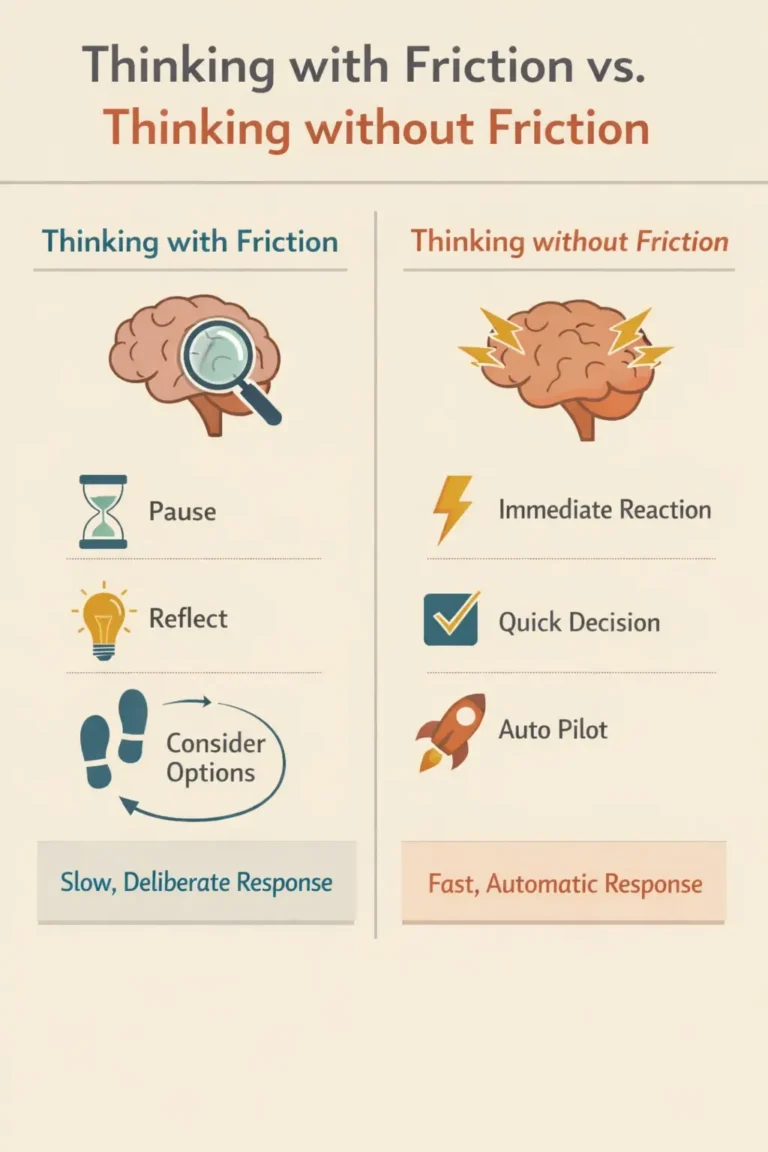
When AI fills gaps, it removes the friction that ordinarily promotes learning and judgment. Errors are fixed before they are discovered, which hinders the development of skills.
Reduced metacognition.
When AI structures thinking, individuals think less about how they think. This reduces self-monitoring, reasoning confidence, and the ability to transfer knowledge between contexts.
Stress management and uncertainty avoidance
Quick responses ease discomfort. Tolerance for uncertainty decreases over time. This raises baseline mental stress, making ambiguity appear frightening rather than manageable.
Habit loops.
Convenience encourages usage. The brain learns to seek out AI before attempting independent reasoning. This is typical behavior in a low friction environment.
This is not considered a moral failing. It describes how human intellect responds to tools.
AI and Mental Clarity – How This Affects Everyday Life
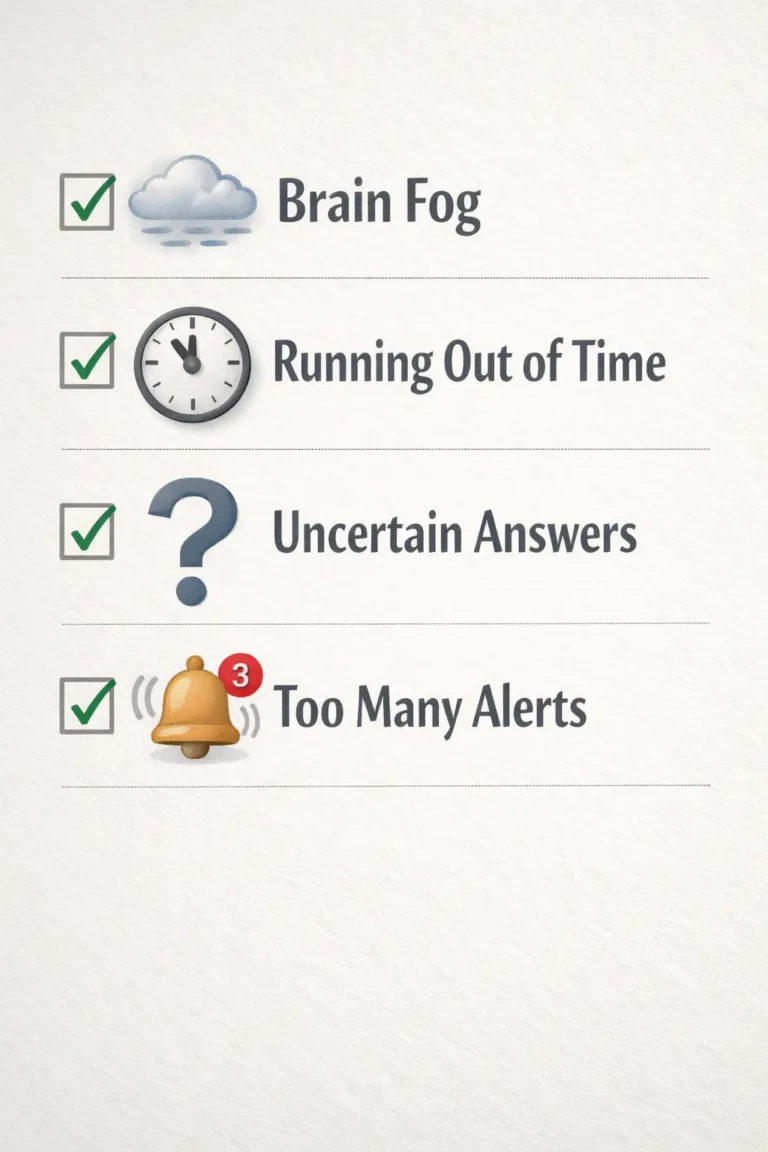
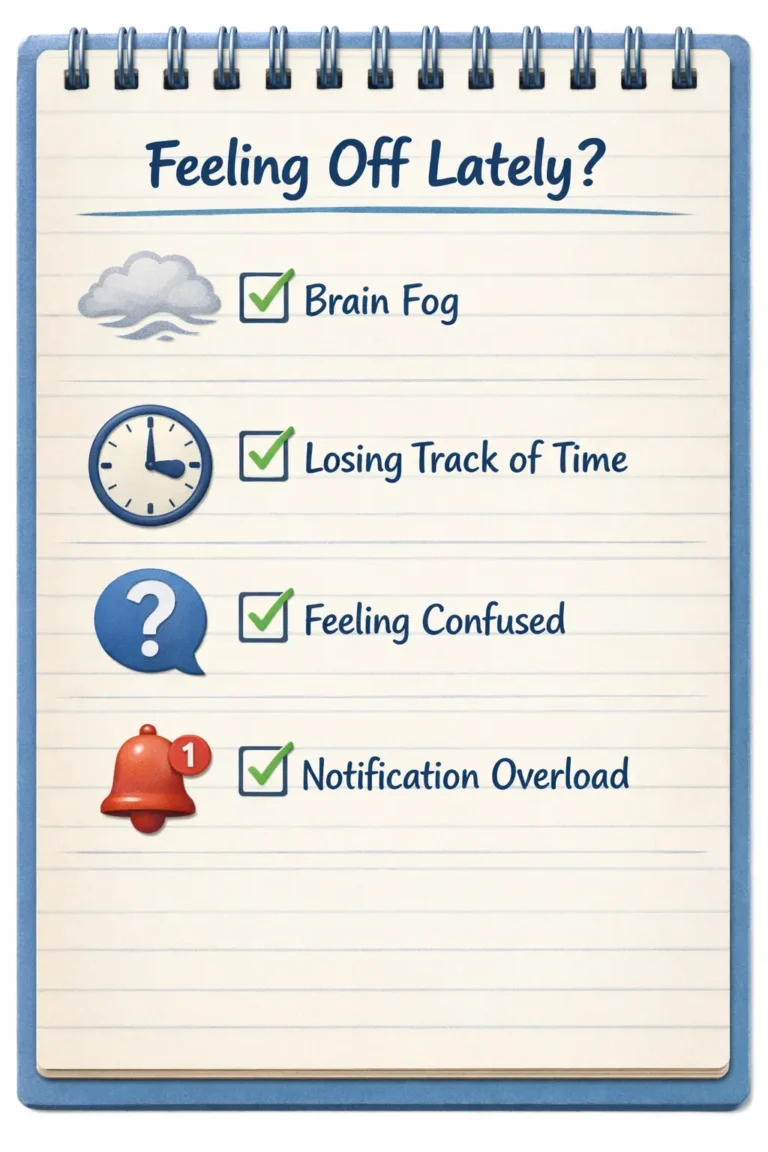
Common symptoms of AI influencing mental clarity include:
- Difficulty beginning tasks without external assistance
- I feel like I’m cognitively active but not clear.
- Decreased trust in personal judgment
- Struggling to organize thoughts without prompts
- Deep work causes faster mental exhaustion.
- Increased restlessness when answers are not immediately available
- Less patience for complicated or unclear problems.
* How to Stop Overthinking Without Forcing Positivity
More subtle indicators are frequently overlooked:
- Needing reassurance after making a decision
- Difficulty explaining thinking without using reference tools.
- Over editing AI-assisted work since it does not feel entirely owned.
- A vague dissatisfaction after finishing duties despite satisfactory outcomes.
None of this suggests that AI is inherently bad. It indicates an imbalance between assistance and cognitive engagement.
AI and Mental Clarity – What Actually Helps
The idea is not to use artificial intelligence less. Using it in a different way is the goal.
The guiding principle
- Use AI to reduce work, not to replace interaction.
Practical modifications that preserve mental clarity:
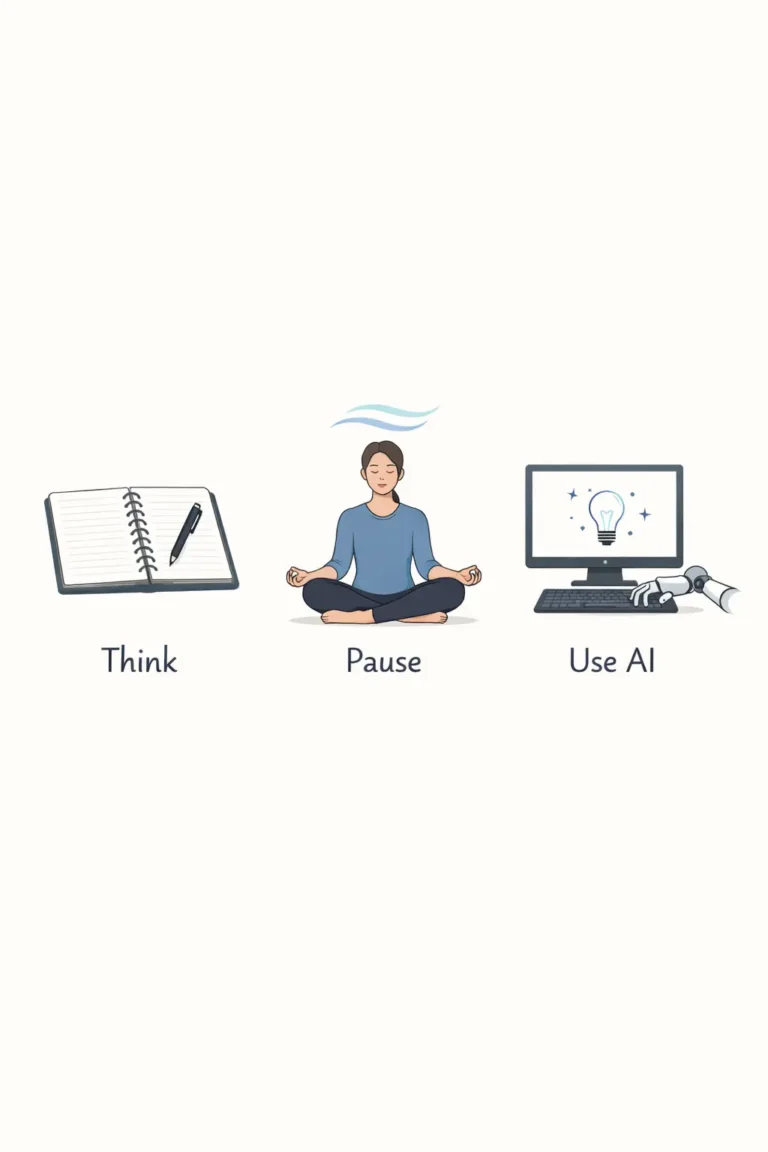
Use AI after thinking, not before.
- Begin by writing or outlining your thoughts. Use AI to revise, stress test, or restructure rather than start from scratch.
Limit task types
- Don’t use AI for everything. Use it for repetitive, mechanical, or review jobs in which judgment is not the core talent.
Creating friction on purpose.
- Delay using AI by five minutes. Prior to prompting, try recalling or solving problems. Productive struggle boosts concentration and learning.
Batching AI sessions
- Use AI during specific time frames. Avoid frequent prodding throughout the day.
Preserve your profound focus.
- Keep serious thought time apart from AI-assisted work. When reading, planning, or writing reflectively, stay away from AI.
Regulate the nervous system
- Take short walks. Reduce the number of open tabs. Breaks without inputs. A calmer nervous system allows for clearer thinking.
These modifications lessen cognitive dependency without eliminating essential tools.
For more comprehensive attentional techniques, see to Mindfulness Habits for Mental Wellness.
AI and Mental Clarity – When to Get Extra Assistance
Using AI can intensify stress patterns that already exist rather than create new ones.
Consider further help if:
- Despite sleep and habit modifications, mental fog endures.
- Stress feels permanent rather than momentary.
- Concentration issues impact work or relationships.
- Anxiety heightens when tools are lacking.
It is critical to differentiate between AI-related behaviours and underlying fatigue, worry, or overload. AI frequently highlights these problems rather than creating them.
When self-regulation is no longer successful, professional assistance is necessary. This isn’t a fail. That’s a limit.
FAQ Section
No, AI does not decrease IQ. It affects the way cognitive effort is distributed. When AI replaces rather than supports thinking, some skills such as recall, judgment formation, and sustained attention are less frequently used. The capacity remains, but it is less used.
Yes, when used purposefully. AI can help with mental clarity by organizing knowledge, summarizing difficult content, and decreasing unneeded cognitive burden. Problems develop when it takes the place of reflection, decision-making, or problem solving rather than supporting them.
The problem isn’t just frequent use. Unstructured, reactive use exists. Constant moving between prompts, outputs, and revisions disrupts attention and lowers focus. Using AI in specified blocks with a clear aim helps to preserve attention capacity.
It is rarely essential to stop totally. When boundaries are altered, mental clarity improves more consistently. Separating AI-assisted chores from deep thought time and pondering before prompting can frequently help to restore equilibrium.
Quick responses alleviate short-term suffering while simultaneously reducing tolerance for uncertainty. This can lead to an increase in overall mental strain over time. Stress is produced not by AI, but by how it interacts with pre-existing pressures, weariness, and cognitive overload.
Conclusion
AI isn’t the issue. It’s unconscious use.
The true danger is not getting less intelligent, but rather being less involved with your own thoughts. When efficiency is confused with clarity, production rises while internal coherence subtly decreases. Ideas come faster, but judgement feels weaker. Decisions are taken, but they do not always feel owned.
There is more to mental clarity than precision or speed. It requires focus, tolerance for uncertainty, and the ability to reflect on how you think rather than just what you produce. When those processes are outsourced too frequently, confidence decreases, even as results increase.

This does not need dismissing AI or adopting productivity discipline. It requires boundaries that keep effort where it is needed. First, think. Fight for a moment. Use tools to enhance, not replace, interaction.
Clarity is not optimization; it is maintenance. It is constructed by regular, intentional constraints that protect attention, judgment, and ownership over time. Pay attention to how you utilize tools, not just the ones you employ. That alone affects the outcome.

Sibani is the founder of The Calm Bloom, sharing mindful living tips, wellness guides, and practical routines for a balanced lifestyle.