Introduction
Lower back pain has become one of the most common health issues of our time, even though it’s not widely known. It’s common to experience disruption when sitting at your desk for long hours, carrying heavy bags, or just waking up with a stiff spine. In India, where urban lifestyles often combine long commutes, desk jobs, and limited movement, back pain is becoming increasingly common among both young professionals and older adults.
What’s the good news? Painkillers or expensive treatments aren’t the only way to get relief. For centuries, yoga has been used to restore balance and alleviate physical discomfort by combining mindful movement and gentle stretching. Yoga, unlike quick fixes, addresses the root causes of back pain, which are tight muscles, weak core, poor posture, and even stress.
This guide will guide you through 10 of the best yoga poses for lower back pain. Each pose comes with detailed instructions, benefits, and safety tips. You’ll be able to find suggestions for supportive Indian products such as yoga mats, props, ayurvedic oils, and herbal teas that can aid in deepening your practice.
Checking out our blog on How to Stay Healthy Working a 9-to-5 Desk Job is important if you spend your days sitting at a desk.
For more tips on saving posture. If you’re battling inflammation or stress, you can check out our articles on Reducing Inflammation Through Diet and Managing Stress Naturally Without Therapy. Together, these resources can provide a comprehensive approach to bringing lasting relief and energy to your daily life.
As an Amazon Associate, I earn from qualifying purchases.
Section 1: Understanding Lower Back Pain
It’s important to comprehend why lower back pain occurs in the first place before jumping into poses. It is commonly believed that aging is the cause, but lifestyle plays a major role.
The common causes of lower back pain:
- A sedentary lifestyle involves prolonged sitting hours, which weaken the core muscles that support the spine.
- Slouching or leaning forward at a desk can cause uneven pressure on spinal discs due to poor posture.
- Muscle imbalances can cause strain to the lower back, including tight hamstrings, weak glutes, or stiff hips.
- Mental tension is often manifested physically, particularly in the back and shoulders.
- Chronic inflammation in the body can make pain worse.(You can explore our post on Reducing Inflammation Through Diet.).
Medical research supports yoga as an effective and safe approach for non-specific lower back pain. According to Harvard Health Publishing, yoga strengthens supportive muscles, improves posture, and reduces stress levels, all key contributors to back discomfort. [Link :Harvard Health].
Yoga is more than just exercise due to the balance of movement, breathing, and awareness. By using this tool, the body and mind can be gently realigned while enhancing flexibility and blood flow.
Section 2: 10 Best Yoga Poses for Lower Back Pain
Each of these poses is beginner-friendly, safe when practiced mindfully, and effective in relieving tension in the lower spine.
1 – The cat-cow position (Marjaryasana-Bitilasana).
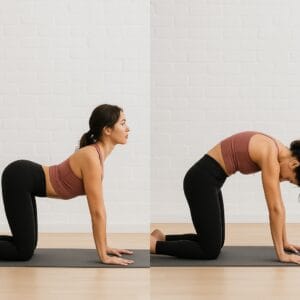 If you feel stiff after sitting all day, Cat-Cow is a great starting point. This gentle flow synchronizes movement with breath and prepares your back for more intense stretches.
Step-by-step:
1. Begin on all fours, placing your wrists directly under your shoulders and knees under your hips. Spread your fingers to ensure stability.
2. When you take a deep breath, drop your belly towards the floor, lift your chest forward, and gently tilt your tailbone upward (similar to Cow Pose).
3. When you take a deep breath, round your back towards the ceiling, tuck your chin towards your chest, and draw your navel inward (this is Cat Pose).
4. Continue this slow rhythm, moving with your breath for 8-10 rounds.
Benefits:
- Enhances the mobility of the entire spine, especially the lumbar region.
- Increases blood flow to spinal discs, which reduces stiffness.
- Helps develop support for the lower back by engaging core muscles.
- Ease mental stress – rhythmic breathing has a calming effect on the nervous system.
Common Mistakes to Avoid:
- Keeping the shoulders away from the ears by collapsing them towards the ears.
- Focus on smooth, controlled movements when moving over the lower back when riding a cow.
- Moving too quickly without synchronizing breath.
Modifications & Variations:
- Place a folded towel under your knees if they feel sensitive.
- If your wrists ache, make fists or come down on your forearms.
- If it’s hard to get onto the floor, try sitting on a chair (perfect for office breaks).
Precautions:
- Avoid if you have severe wrist pain or recent spinal surgery.
- Move gently if pregnant, especially in later stages.
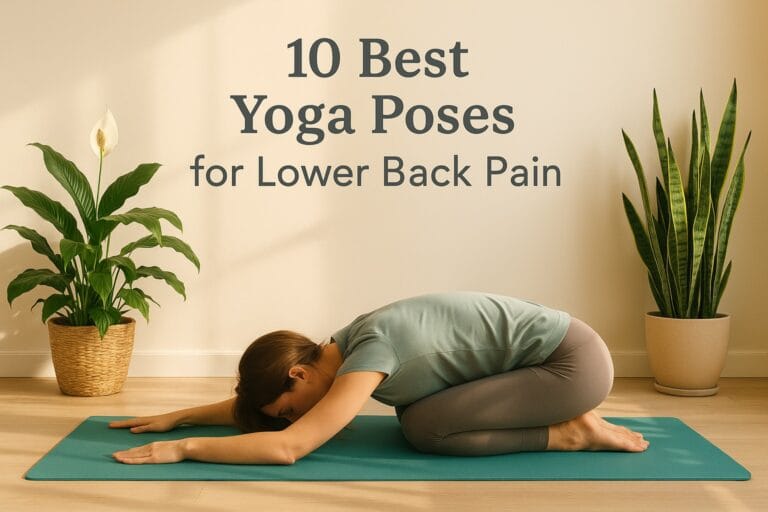
2 – Child’s pose (Balasana)
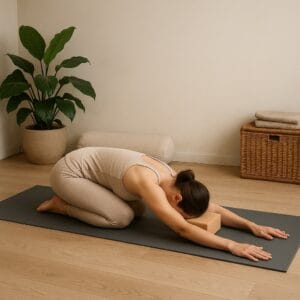 Balasana is a resting posture that provides immediate relief when your back feels tight. This pose is highly recommended for both physical and emotional release because it lengthens the spine and calms the mind.
Step-by-step:
1. Stand on the floor with your big toes touching. To achieve a deeper stretch, widen your knees slightly apart.
2. Sit back on your heels. Slowly bend your body forward and place your forehead on the mat.
3. Extend your arms forward with palms facing down for a gentle stretch, or rest them alongside your body for a more restorative version.
4. Inhale deeply into your lower back and stay there for 1–2 minutes.
Benefits:
- Stretches the spine, hips, and thighs without putting any pressure on them.
- Relieves tension in the lower back by gently lengthening it.
- Promotes relaxation by activating the parasympathetic nervous system.
- When held for a longer period, it can help alleviate anxiety and fatigue
Common mistakes that should be avoided:
- Make sure to allow a natural distance between your hips and heels.
- Holding breath – focus on slow, deep breathing with a deep belly
- Overstretching arms and lifting shoulders towards the ears.
Modifications and variations
- Place a cushion or bolster between the thighs and chest for support.
- If your knees are wide and make you uncomfortable, try to keep them together.
- To increase the back stretch, try the extended Child’s Pose with arms stretched forward.
Precautions:
- Avoid if your knee pain or injury is severe.
- Pregnant women should practice with their knees wide apart to make space for their belly.
3 – Sphinx pose (Salamba Bhujangasana).
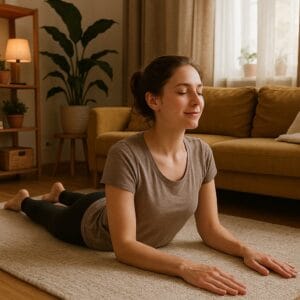 This gentle backbend strengthens the spine without straining it. For beginners who may find deeper backbends like Cobra too intense, this is a safe option.
Step-by-step:
1. Lie flat on your stomach, legs extended with the tops of your feet pressing into the mat.
2. Place your forearms on the mat, elbows under your shoulders, and your forearms parallel.
3. Press your forearms into the floor while inhaling and lifting your chest forward and upward.
4. Keep your pelvis and thighs grounded, and gaze softly ahead.
5. Hold for 30-60 seconds while breathing steadily
Benefits:
- Helps to strengthen lower back muscles that are often weakened by prolonged sitting hours.
- Opens up the chest and enhances lung capacity.
- Increases the flow of blood to the spine and abdominal organs.
- Aids in preventing slouching and “tech neck”.
Common Mistakes to Avoid:
- Shrugging shoulders up towards ears (keep shoulders relaxed).
- A gentle lift should come from the upper back over the lower back.
- It’s not the right way to breathe evenly if you hold your breath
Modifications & Variations:
- Place a folded towel under your pelvis if you feel pressure.
- For a gentler version, lower your chest slightly and rest more on your forearms.
- To advance, lift your palms underneath your shoulders and move into Cobra Pose.
Precautions:
- Avoid if you have a severe lower back injury or slipped disc.
- Not recommended during pregnancy.
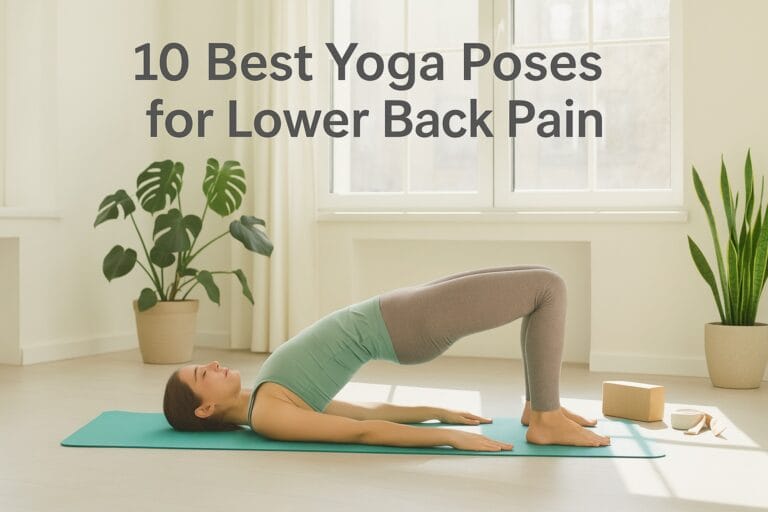
4 – Bridge pose (Setu Bandhasana).
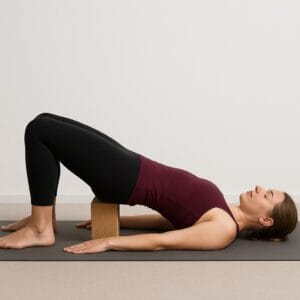 The Bridge Pose strengthens the glutes and lower back, while also gently extending the chest and hips. It is particularly valuable for individuals who experience back pain from weak muscles due to this strengthening component.
Step-by-step:
1. Lie down flat on your back, with your knees flexed, your feet hip-width apart, and your heels near your hips.
2. Place your arms and feet on the floor, and while inhaling, slowly lift your hips upward.
3. Keep your thighs parallel and prevent your knees from splaying outward.
4. For additional stability, try interlacing your fingers under your back and pressing your arms into the mat.
5. Hold for 30-60 seconds, then release slowly.
Benefits:
- Enhances the strength of gluteal muscles, hamstring muscles, and spinal muscles.
- Improves posture and opens the chest.
- The thyroid and lungs are stimulated to reduce fatigue.
- A mild inversion is provided, which improves blood flow to the brain.
Common mistakes that should be avoided:
- It’s possible to cause strain in the lower back by lifting hips too high.
- Spreading your knees apart instead of keeping them parallel.
- Putting too much weight on the neck rather than the shoulders.
Modifications & Variations:
- To perform the supported bridge pose, place a yoga block under your sacrum.
- It’s possible for beginners to hold a pose for only 10-15 seconds before releasing it.
- For more advanced training, lift one leg while maintaining steady hips.
Precautions:
- Avoid if you have had a recent neck or shoulder injury.
- Move slowly if you have high blood pressure.
5 – Supine twist (Supta Matsyendrasana)
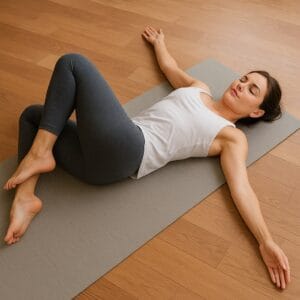 The power of twists lies in their ability to release deep tension in the spine. The Supine Twist is an accessible exercise that can stretch tight muscles while calming the nervous system when done lying down by most people.
Step-by-step:
1. Lie on your back and extend your arms into a T-shape.
2. Bring your knees towards your chest and bend them.
3. Move your knees gently towards the right side while keeping your shoulders flat on the mat.
4. For a deeper twist, turn your head to the left.
5. Hold for 30-60 seconds, then switch sides.
Benefits:
- Relieves tension in the lower back and hips.
- Improves digestion through the action of massaging the abdominal organs.
- Helps to calm the mind and promotes relaxation before sleeping.
- Over time, spinal flexibility improves.
Common Mistakes to Avoid:
- Let gravity do the heavy lifting when pushing your knees down to the floor.
- When lifting your shoulders off the mat, make sure to keep them grounded.
- When holding your breath, focus on exhaling deeply while twisting.
Modifications & Variations:
- To provide gentle support, place a cushion under your knees.
- Perform a one-legged twist by extending one leg straight while twisting the other.
- For a gentler stretch, raise your knees towards your chest.
Precautions:
- If you’re pregnant, steer clear of deep twists.
- Move slowly if you have herniated discs or severe spinal issues.
6 – Downward-facing dog (Adho Mukha Svanasana)
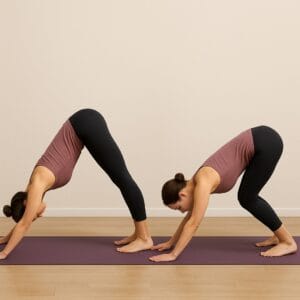 Downward Dog is a yoga pose that is widely recognized and can stretch the entire back while also strengthening the arms and shoulders. It helps to lengthen the spine and release tight hamstrings that often pull on the lower back for lower back pain.
Step-by-step:
1. Start on all fours, with wrists under shoulders and knees under hips.
2. Close your toes, press into your hands, and raise your hips towards the ceiling.
3. Make sure to straighten your legs as much as possible and aim for an inverted ‘V’ shape.
4. Keep your head relaxed between your arms and gaze towards your legs or navel.
5. Inhale deeply for 5-8 breaths, then slowly lower yourself.
Benefits:
- Stretches the spine, hamstrings, calves, and shoulders.
- Reduces tension in the lower back caused by tight legs.
Strengthens the upper body. - Improved posture can be achieved by lengthening the spine.
Common Mistakes to Avoid:
- Rather than lifting the hips, rounding the back is a better option.
- Putting heels on the floor – it’s okay if they don’t touch.
- The shoulders are collapsing towards the ears.
Modifications & Variations:
- Bend your knees slightly to focus on lengthening your spine.
- To increase your height, use yoga blocks under your hands.
- Try a gentle ‘walking with the dog’ movement, alternating bending of each knee.
Precautions:
- Avoid if you have severe wrist pain or uncontrolled high blood pressure.
- If you experience dizziness, move slowly.
7 – Reclining Pigeon Pose (Supta Kapotasana)
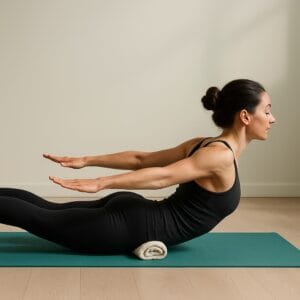 This gentler version of the popular Pigeon Pose is perfect for those who can’t practice deep hip openers. Loosening tight hips helps release lower back tension.
Step-by-step:
1. Lie on your back with your knees bent and feet flat.
2. Cross your right ankle over your left thigh at the knee level.
3. Gently pull your left thigh toward your chest, threading your hands behind it.
4. Maintain a relaxed posture with your head and shoulders.
5. Hold for 30-60 seconds before switching sides.
Benefits:
- Stretches the glutes and piriformis muscles, which can be a factor in sciatica.
- Minimizes pain in the lower back caused by tight hip muscles.
- Promotes complete relaxation in the hips and lower spine.
Common Mistakes to Avoid:
- The hip joint can suffer if you pull the thigh too hard.
- Maintain grounding by lifting the head and shoulders off the floor.
- Resting the ankle on the knee instead of the thigh.
Modifications & Variations:
- Support the head with a cushion placed under it.
- For a deeper stretch, hold the shin instead of the thigh.
- If you want to feel more comfortable, don’t pull your thigh in by keeping your bottom foot on the ground.
Precautions:
- Avoid if you have recently had hip surgery.
- If you feel a sharp pain in your knees, move gently.
8 – Cobra Pose (Bhujangasana).
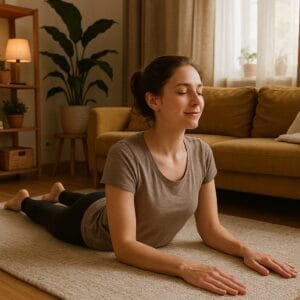 The Cobra Pose is a well-known backbend that aids in strengthening the spine and enhancing flexibility. It is stronger than Sphinx Pose, but it is still manageable for beginners when practiced with care.
Step-by-step:
1. Lie on your stomach with your legs extended and the tops of your feet pressing into the mat.
2. Place the palms under your shoulders and the elbows near your body.
3. Inhale and gradually lift your chest up, gently pressing it into your hands.
4. Maintain a slight bend in your elbows and a relaxed shoulder.
5. Hold for 20-30 seconds before releasing.
Benefits:
- Improves the strength of the lower back muscles.
- Improves breathing by opening up the chest and lungs.
- Helps to prevent slouching from desk work.
- Stimulates abdominal organs, aiding in digestion.
Common Mistakes to Avoid:
- Instead of engaging the back, focus on locking elbows and straining arms.
- Compressing the neck by tilting the head too far back.
- Lifting the pelvis off the mat – keep the hips grounded.
Modifications & Variations:
- For Baby Cobra (gentler version), lift only a little.
- Support the pelvis by placing a folded towel under it.
- For progression, straighten your arms more if your back feels flexible.
Precautions:
- Don’t go if you have serious back injuries or have recently had abdominal surgery.
- Pregnant women should not practice this pose.
9 – Locust Pose (Salabhasana).
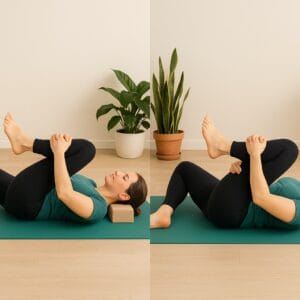 This backbend is designed to strengthen the muscles along the spine, which makes it ideal for building stability and reducing recurring lower back pain.
Step-by-step:
1. Lie on your stomach with arms alongside your body, palms facing down.
2. As you inhale, lift your chest, arms, and legs off the mat.
3. Maintain a slight forward gaze without straining your neck.
4. To maintain the lift, make sure to engage your glutes and core muscles.
5. Hold for 15–30 seconds before releasing.
Benefits:
- Enhances the strength of the lower back, glutes, and hamstrings.
- By activating back extensors, posture can be improved.
- Improves circulation and energy flow.
- Develops endurance in the spinal muscles.
- The lower back is overshadowed without engaging the core.
- To succeed, it’s crucial to hold your breath and maintain steady breathing.
- The neck can be compressed if the head is lifted too high.
Modifications & Variations:
- If the full pose is too difficult, lift either your legs or chest separately.
- Use a rolled towel to support the pelvis.
Try half locust by lifting one leg at a time.
Precautions:
- Avoid if you have herniated discs.
- This pose is not recommended for pregnant women.
10 – Mountain Pose (Tadasana).
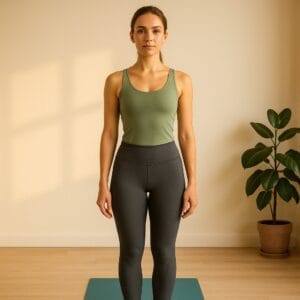 Despite its simplicity, Mountain Pose instructs on posture awareness and spinal alignment, which are crucial in the prevention of lower back pain.
Step-by-step:
1. Keep your feet hip-width apart and your arms relaxed beside your sides while standing tall.
2. Distribute the weight equally between both feet.
3. Slightly engage your thighs, lift your chest, and extend your spine upward.
4. Maintain your chin level with the ground and your shoulders relaxed.
5. Breathe naturally and hold it for 1–2 minutes.
Benefits:
- Improves one’s posture and body awareness.
- Helps to strengthen thighs, knees, and ankles.
- Teaching corrects spinal alignment for daily activities.
- Reduces stress by grounding the mind.
Common Mistakes to Avoid:
- Tightening your knees; keeping a micro-bend.
- Engage the core slightly when you overarch your lower back.
- The weight is concentrated on one leg instead of balanced evenly.
Modifications & Variations:
- To feel more aligned, practice with your back against a wall.
- An additional balance challenge can be achieved by closing your eyes.
- Raise arms overhead for an extended version.
Precautions:
- Most people find it very safe.
- If you have balance issues, avoid closing your eyes.
Section 3: Indian Product Recommendations for Lower Back Pain Relief
While yoga is powerful on its own, using the right supportive products can ensure your practice is safer, more comfortable, and more effective. Here are some Indian products that complement yoga for relieving back pain.
1. Yoga mats are essential for stability and comfort.
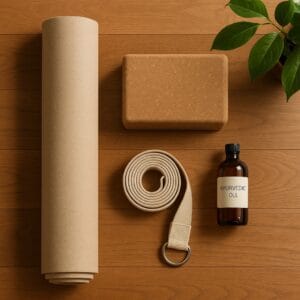
Your joints and lower back may experience strain if you practice on a hard floor. A good yoga mat is capable of providing cushioning, grip, and stability.
Recommended options for India:
- Boldfit Yoga Mat (Link) – Affordable, anti-slip, and eco-friendly.
- AmazonBasics 13mm Yoga Mat (Link) – Extra thick cushioning, great for beginners with sensitive joints.
- Reebok Yoga Mat (Link) – Durable, slightly more expensive option for long-term use.
Pros:
- Prevents slipping in poses like the Downward Dog by providing grip.
- Reduces pressure on the knees and spine.
- It is easy to roll, store, and carry.
Cons:
- Very thick mats (over 10mm) can reduce stability in standing poses.
- Budget mats may wear out faster with daily use.
PRO TIP – An anti-slip mat like Boldfit is a reliable choice for beginners.
2. Yoga Props (Blocks & Straps for Safe Practice)
Props are particularly beneficial for beginners or individuals with stiffness. They allow you to safely modify poses instead of straining.
Recommended options for India:
- Strauss EVA Foam Yoga Block (Link)– lightweight and supportive.
- Boldfit Yoga Strap (Link) – Helps deepen stretches.
- Decathlon Yoga Kit – Bundle of block and strap at affordable price.
Pros:
- Blocks help in poses like bridge or downward dog for additional support.
- The reach of tight hamstrings or shoulders is extended by straps.
- Makes yoga safe and accessible for all body types.
Cons:
- Some people skip props because they think they are not real yoga, but all teachers recommend them.
- Cheap foam blocks may easily dent.
PRO TIP – Props are an investment in safe progress. If your hamstrings or hips are tight, a yoga strap will come in handy.
3. Ayurvedic Pain Relief Oils (For Massage & Relaxation)
A soothing massage with natural oils can ease soreness and improve flexibility even though yoga stretches muscles.
Ayurvedic options that are popular:
- Kerala Ayurveda Murivenna Oil (Link) is widely used to treat back pain and sprains.
- Himalaya Rumalaya Oil is a herbal formulation that alleviates muscular pain.
- Dabur Mahanarayan Oil (Link) is a traditional herbal oil that is utilized in massages to alleviate joint and back pain.
Pros:
- Natural herbs like ashwagandha, camphor, and eucalyptus offer relief.
- Improves circulation and warms up muscles before yoga.
- India offers affordable and widely available options.
Cons:
- A strong scent of herbs may not be appealing to everyone.
- If not fully absorbed, it can feel greasy.
PRO Tip -Warming the oil a little before applying can enhance absorption and relaxation.
4. Herbal Teas (For Stress & Muscle Relaxation)
 Stress and inflammation can lead to back pain, which is why drinking calming teas can enhance your yoga practice.
Indian Options:
- Organic India Tulsi tea reduces stress and supports immunity.
- The use of Girnar Detox Green Tea aids digestion and reduces bloating.
- Baidyanath Ashwagandha tea supports muscle relaxation and energy.
Pros:
- Naturally calming, caffeine-free options are available.
- Encourages overall health, not just back pain.
- An easy addition to your daily routine.
Cons:
- Not a replacement for hydration with plain water.
- Some herbal blends may interact with medications (always check if under treatment).
PRO Tip: Sip a warm cup of Tulsi or Ashwagandha tea after yoga to relax muscles and calm your mind.
5. Posture Correctors & Cushions (Optional Support)
Although posture correctors and ergonomic cushions are not solely yogic products, they can prevent recurring pain by improving spinal alignment outside of practice.
Indian Options:
- Strauss Lumbar Support Cushion – Great for office chairs.
- Tynor Posture Corrector (Link) – Helps train your back muscles to stay upright.
- Wakefit Orthopedic Cushion (Link) – Comfortable support for long sitting hours.
Pros:
- Encourages the correct positioning of the spine.
- Relieves pressure on the lower back while sitting.
- Preventive tools that are affordable.
Cons:
- Shouldn’t be over-reliant on – core strength matters more.
- It’s possible for some correctors to feel restrictive.
PRO Tip: Use cushions or correctors only as an aid, not as a permanent solution. For long-term results, combine them with yoga.

Sibani is the founder of The Calm Bloom, sharing mindful living tips, wellness guides, and practical routines for a balanced lifestyle.