Lifestyle Changes to Reduce Stress Naturally

The most natural way to manage stress without therapy is by reworking how you live day-to-day. Repeating small habits consistently can significantly affect how the body and mind respond to pressure. Think of it as building resilience. You may not be able to eliminate all stressors, but you can train yourself to handle them better.
1. Create a Balanced Daily Routine
A schedule that is chaotic and unpredictable can often increase stress. Establishing a schedule that balances work, rest, and leisure is a way to anchor the mind. Simple steps include:
- Wake up and sleep at the same time every day.
- Designating specific periods for focused work, meals, and breaks.
- Make sure to allocate at least 30 minutes for movement such as yoga, walking, or stretching.
When your brain knows what to expect, it doesn’t stay on high alert all the time. The rhythm brings a sense of calm and clarity.
Connect to How to Stay Healthy Working a 9-to-5 Desk Job where we discussed routines for office workers.
2. Prioritize Sleep Hygiene
Stress is both a cause and a symptom of poor sleep. You may have observed that after a night of sleeplessness, everything becomes more difficult to handle. A chronic lack of sleep results in an increase in cortisol levels, making the stress cycle even more difficult.
Natural tips for boosting sleep:
- Avoid using screens at least one hour before going to bed.
- Drink herbal teas like chamomile or Tulsa to relax.
- Maintain a dark, quiet, and cool atmosphere in your bedroom.
- Adopt a ‘wind-down routine’: reading, journaling, or meditation.
Your body’s stress-management battery is charged when you invest in good sleep.
3. Practice Digital Detox
We live in an age of constant notifications: WhatsApp pings, Instagram scrolling, and endless emails. While technology is useful, too much of it can overwhelm the brain. Mental clutter can be reduced by taking regular breaks from screens.
Ideas to try:
- Start your day without checking your phone in the morning.
- To achieve a fast social media, uninstall apps for a day every week.
- Ensure that the bedroom or dining table is free of any gadgets in tech-free zones.
A short break from the digital world can provide a space for calmness and focus.
4. Move Your Body Every Day
Exercise is a natural way to relieve stress. Endorphins, the “feel-good” hormones, are released by physical activity, which also lowers cortisol. You don’t need intense gym workouts. Simple daily movement works wonders.
Options include:
- A brisk walk in the morning sun.
- For 20 minutes, practice yoga stretches.
- Dancing to your favorite tunes.
- Spending weekends cycling or playing badminton.
Movement not only reduces stress, but also boosts energy, improves mood, and aids in better sleeping.
5. Spend Time in Nature
Research shows that even 20 minutes of outdoor activity can lower stress levels. Nature has a grounding effect. It reminds us that life is bigger than our immediate problems.
ways to connect with nature:
- Morning walks in the park.
- Home gardening.
- Taking short weekend getaways to green spaces.
- Sitting close to plants or water bodies.
Those who live in hectic cities can make a difference by taking small steps like keeping indoor plants or sitting on a balcony with fresh air.
6. Build Social Connections
Loneliness can cause stress to feel heavier. Humans are wired to connect, and talking to trusted friends or family can provide emotional relief.
- Arrange weekly catch-ups with loved ones.
- Join a hobby club or community group.
- Be a volunteer for causes that matter to you.
Conversations don’t have to solve problems; sometimes just being heard reduces emotional burden.
7. Journaling and Gratitude Practice
The act of writing down thoughts can help clear mental clutter. Externalizing worries prevents them from spinning endlessly in your mind.
A simple journaling ritual could consist of:
- Writing about what’s causing you stress.
- List three things you’re grateful for each night.
- Keeping track of small victories on a daily basis.
Journaling can change perspective over time, making you more solution-focused and resilient.
8. Mindful Breaks During Work
Stress accumulates quickly when you work long hours. Micro-breaks are a great way to refresh your mind.
Examples:
- Deep breathing for 5 minutes every hour is recommended.
- Stand up to stretch.
- Drinking water with patience and awareness.
- Taking a break from the screen to take a break.
Taking small pauses can reset your brain and reduce stress without impacting productivity.
9. Limit Stimulants and Alcohol
Many individuals use coffee, energy drinks, or even alcohol as a means of coping with stress. While they may provide temporary relief, they often worsen stress in the long run.
- Excessive caffeine increases heart rate and anxiety.
- Drinking alcohol disrupts sleep and worsens mood.
- Energy drinks increase cortisol levels.
Instead, opt for calming beverages such as herbal teas, warm turmeric milk, or infused water.
10. Create Personal Boundaries
Stress can be caused by saying yes to everything at work or home, which can lead to overcommitment. Setting healthy boundaries is a way to reduce pressure.
- Politely decline additional tasks when you’re overloaded.
- Make time for rest and hobbies in your personal schedule.
- When possible, avoid toxic conversations or environments.
Boundaries are not about being selfish; they’re about maintaining mental space so you can show up fully when it’s truly important.
Diet and Stress Relief
 Stress management is highly influenced by what you eat, and it’s not just a cliché. The food you put on your plate has a direct impact on your brain chemistry, hormone balance, and energy levels. A diet that contains processed foods, sugar, and caffeine overstimulates the body, making stress more difficult to handle. In contrast, nutrient-rich whole foods can soothe the nervous system and enhance mood.
To manage stress naturally without therapy, it is crucial to pay attention to diet, which is one of the most effective and sustainable steps.
Foods That Help Reduce Stress
Nutrients that support the body’s natural stress response can be found in certain foods.
1-Whole Grains
- Brown rice, oats, and millets are a good source of steady energy, which prevents sugar spikes that worsen anxiety.
- Additionally, they raise the production of serotonin, which is the neurotransmitter that brings joy.
2-Nuts and Seeds
- Almonds, walnuts, sunflower seeds, and pumpkin seeds are all high in magnesium, which can help relax muscles and calm the nervous system.
- The brain’s health is supported by Omega-3 fatty acids found in walnuts.
3-Leafy Greens
- Spinach, moringa leaves, and methi (fenugreek) are rich in folate and magnesium, both of which are linked to reduced stress.
4-Herbal Teas
- Tulsi (Holy Basil), chamomile, and peppermint teas have a natural adaptogenic effect, regulating cortisol levels.
- Tulsi tea is a traditional drink in Indian households and has a long history of Ayurvedic support.
5-Fruits Rich in Vitamin C
- The consumption of oranges, amla (Indian gooseberry), guava, and strawberries can reduce cortisol and boost immunity.
- Vitamin C is crucial for repairing tissues that have been damaged by chronic stress.
6-Dark Chocolate (in moderation)
- It contains antioxidants and compounds that enhance mood.
- After a meal, a small piece can be both a treat and a stress reliever.
7-Probiotic Foods
- Gut health can be improved through the use of curd, buttermilk, and fermented foods like idli and dosa batter.
- The production of serotonin, which regulates mood, is enhanced by a healthy gut.
Foods That Worsen Stress
Just as certain foods can help, others can make stress worse by straining the nervous system.
- Excess caffeine (coffee and energy drinks) can cause jitters and increase heart rate.
- Sugary snacks (such as soda, pastries, and packaged desserts) can cause sugar highs and crashes, which worsen mood swings.
- Highly processed foods (instant noodles, fried snacks) lack essential nutrients and increase inflammation.
- Alcohol disrupts sleep, lowers serotonin levels, and increases fatigue.
Moderation is essential. It’s ideal to cut down on these foods to create balance, but it’s not necessary to eliminate them altogether.
Stress-Relief Meal Ideas
These simple, practical meal ideas are based on Indian eating habits and can help you naturally manage stress.
- For breakfast, I have vegetable poha with peanuts and a glass of warm turmeric milk.
- For my mid-morning snack, I prefer soaking almonds and walnuts in a handful.
- The lunch plan for me includes brown rice, dal, palak sabzi, cucumber salad, and curd.
- In the evening, I enjoy a cup of Tulsi green tea with roasted chana.
- In dinner, Multigrain chapati, mixed vegetable curry, and a small bowl of curd rice.
- To get a better night’s sleep, try having warm milk with a pinch of nutmeg or cardamom before going to bed.
These meals not only provide nutrition but also bring comfort through traditional flavors, which is important for emotional balance.
Connect to your earlier blog Reduce Inflammation Through Dietto emphasize how anti-inflammatory foods also reduce stress
How Diet and Stress Are Linked
- Stable blood sugar is essential for preventing mood swings and irritability.
- The production of serotonin and dopamine is supported by amino acids, vitamins, and minerals.
- Hormonal health is regulated by nutrient-dense foods.
- Mental clarity and emotional resilience are enhanced by a healthy digestive system in the Gut-Brain Axis.
By choosing foods wisely, you’re not only nourishing your body, but you’re training your mind to stay calm under pressure.
Yoga, Breathing, and Meditation for Stress Management
When people think of natural ways to handle stress, yoga and meditation are usually the first ones they think of. Indian tradition has been rooted in these methods for thousands of years, and they are now recognized worldwide as scientifically-backed methods to soothe the nervous system. If you want to manage stress naturally without therapy, these practices are not optional. They are foundational.
Why Yoga Works for Stress Relief
Yoga is more than just exercise. It’s a combination of movement, breath, and mindfulness that affects both the body and mind. When practiced regularly, yoga:
- Decreases levels of cortisol (the hormone that causes stress).
- Enhances both flexibility and blood circulation.
- Relaxes the nervous system.
- Develops a capacity to handle everyday pressures.
Yoga doesn’t overstimulate the body like high-intensity workouts. It teaches the art of balance, which we often lose in stressful environments.
Best Yoga Asanas for Stress
1- Balasana (Child’s Pose)
- Helps to relieve tension in the back and shoulders.
- Provides a feeling of security and grounding.
2- Shavasana (Corpse Pose)
- A posture that teaches the mind to let go and relax.
- A great way to end a stressful day.
3- Setu Bandhasana (Bridge Pose)
- Increases blood flow and opens up the chest.
- Minimizes anxiety and fatigue.
4- Viparita Karani (Legs-Up-the-Wall Pose)
- Calms the nervous system and improves circulation.
- Ideal for individuals who experience exhaustion or overwhelm.
5- Adho Mukha Svanasana (Downward Dog Pose)
- Releases pressure from the spine.
- Boosts energy and calms the mind at the same time.
Pro Tip :A daily yoga session of 15–20 minutes can significantly reduce stress levels.
Breathing Techniques (Pranayama)
Breathing is the bridge between body and mind. Shallow breathing is often a result of stress, which causes the body to remain tense. Deep, mindful breathing can be restored through pranayama to reverse that.
A few effective methods:
1 – Anulom Vilom (Alternate Nostril Breathing)
- Regulates the balance between the left and right hemispheres of the brain.
- Relieves anxiety and mental restlessness.
2 – Bhramari (Bee Breath)
- The process involves making a humming sound while exhaling.
- Regulates anger, agitation, and racing thoughts.
3 – Kapalabhati (Skull Shining Breath)
- Clears the respiratory system.
- Energizes and clears mental fog.
4 – Box breathing (4-4-4-4 method)
- Breathe 4 times, hold for 4 times, exhale 4 times, hold for 4 times
- Stress control is even used by military personnel.
By practicing pranayama for 10 minutes each morning, you can set the tone for a calmer day.
Meditation for a Calm Mind
Meditation does not necessitate sitting in silence for hours. The practice involves focusing attention and letting go of distractions. Over time, meditation rewires the brain, reducing the ‘fight-or-flight’ response.
Advantages of regular meditation:
- Reduces cortisol levels.
- Enhances concentration and emotional stability.
- Reduces the number of negative thought loops.
- Boosts self-awareness and inner peace.
What are the different types of meditation that you can try?
- Mindfulness meditation involves focusing on breath or sensations in the present moment.
- Listening to audio instructions (podcasts or apps) is part of guided meditation.
- Mantra meditation involves repeating calming words such as ‘Om’ or personal affirmations.
- By relaxing each part of the body with awareness during body scan meditation.
How to Build a Daily Practice
- Begin with a small amount: just 5 minutes of breathing or meditation daily.
- To get the most out of yoga and pranayama, combine them.
- If you’re having trouble focusing, consider using podcasts or apps.
- Be consistent. Results come with regular practice, not perfection.
Indian Remedies & Herbal Solutions for Stress
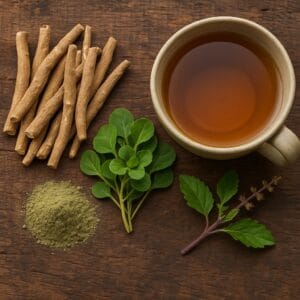 India has a rich history of using herbs, spices, and natural remedies to maintain both physical and mental health. Ayurveda had been using herbs to soothe the mind, balance energy, and enhance focus prior to modern medicine’s recognition of the effects of cortisol and neurotransmitters. Modern science is catching up, with research backing many of these remedies.
These Indian solutions can be reliable companions if you’re looking to manage stress naturally without therapy.
1. Ashwagandha – The Stress Shield.
- This is a powerful adaptogenic herb that aids in the body’s adaptation to stress.
- The function is to reduce cortisol levels, promote better sleep, and increase resilience to stress.
- There are three ways to use it: capsules, powders (churna), or teas. The traditional way to take it is with warm milk at night.
- Studies show that Ashwagandha reduces stress and anxiety in both clinical and workplace settings.
2. Brahmi – The Mind Tonic
- A traditional Ayurvedic herb known for supporting memory and concentration.
- It works by calming the nervous system, improving mental clarity, and reducing anxious thoughts.
- Consumption can be done through syrups, tablets, or powders. Brahmi oil is utilized in head massages for the purpose of relaxation.
3. Tulsi (Holy Basil) – The Everyday Stress Reliever
- Tulsi is a natural adaptogen that is considered sacred in Indian households.
- It works by lowering cortisol, strengthening the immune system, and balancing energy.
- Fresh leaves in tea, Tulsi-infused green teas, or Tulsi drops in water are all great ways to use it.
4. Aromatherapy with Indian Essential Oils
- Lavender oil calms the nervous system and promotes sleep.
- Sandalwood oil is traditionally used for meditation and reduces anxiety.
- Eucalyptus oil clears the mind and relieves fatigue.
- The method of use is to add a few drops to a diffuser, mix with carrier oil for massage, or sprinkle on a pillow.
5. Spices That Heal
Indian kitchens already have stress-relief remedies in their spice jars.
- Turmeric has anti-inflammatory properties and aids in brain health.
- Cardamom enhances digestion and alleviates stress.
- Cinnamon is effective in balancing blood sugar and stabilizing mood.
Adding these to everyday cooking provides a subtle but steady support for stress management.
6. Ayurvedic Lifestyle Additions
- Abhyanga (Oil Massage) involves using warm sesame or coconut oil to calm nerves and relax muscles.
- Shirodhara (Oil Drip Therapy) is a treatment where warm oil drips steadily on the forehead, which is deeply soothing, though it is usually done at Ayurvedic centers.
- Triphala balances digestion, which indirectly helps with stress resilience.
Why Indian Remedies Work Well for Stress
- They are typically safe and natural for long-term use.
- They address the root causes of the problem, such as balancing hormones, improving digestion, and calming nerves, rather than just treating symptoms.
- They can easily be included in daily routines, such as tea, massage, and cooking.
👉Using Ayurveda and natural herbs is not only about treating stress, but also about creating a lifestyle that supports calmness and focus every day.
Product Recommendations
Here are some trusted Indian products that combine tradition with modern convenience, if you want to try natural remedies for stress. It’s important to consult with a healthcare professional before starting any new supplements.
Pros: Reduces cortisol, improves sleep, easy to consume.
Cons: Results take 2–3 weeks; not suitable for pregnant women.
Brahmi Tablets / Amla Hair Oil (Link)
Pros: Improves focus, reduces anxiety, available in multiple forms.
Cons: Tablets may taste bitter; hair oil requires regular use.
Pros: Refreshing, boosts immunity, daily stress relief ritual.
Cons: Mild taste may not appeal to everyone.
Pros: Promotes calmness, improves sleep quality, multipurpose use.
Cons: Needs a diffuser or carrier oil; not to be ingested.
Headspace / Calm App (Indian-accessible meditation apps)
Pros: Guided meditations, easy for beginners, can track progress.
Cons: Requires subscription; depends on self-discipline.
Pros and Cons of Managing Stress Naturally
Pros
- It is safe to use for a long time.
- Compared to therapy or medication, it’s affordable.
- Improves lifestyle in general, not just stress.
- There are few to no side effects.
- Enhances self-sufficiency and resiliency.
Cons
- Consistency and patience are necessary.
- It’s not a quick fix for severe anxiety or depression.
- We require brands that are trusted because the quality of herbal products can vary.
- Professional help may not be replaced in extreme cases.
FAQs
1- Can stress really be managed without therapy?
A-Lifestyle changes, diet, yoga, and herbs can be very effective in treating mild to moderate stress. If stress becomes overwhelming or leads to depression, therapy and medical help may be required.
2- What Indian herb is the most effective for reducing stress?
A- Ashwagandha has been extensively studied as an adaptogen for reducing cortisol levels. Tulsi and Brahmi are excellent for daily use.
3. What is the speed of natural remedies’ effectiveness?
A- Unlike pills, natural methods require patience. Meditation or yoga can help you feel calmer within a few days, but herbs such as Ashwagandha typically require 2–4 weeks of regular use.
4. Is it possible for dietary changes alone to reduce stress?
A- A healthy diet is beneficial to the body, but it is most effective when combined with lifestyle changes like sleep hygiene and yoga.
5. When is the right time to seek medical assistance?
A-In the event that stress is causing panic attacks, severe insomnia, or thoughts of self-harm, it is crucial to immediately consult a doctor or therapist. While natural remedies can be helpful, professional care may be necessary.
 Conclusion & CTA
 Conclusion & CTA
Therapy or medication are not always necessary to manage stress. By making small but consistent changes, such as improving your diet, practicing yoga, drinking Tulsi tea, or journaling, you can build a calmer and healthier life. Indian remedies like Ashwagandha, Brahmi, and Tulsi have been trusted for centuries and continue to offer safe and effective support in modern times.
Remember, consistency is key. Don’t attempt to accomplish everything at once. Start with one or two practices, such as drinking Tulsi tea every day or meditating for 10 minutes every day, and expand your practice gradually.
🌿 Take the first step today: Brew yourself a calming herbal tea, put your phone aside for 10 minutes, and just breathe. Notice how even small actions shift your stress levels.
👉 For more practical wellness guides, explore other resources on The Calm Bloom, like:
Your journey to balance and peace begins with simple choices you make today.

Sibani is the founder of The Calm Bloom, sharing mindful living tips, wellness guides, and practical routines for a balanced lifestyle.