Skin & Hair Changes Due to Hormones: A Straightforward Guide for Women
Your skin and hair are reacting to hormones, not your skincare routine.
“Skin and hair problems are often hormonal feedback, not surface-level issues.”
Table of Contents
Introduction
Hormones are the most likely cause of unexpected skin or hair changes that you are unable to explain. Not your age. It’s not horrible skincare. Not just genetics. Skin and hair are hormone-sensitive tissues. They respond quickly and visibly.
You’re not dreaming if you’re seeing changes in your skin and hair as a result of hormones. These changes are frequently the first evident indicators of hormonal imbalance in women.
Women experience this during their menstrual cycle, stressful periods, postpartum, PCOS, thyroid imbalances, or perimenopause. The issue isn’t that hormones change. That is very natural. The issue arises when the balance breaks and remains broken.
Many women are advised that their acne is “just stress,” their hair loss is “normal aging,” or their dryness is “bad skincare.” Because it ignores the true reason, hormonal imbalance, that advice wastes months or even years. Treatments are useless unless the specific hormone is identified.
The article discusses how hormones influence skin and hair, what changes are normal, what are not, and what you can do to cure them.
1. How Hormones Affect Skin and Hair So Quickly
Skin and hair changes due to hormones happen quickly because skin cells and hair follicles respond directly to hormonal signals.Multiple hormonal pathways regulate skin and hair. When someone makes a change, the consequences can be felt within days or weeks.
- Androgens stimulate oil glands.
- Estrogen is necessary for the formation of collagen.
- Progesterone regulates water retention.
- Cortisol accelerates inflammation and aging.
- Thyroid hormones control cell turnover and follicular cycling.
That is why pimples arise before periods, hair loses after stress, and dryness occurs when estrogen levels drop. This is not at random. It’s called chemistry.
2. How Each Hormone Affects Your Hair and Skin
To understand skin and hair changes due to hormones, you have to look at how each hormone affects oil production, collagen, inflammation, and hair growth cycles
Estrogen
Estrogen is the primary reason why women have softer skin and longer hair than men.
What it does:
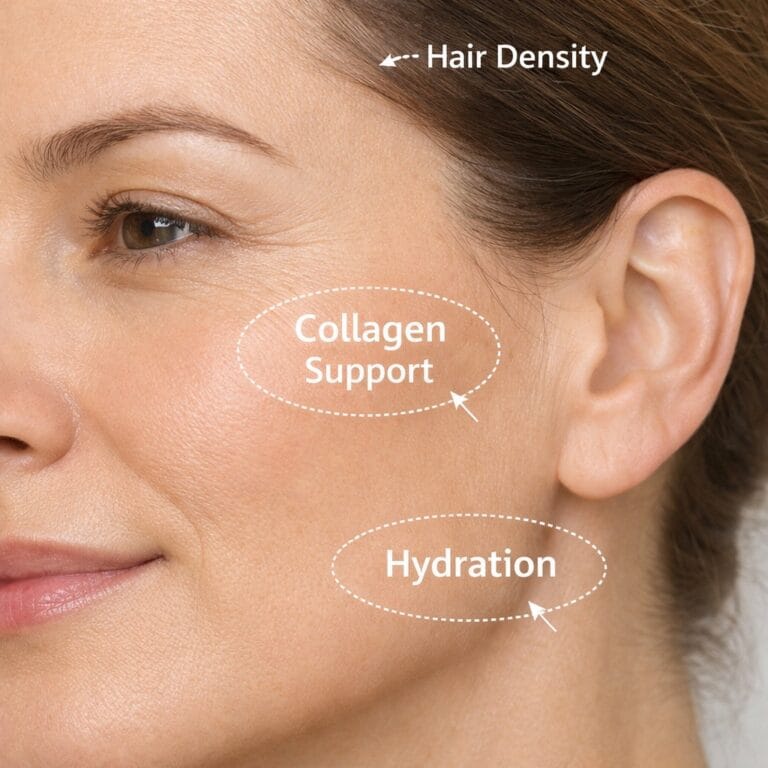
- It stimulates collagen and elastin.
- Keeps skin hydrated.
- Promotes hair growth
- Promotes wound healing
Low estrogen causes:
- The skin appears dull and worn.
- Fine lines and early wrinkles
- Enhanced dryness and sensitivity
- Hair loss and low density
Estrogen levels decrease during the late luteal phase, postpartum, perimenopause, menopause, and excessive dieting.
Progesterone
Progesterone levels rise following ovulation and peak shortly before your period.
What it does:
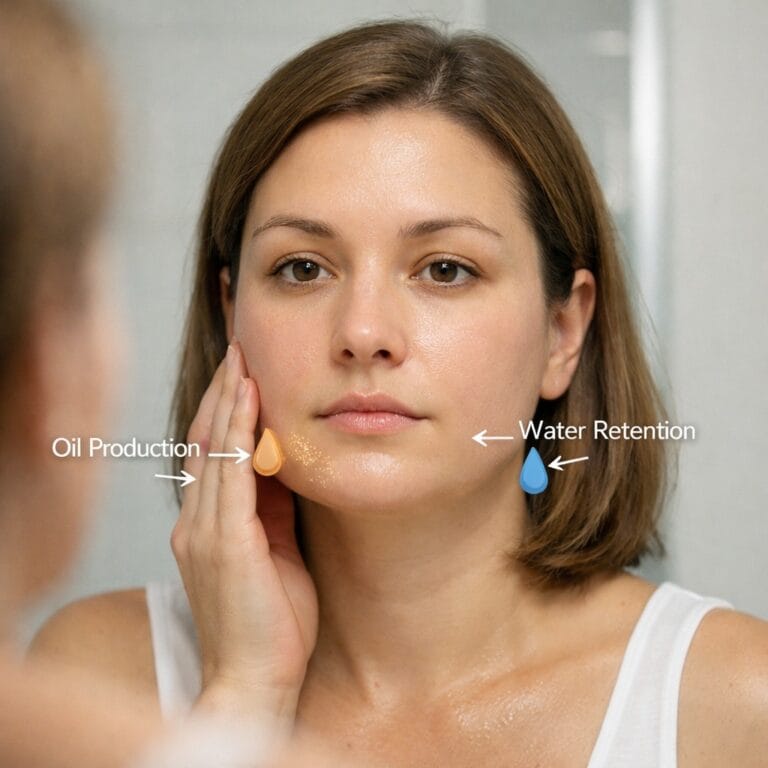
- Increased oil production
- Mild water retention
- Thickens the skin somewhat
Symptoms of high progesterone:
- Pre-period outbreaks
- Bloating and puffiness on the face
- Oily T-zone.
Because of this, skin frequently seems worse the week before menstruation.
American Academy of Dermatology – Hormonal acne
Testosterone and DHT
Women make modest levels of testosterone. Problems begin as levels rise or sensitivity rises.
Commonly associated with PCOS and insulin resistance.
Effects:
- Acne on the jawline and chin.
- Cystic outbreaks
- Hair thinning around the crown or temples
- Excessive face or body hair
DHT-related hair thinning is not limited to men. Many women are affected without realizing what is causing it.
Cortisol (Stress hormone)
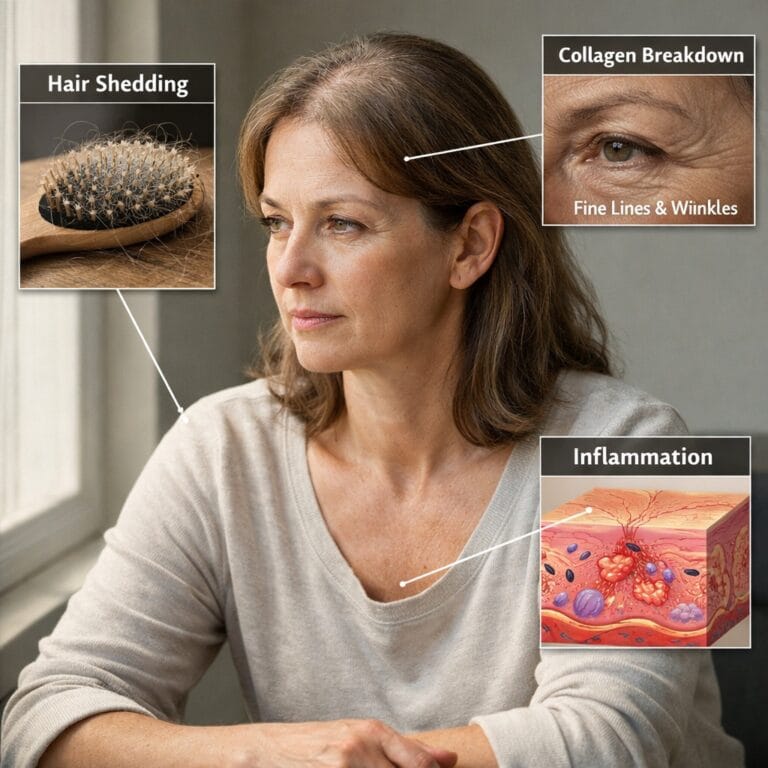
Chronic stress elevates cortisol levels. This hormone quietly destroys skin and hair.
Effects:
- Collagen breaks down.
- Disrupts the oil balance
- Increases inflammation
- Promotes hair shedding.
When high cortisol levels are sustained for an extended period of time, the face ages faster than sun exposure.
NIH – Stress and skin function
Thyroid hormones
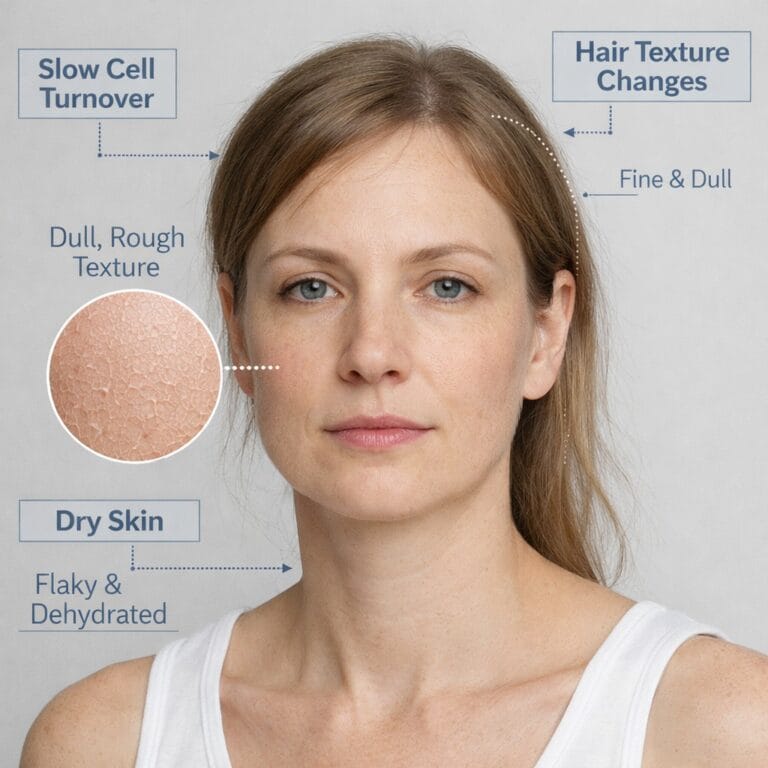
Thyroid hormones control how quickly skin cells renew and hair follicles cycle.
Hypothyroidism (low thyroid)
- Dry and rough skin.
- Hair loss and delayed regrowth
- Thinning of the outer brows
- Brittle nails
Hyperthyroidism (High Thyroid)
- Excess sweating
- Hair is fragile.
- Increased hair loss
Thyroid problems are frequently overlooked in women with skin and hair issues.

British Association of Dermatologists – Thyroid disease and skin
3. Common Hormone-Related Skin Problems
A: Hormonal Acne
Hormonal acne appears on the lower face, specifically the chin, jawline, and cheekbones.
Causes:
- Androgen-driven oil production.
- Increased inflammation during the luteal phase
- Insulin Resistance
- Chronic stress
Fixes that help:
- Reduce refined sugar and excessive dairy consumption.
- Regularly use benzoyl peroxide or salicylic acid
- Include omega-3 fatty acids
- Manage stress and sleep
- Dermatology alternatives, such as spironolactone when severe
Internal link:
B. Dry and dull skin.
Commonly associated with low estrogen or thyroid problems.
What is beneficial:
- Hyaluronic acid and ceramides
- Sufficient protein intake
- Check Vitamin D levels.
- Sleep for 7 to 8 hours.
- Avoid prolonged fasting which suppresses estrogen.
C. Oily skin before menstruation.
It is caused by progesterone and water retention.
Repair it without causing skin damage.
- Use clay masks twice a week.
- Cleanse gently.
- Avoid using strong occlusive oils.
D. Melasma (hormonal pigmentation)
Symptoms are triggered by hormonal fluctuations and exacerbated by sun exposure.
Non-negotiable fixes:
- Daily SPF 50.
- Azelaic acid or niacinamide.
- Avoid aggressive peels pre-period.
Diet alone will not correct pigmentation.
4. Common Hormone-Related Hair Problems
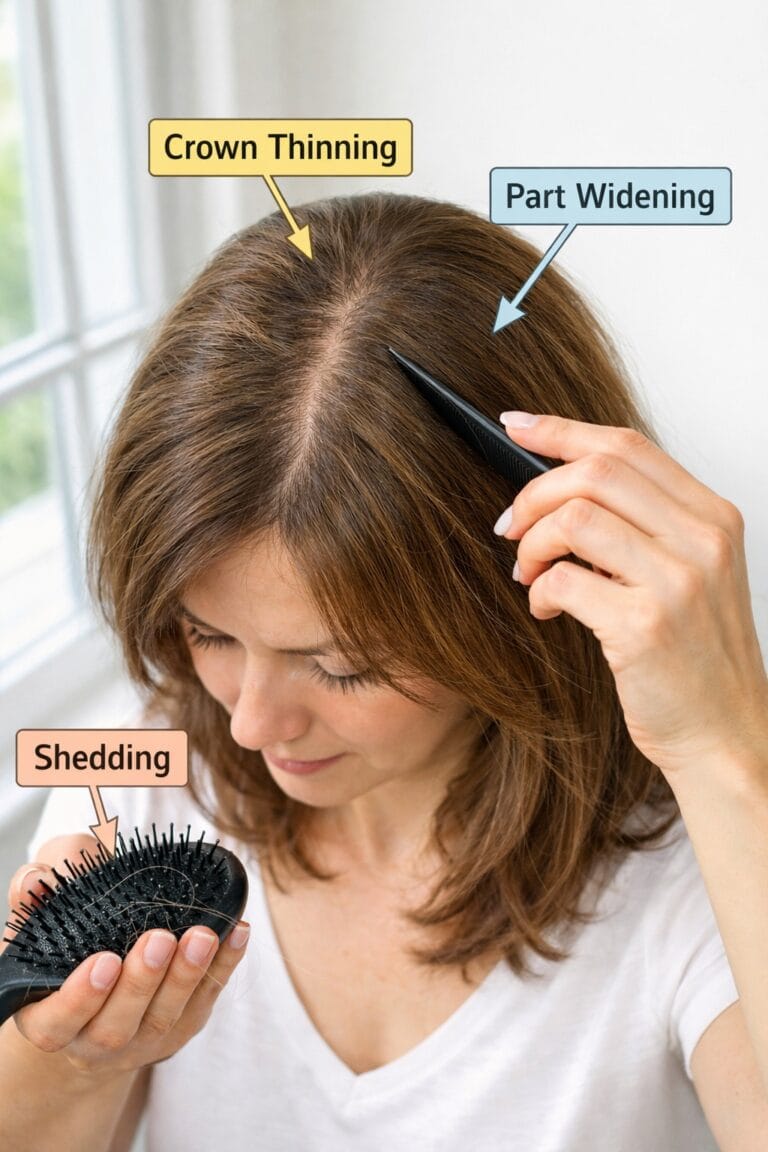
A. Hormonal Hair Loss.
Patterns:
- Thinning at the crown or the top
- Excessive shedding after washing
- Widening the portion line
Causes:
- Low estrogen
- Higher levels of androgens
- Hormonal decrease after childbirth
- Thyroid imbalances
- Extreme or persistent stress
Fixes:
- Protein consumption of 1 to 1.2 grams per kilogram
- Correct deficits in iron, zinc, and B12.
- Avoid high-intensity workouts during the luteal phase.
- If shedding persists, consider minoxidil.
B. Excess facial hair (Hirsutism)
Strongly related to PCOS and insulin resistance.
What really works:
- Reduce sugar and refined carbs.
- Strength Training
- Inositol Supplementation
- Cycle Tracking
- Laser and eflornithine cream are two dermatological solutions.
C. Premature greying
Frequently associated with prolonged stress or a lack of vitamin B12.
Steps:
- Proper B12 levels
- Reduce cortisol levels
- Limit chemical hair treatments.
5. How Different Life Stages Affect Skin and Hair
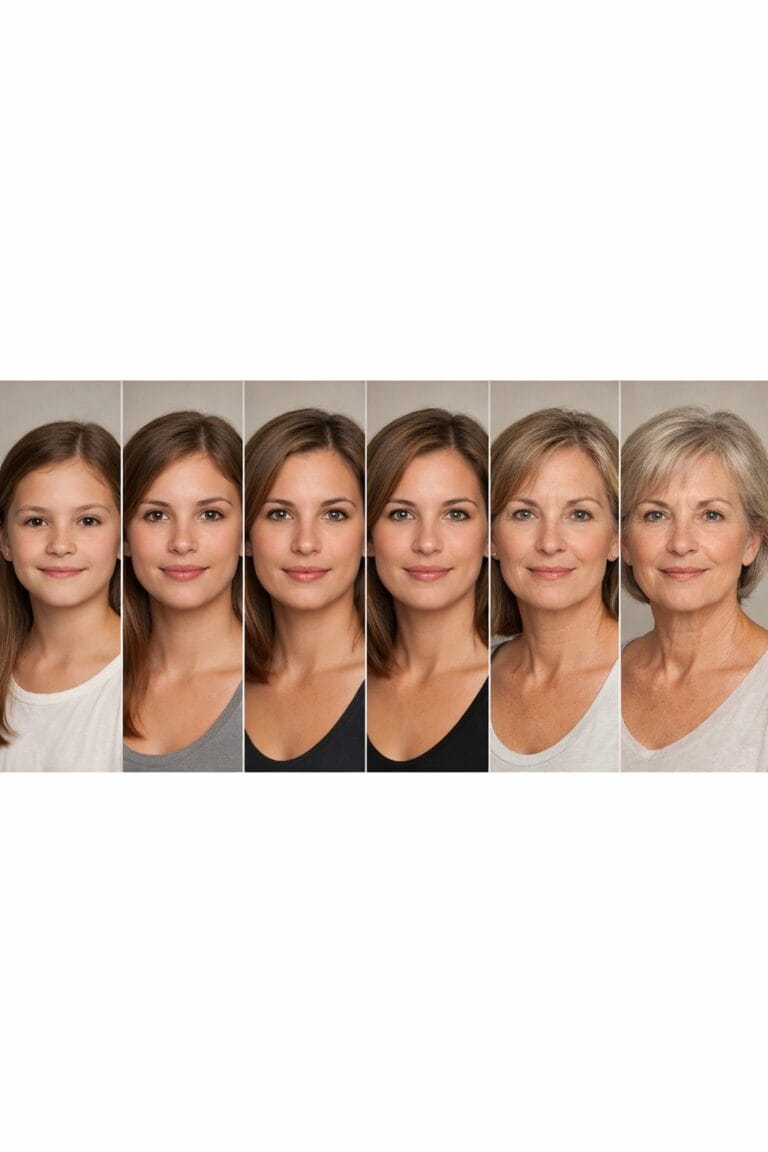
- Teenager years: Androgen surge promotes acne and oiliness
- 20s: Stable estrogen promotes radiance and hair strength.
- 30s: Progesterone declines first, PMS acne worsens, and collagen degeneration begins.
- 40s: Estrogen levels drop faster, causing dryness and thinning.
Pregnancy: High estrogen levels cause fuller hair and bright skin.
Sudden shedding after childbirth is normal.
- Menopause: low estrogen causes dryness, dullness, and fast thinning
Understanding this minimizes panic and incorrect remedies.
6. Diet Changes to Support Skin and Hair Hormones
No trends. Simply fundamentals.
- Increase protein levels.
- Reducing refined sugar
- Include omega-3 fats
- Eat meals high in iron and zinc.
- Increase colorful vegetables
- If you have acne, cut out on dairy.
- Stay regularly hydrated.
Internal link:
Stress and Hormone Connection.
7. Supplements That Actually Work
(The following is not medical advise. Test whenever possible.)
- Omega-3
- Vitamin D
- Glycated magnesium
- Iron (only if insufficient).
- Zinc
- Inositol (PCOS)
- Collagen peptides
- Ashwagandha for Stress
Internal link:
Supplements for Women Over 25.
8. When to See a Physician
Do not delay if you:
- Hair loss lasts more than three months.
- Greying starts suddenly.
- Acne turns cystic.
- Periods get irregular.
- Thyroid issues are suspected.
- Pigmentation spreads quickly.
It is generally easier to rectify anything early on.
9. FAQs
Conclusion: What Your Skin and Hair Are Really Telling You
Skin and hair changes due to hormones are not cosmetic problems. They are biological signals.Hormonal changes to the skin and hair do not cause cosmetic issues. They represent biological signals.
When estrogen levels drop, so does collagen. As progesterone levels rise, so does oil. Acne and hair thinning occur when androgens are dominant. When cortisol levels remain high, inflammation and shedding intensify. None of this is mysterious, nor is it your fault.
What is problematic is disregarding these warning signs or attempting to address them with superficial fixes. Expensive skincare will not fix hormonal imbalances. Hair serums will not address vitamin shortages or persistent stress. Pushing harder when your body is already stressed usually makes matters worse.

The goal isn’t always to have beautiful skin or thick hair. That is unreal. Knowing what phase, condition, or imbalance your body is in and reacting appropriately are the true objectives.
Most skin and hair problems are treatable if you monitor patterns, support hormones through diet and lifestyle, and act quickly when something seems odd. If you ignore them, they usually worsen.
Your body isn’t betraying you. It provides feedback.
It’s better to listen to it now than later.






Sibani is the founder of The Calm Bloom, sharing mindful living tips, wellness guides, and practical routines for a balanced lifestyle.