Not getting enough sleep isn’t the only reason you feel tired in the morning.
You feel drained because your mornings are busy, reactive, and mentally overwhelming.
“Mental clarity is not about doing more. It is about reducing the noise before it begins.”
Introduction: Why Your Morning Determines Your Mental Clarity
Mental clarity does not begin at your desk or on your to-do list. It begins the first hour after you awaken.
Most people start their day in reactive mode, which includes notifications, rushing, and choice overload. This quickly increases stress hormones and scatters focus before the day even begins.

According to research, consistent routines lessen cognitive load, promote emotional regulation, and boost felt control over one’s everyday life. This is the true foundation of mental clarity.
This guide will bring you through a simple, science-backed morning practice for mental clarity that avoids severe schedules, unrealistic habits, and influencer gimmicks.
Free Download:
Want a simple version of this routine you can actually follow?
👉 Download the Free Morning Peace Checklist and build a calm, focused morning without overwhelm.

Step 1: – Define Your Purpose for Mental Clarity
A morning routine is only effective when it has a defined aim. Without one, routines feel forced and are soon abandoned.
Before designing your perfect morning, consider the following:
What is the reason for me seeking mental clarity?
Do you want to reduce my stress?
Do I wish to improve my performance at work?
Would I like to feel more at ease in my family’s presence?
👉 Routines feel forced when the reason is unclear.
Mental clarity frequently declines when stress becomes chronic, particularly because many people misunderstand The effects of chronic stress hormone balance and cognitive focus over time.
For instance:
A parent who is busy might want to have a calm morning before their children wake up.
Clarity can help students better understand the content they are studying.
A professional may want to allocate energy to creative work before meetings commence.
The purpose determines the structure. A routine for calming demands different inputs than a routine for productivity.
Step 2: Set a Consistent Wake-Up Time
Mental clarity is strongly dependent on circadian rhythm consistency. Waking up at irregular intervals alters cortisol release and decreases attention management throughout the day.
Reasons for importance:
Consistent wake periods improve mental alertness.
Decrease cortisol spikes.
Improve sleep quality.
Science Insight: According to studies published in Sleep Health, irregular sleep-wake rhythms are connected with impaired cognitive and occupational performance.s.
👉 Instead of worrying about getting up earlier, try to get up at the same time every day, especially on the weekends.
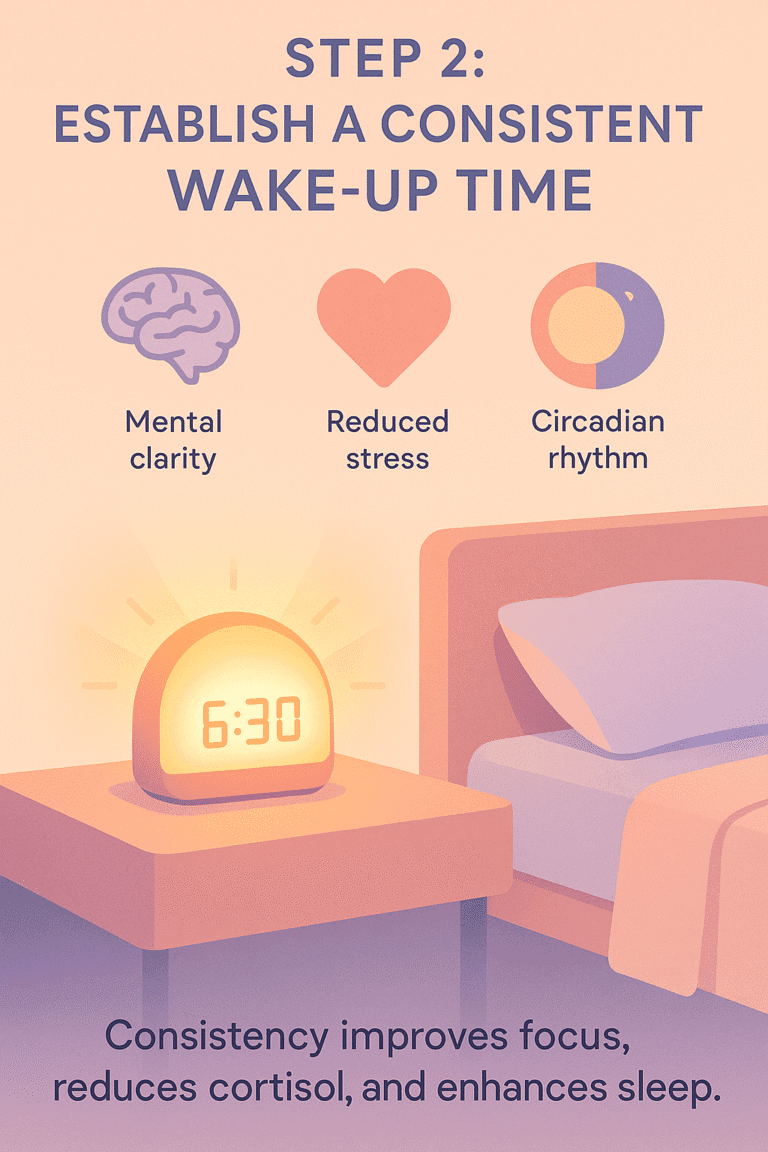
Pro Tip: Make use of an alarm clock that simulates natural light at sunrise.
Philips SmartSleep Wake-Up Light (Link) – softly awakens your body by simulating sunlight.

Step 3: Hydrate Before Caffeine to Reduce Brain Fog
Mild dehydration is usual after sleeping for 6-8 hours. Even little fluid losses can affect attention, working memory, and mood.
Action:
Prior to consuming coffee, drink one or two glasses of water.
Incorporate electrolytes to improve absorption.
Steer clear of sugary drinks that raise insulin levels.
Affiliate Suggestions:
Hydration Multiplier Liquid IV(Link Here) – a handy electrolyte blend.
Hydro Flask Reusable Water Bottle(Link Here) – keeps water close at hand and fresh.
👉 Proper hydration increases cerebral blood flow, which directly supports focus and mental clarity.
Step 4: Use Movement to Clear Mental Fog
Physical exercise activates neurotransmitters like dopamine and norepinephrine, which improve focus and motivation.
Options:
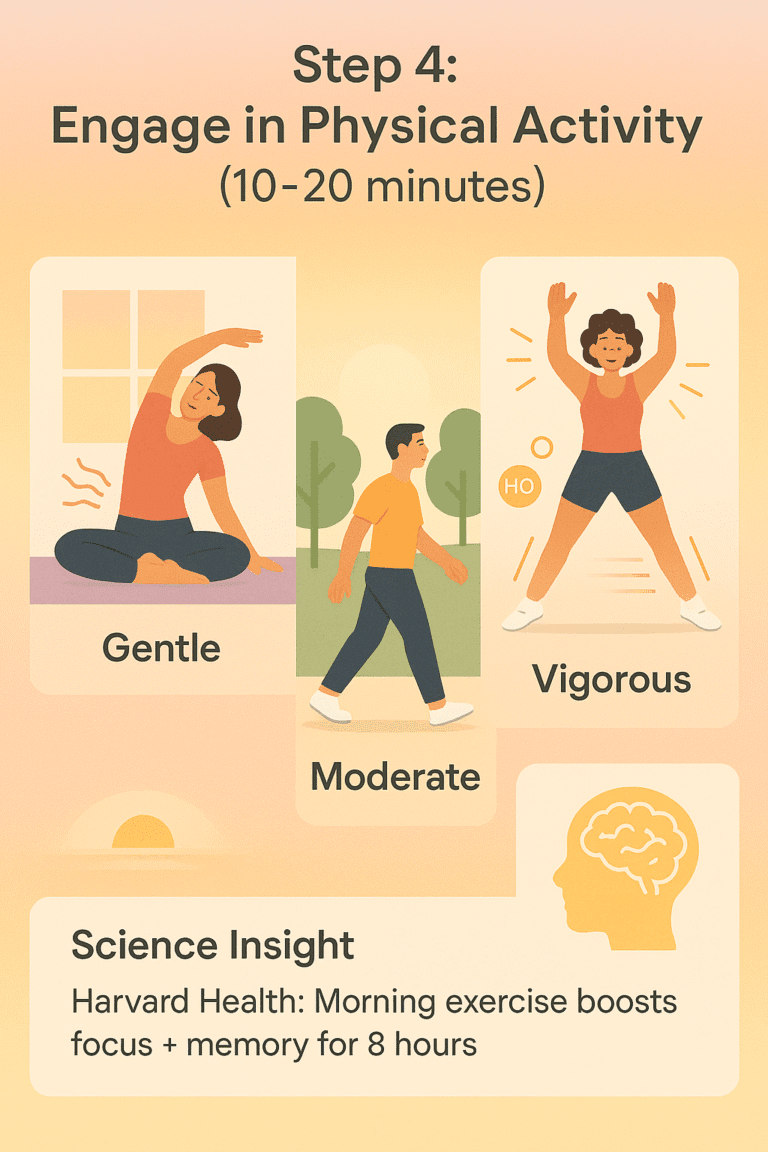
Gentle: 5–10 minutes of stretching and yoga improve blood flow and flexibility.
Moderate: Take a stroll outside because sunlight helps to balance the circadian cycle.
Vigorous: 10-minute HIIT → increases dopamine and oxygenation in the brain.
👉 Research summarized by Harvard Healthindicates that brief morning exercise improves memory and concentration for several hours.
Affiliate Suggestions:
Manduka PRO Yoga Mat (slip-resistant, long-lasting)(Link here)
Alo Moves Subscription (mindfulness exercises, Pilates, and guided yoga).
Step 5: Practice Short Morning Meditation for Cognitive Control
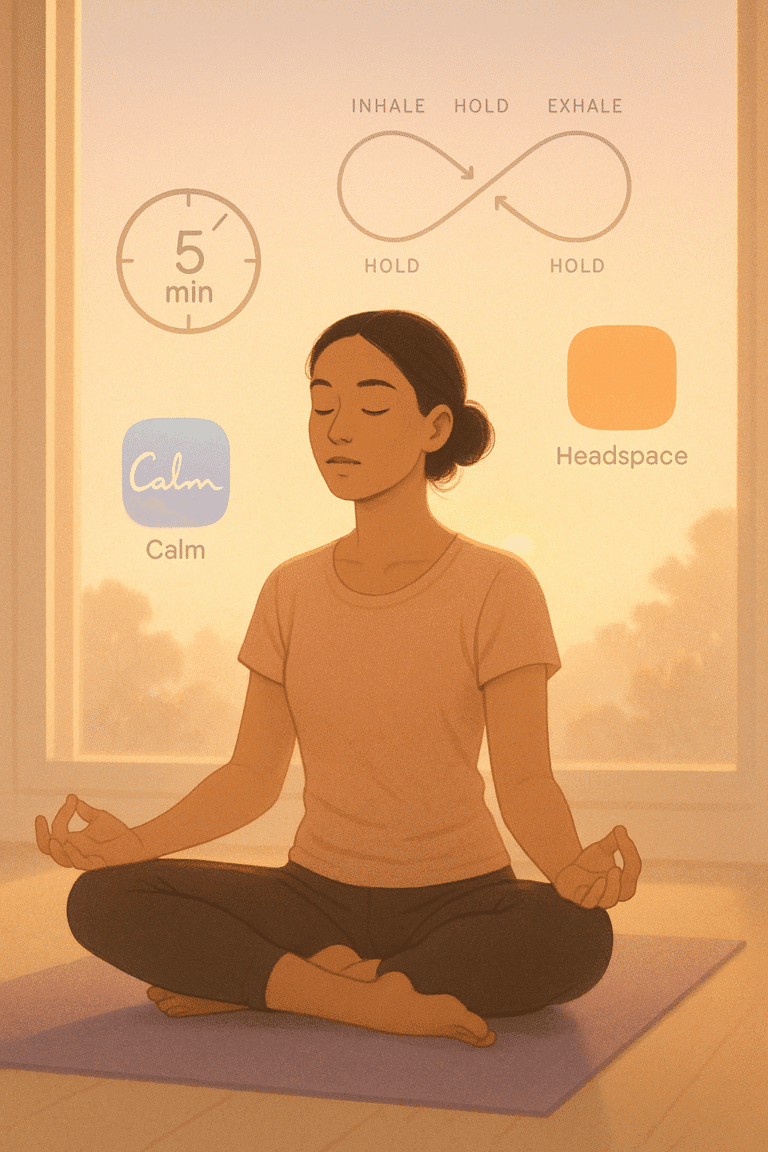
Meditation develops attention before distractions occur. Even brief sessions enhance emotional regulation and decrease mental reactivity.
Simple Options:
5 minutes of breathing awareness.
Box breathing (4-4-4-4).
Guided mindfulness, if necessary.
Mental peace or clarity is not the absence of thoughts, but the ability to direct them.
Step 6: Eat for Stable Blood Sugar and Sustained Focus
Blood sugar fluctuations cause irritation, fatigue and poor focus. A well-balanced meal helps you avoid mid-morning collapses.
Avoid:
Cereals high in sugar (they can create brain fog).
Prioritize:
Slow-digesting carbohydrates.
Healthy fats.
Protein.

Step 7:
Plan Before You Consume Information
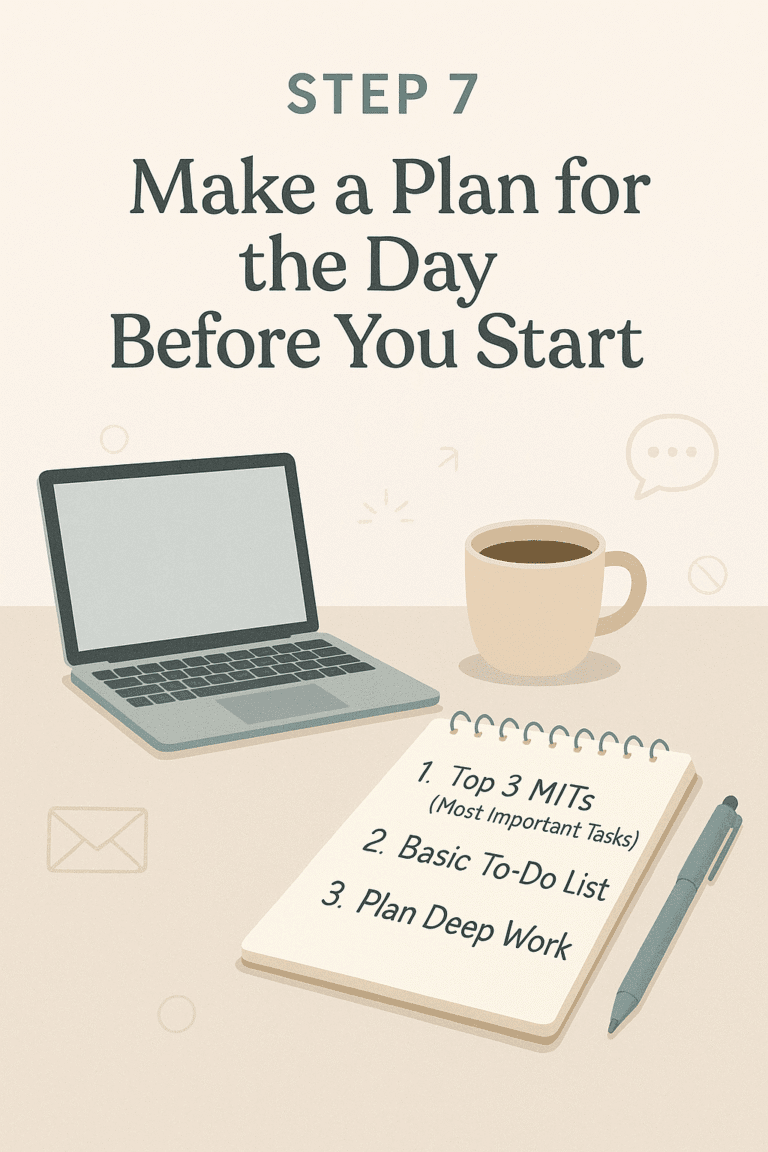
Starting the day without a plan puts your brain in a reactive mode. Planning ahead of time saves brain resources for more meaningful activities.
System:
Make a list of three priority tasks.
Avoid using email or social media first thing.
Match hard work with peak energy
👉 Being productive is about doing what matters, not about doing more.
Writing down priorities works best when paired with journaling for emotional clarity and mental unloading, especially for people who wake up anxious or mentally crowded.
Free Download:
If planning is the hardest part of your morning, the Free Morning Peace Checklist helps you apply these steps without overthinking.
The Benefits and Drawbacks of Morning Routines
Benefits include:
✅ Boosts creativity and attention
✅ Lowers stress and anxiety
✅ Develops discipline and consistency
✅ Enhances mental and physical health
Drawbacks:
❌ May feel stiff at first
❌ Requires discipline and work to build
❌ Requires changing one’s bedtime routine.
Routines provide structure but not perfection. Flexibility ensures sustainability.
Common Mistakes That Sabotage Morning Mental Peace
Even well-designed routines fail when they are overloaded or blindly copied.
Adding too many habits to your morning routine
Following someone else’s routine
Loss of sleep
Immediate phone use
If your mind feels busy even during quiet moments, learning how to If your mind feels busy even during quiet moments, learning how to stop overthinking without ignoring real problems can make morning meditation significantly more effective.can make morning meditation significantly more effective.
FAQs
Q1: What is the ideal length of my morning routine?
A: 30 to 60 minutes works best. If you’re new, start with 10 to 15 minutes.
Q2: What if I don’t like to get up early?
A: Five a.m. wake-ups are not necessary. Simply establish a habit after waking up.
Q3: Is it better to eat before working out?
A: You can do little exercise while fasting; for more strenuous activities, use protein as fuel.
Q4: Does coffee interfere with morning focus?
A: No, however to prevent cortisol increases, wait three to six hours after getting up.
Q5: What is the most basic routine for beginners?
A: Write down three priorities, stretch, and drink plenty of water. That’s where to start.
Final Call to Action: Your Morning, Your Power
Mental clarity is not achieved through extreme change. It is constructed from simple, repeating activities.
Begin with one habit—hydration, activity, or planning—and practice it every day for a week before adding another.

A morning routine for mental serenity is most effective when it combines constant waking times, hydration, movement, focused breathing, stable nutrition, and straightforward planning. These routines help to prevent cognitive overload, regulate stress hormones, and boost focus throughout the day.
Download the Free Morning Peace Checklist to create a routine that works for you, not someone else.

Sibani is the founder of The Calm Bloom, sharing mindful living tips, wellness guides, and practical routines for a balanced lifestyle.