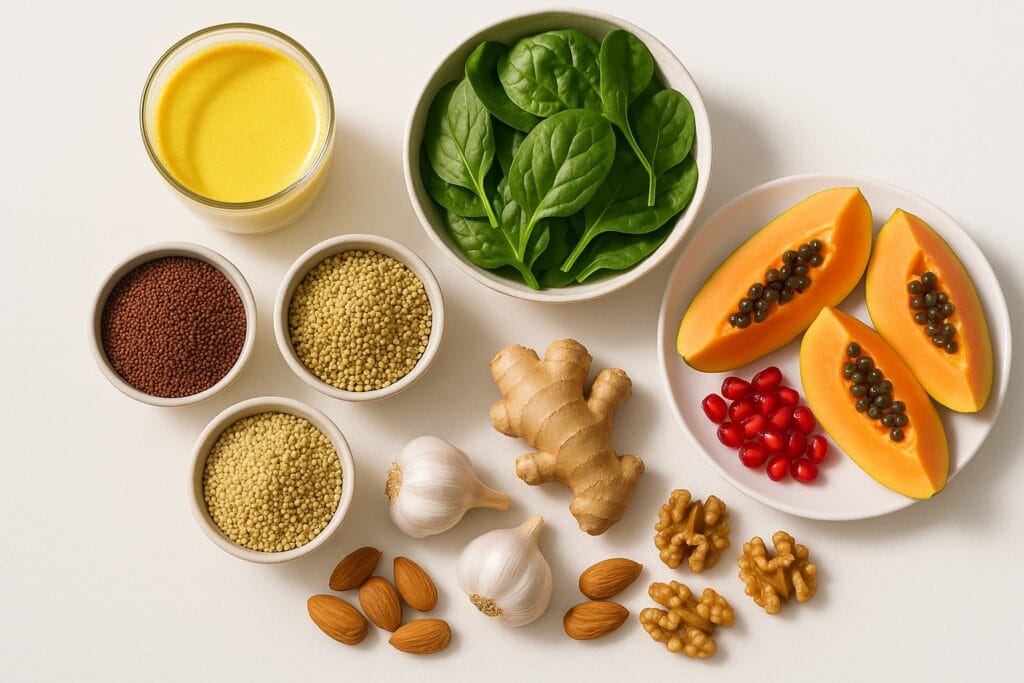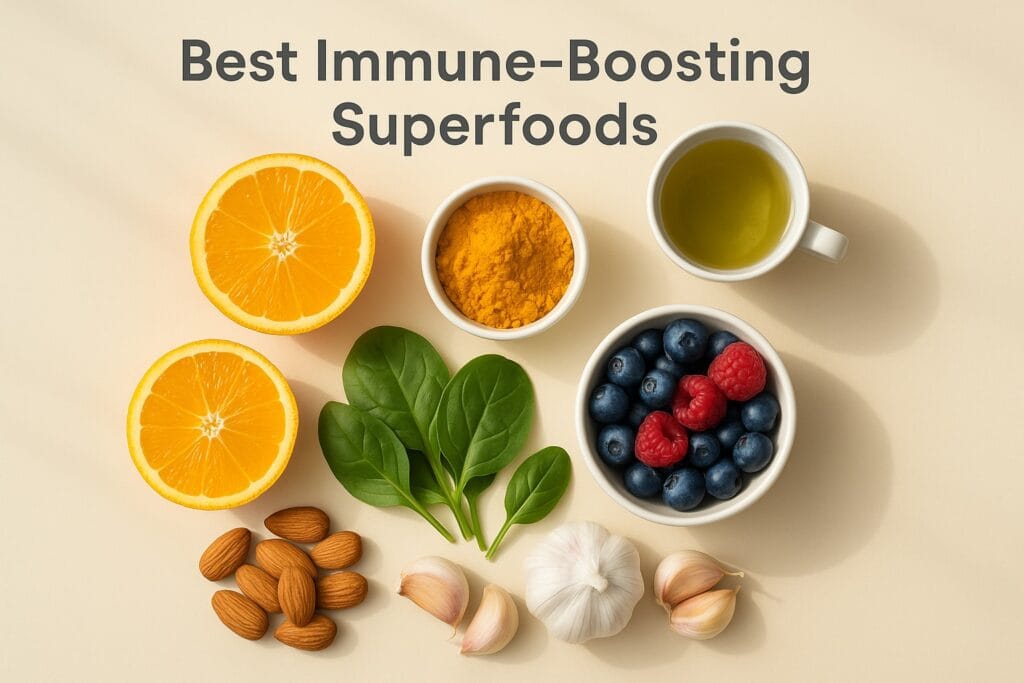
Micronutrient Staples are vitamins and minerals that enhance immunity
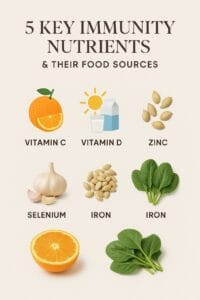
 Immunity is often associated with Vitamin C tablets when we talk about it. Although they do help, it’s important to note that not every vitamin is effective when taken alone. The immune system is like a well-organized orchestra, with Vitamin C, D, Zinc, Selenium, and Iron playing different instruments. When one person goes missing, the whole performance suffers.
I have observed how small, consistent nutrient gaps can quietly deplete your immunity over the years. You might feel fine on the surface — just a little tired, maybe more prone to colds — but your system is running low on reserves. Once I corrected these micronutrient imbalances through food, I noticed the difference: fewer energy crashes, clearer skin, and faster recovery from fatigue.
Let’s look at the key players and how to naturally get them from food, especially with Indian options that are realistic and affordable.
🍊 1. Vitamin C is your first line of defence.
The absorption of iron by your body is improved by vitamin C, which strengthens white blood cells. It needs to be replenished every day because it’s water-soluble and your body can’t store it. Instead of relying only on supplements, distribute your intake through real foods.
Top Sources:
- Amla (Indian gooseberry) has 20x more Vitamin C than oranges.
- Oranges, mosambi, and lemons are citrus fruits.
- One guava contains more Vitamin C than two oranges.
- Bell peppers, broccoli, cabbage are all good options
How to make it work:
Add lemon juice to sabzis or dal after cooking (not before, as heat destroys Vitamin C). Make sure to eat a fruit that is rich in Vitamin C every day, whether it’s raw or lightly cooked.
I often start my day with warm water, a squeeze of lemon, and a spoon of honey – simple, hydrating, and naturally cleansing.
Affiliate Suggestion:
[Affiliate Link: Organic Vitamin C Powder with Amla Extract]
[Affiliate Link: Cold-Pressed Amla Juice]
🌞 2. Vitamin D — The Immunity Vitamin We Often Forget
 It’s a challenge because sunlight is the most effective natural resource, but most of us work indoors. Studies from Mayo Clinic have demonstrated that a deficiency in Vitamin D is linked to an increased risk of infection and a slower recovery as shown by studies from Mayo Clinic and NCBI.
Even though India has plenty of sunlight, Vitamin D deficiency is common due to pollution and sunscreen blocking UVB absorption.
In India, despite the sunlight, Vitamin D deficiency is surprisingly common due to pollution and sunscreen blocking UVB absorption.
Top Sources:
- Morning sunlight (15-20 minutes between 8-10 a.m.)
- Read the label before purchasing fortified milk, curd, or plant milks
- Egg yolks and fatty fish like salmon, sardine, rohu, and mackerel
- Mushrooms that are exposed to sunlight
How to make it work:
Sun exposure is essential for vegetarians. I try to spend 10 to 15 minutes on my balcony every morning without using my phone or listening to podcasts. Just sunlight and silence. The grounding ritual is beneficial for both mood and immune balance.
Affiliate Suggestion:
🧂 3. Zinc is the mineral that keeps your immune system active.
Zinc helps to produce immune cells and shorten the duration of colds. Most people underestimate how quickly zinc can be depleted during stress, poor diet, or infections.
Top Sources:
- Pumpkin seeds and sunflower seeds.
- Chickpeas, lentils, and rajma.
- Cashews, almonds
- Curd, paneer, and eggs
If you have noticed slow wound healing or constant low energy, low zinc may be the cause.
I keep roasted pumpkin seeds handy – just a tablespoon or two every evening adds a solid zinc boost and a nice crunch.
Affiliate Suggestion:
🧄 4. Selenium — The Hidden Defender
Selenium is not well-known, but it is essential for generating antioxidant enzymes that safeguard your immune system. Mild deficiency can make you more vulnerable to viral infections.
Top Sources:
- Brazil nuts (just 1 or 2 a day will cover your requirements).
- Whole grains, such as brown rice and millets, are not processed
- Garlic and onions are a popular combination
- Fish and egg
Because Brazil nuts aren’t always easily available in India, I use local alternatives — a mix of roasted chana, garlic, and sunflower seeds provides a good selenium balance.
Affiliate Suggestion:
[Affiliate Link: Organic Brazil Nuts Pack]
🧠 5. Iron — The Oxygen Carrier
Iron is necessary for oxygen transport in your blood, and without it, your cells cannot function at full strength. Iron-deficiency anaemia, commonly seen in Indian women, weakens the immune response because immune cells need oxygen to thrive.
Top Sources:
- Spinach, methi leaves, and amaranth (rajgira).
- Jaggery, dates, raisins are all ingredients
- Lentils, beans, and chickpeas.
- Organ meats (if not vegetarian)
Pro tip: Always pair iron-rich foods with Vitamin C sources, such as lemon, tomato, or amla, to enhance absorption. Avoid drinking tea or coffee right after meals; they block iron uptake.
🪷 Practical ways to bring it all together.
Micronutrients are not required to come from complicated diets or expensive supplements. A balanced Indian thali already provides most of what your body needs, but it is better to keep it colourful and minimally processed.
A one-day example that keeps immunity steady is as follows:
Morning: Lemon honey water + 1 boiled egg or poha with peanuts
Lunch: Brown rice, dal with spinach, cucumber raita with curd
Snack: Handful of roasted seeds + amla juice shot
Dinner: Roti with methi sabzi + beetroot salad + turmeric milk
These small, habitual choices are what your immune system depends on daily — not occasional detoxes or high-dose supplements.
If you’d like a broader look at building your natural defence through daily habits, read How to Boost Your Immune System Naturally at Home. It pairs perfectly with this section.
Gut & Microbiome Foods — How a Healthy Gut Fuels Strong Immunity
 For the longest time, I believed immunity was all about vitamins and antioxidants. Then I learned that nearly 70% of your immune system actually lives in your gut. That fact changed the way I looked at food completely.
If your gut bacteria are healthy and balanced, your immune system stays calm and alert. If your gut is off — from processed food, poor sleep, or stress — your immunity becomes confused and overreactive. That’s when you start catching every small infection, feeling bloated, or dealing with mysterious fatigue.
When I fixed my gut health (after years of random antibiotics and skipped meals), I noticed my energy stabilize, digestion improve, and skin clear up. It’s not magic — it’s microbiology. Let’s unpack it simply.
🧫 Why Gut Health and Immunity Are Connected
Both good and bad bacteria live in your gut. The good bacteria train your immune system to recognize real threats from harmless triggers. Short-chain fatty acids produced by them can reduce inflammation, aid in nutrient absorption, and even affect your mood.
When the balance shifts, such as after too much processed food, antibiotics, or alcohol, the bad bacteria multiply. That weakens your gut lining and allows toxins to leak into your bloodstream, causing inflammation that can lower your immunity over time.
This is what nutritionists call dysbiosis — and most people don’t realize they have it.
The solution isn’t in probiotic pills alone; it’s in feeding your gut bacteria the right food — prebiotics and probiotics working together.
🥛 1. Indian Fermented Foods — Naturally Probiotic
While we tend to look for fancy yogurt brands, Indian cuisine has always been rich in natural probiotics. These foods introduce beneficial bacteria and enzymes that strengthen your gut microbiome.
Examples:
Curd (Dahi): Simple, cooling, and packed with live cultures. Have it plain, or as chaas or raita.
Kanji: A fermented drink made from black carrots or beetroot — rich in probiotics and antioxidants.
Idli & Dosa Batter: Naturally fermented rice and lentils that develop beneficial bacteria during the soaking process.
Dhokla: Another great example of mild fermentation from chickpea flour.
My go-to habit: I started adding a bowl of curd to lunch daily and drink homemade kanji twice a week. Within two weeks, my bloating was gone, and my energy felt steadier.
 🥦 2. Prebiotics — Food for the Good Bacteria
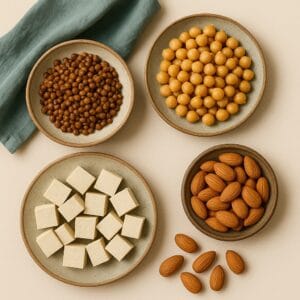 🥦 2. Prebiotics — Food for the Good Bacteria
If probiotics are like planting healthy bacteria, prebiotics are what feed them. These are fiber-rich foods that help your gut bacteria thrive.
Top Prebiotic Foods:
Onions, garlic, leeks
Bananas (especially slightly unripe)
Oats, barley, and millets
Chickpeas, beans, lentils
My go-to habit is to add a bowl of curd to lunch daily and drink homemade kanji twice a week. Within two weeks, my bloating disappeared and my energy became more steady.
🧉 3. Probiotic Drinks — Modern Additions That Work
Prebiotics are like planting healthy bacteria, and probiotics are like feeding them. These foods are high in fiber and help your gut bacteria thrive.
Examples:
Kefir (a tangy fermented milk drink rich in multiple strains)
Kombucha (fermented tea, available in ginger, mint, or lemon flavors)
Probiotic curd drinks (local Indian brands often make these affordable)
Just one small glass of kefir or kombucha a few times a week can restore gut diversity after stress or antibiotics. But remember — they’re supplements, not substitutes for whole foods.
Affiliate Suggestions:
🍲 4. Balanced Meals That Support the Gut-Immune Axis
Building a gut-friendly plate doesn’t mean anything fancy — it’s about diversity. The more colors and fibers you eat, the wider range of bacteria you feed.
Here’s a simple Indian gut-friendly meal combination:
Breakfast: Idli with coconut chutney (probiotic + healthy fat)
Lunch: Brown rice with dal, sautéed veggies, and a bowl of curd
Snack: Banana or roasted chana
Dinner: Vegetable khichdi with ghee and a glass of beetroot kanji
Avoid ultra-processed foods, refined oils, and excess sugar – they wipe out your good bacteria quickly. It’s important to eat your last meal at least 2–3 hours before bed to ensure that digestion finishes peacefully.
If you want a deeper dive into building gut health through everyday foods, you’ll love my article How to Improve Gut Health Without Probiotics. It explains how even simple Indian meals can act as natural pre- and probiotics when planned right.
🌿 The connection between Ayurveda and medicine
Ayurveda has always emphasized “Agni” — the digestive fire — as the root of all health. When Agni is weak, immunity weakens.
Spices like ginger, cumin, ajwain, and hing gently stoke this digestive fire without irritation. You don’t need anything extreme; just cook with intention — moderate spices, fresh ghee, and mindful eating without distractions.
🪷 Key Takeaway
If your gut isn’t happy, your immune system can’t do its job well — no matter how many supplements you take.
So before you spend on immune boosters, fix your foundation: your gut.
Begin with a single change. Try adding curd to your lunch, drinking kanji twice a week, or consuming more fibre. Your gut bacteria will respond quickly, and your immune resilience will quietly strengthen in the background.
Spices & Adaptogens — Nature’s Ancient Immunity Tools
If there’s one thing I’ve learned in my wellness journey, it’s that your spice rack is more powerful than your medicine cabinet – when used thoughtfully. Turmeric, tulsi, ashwagandha, giloy, and other adaptogens have been used by Indian kitchens for a long time to strengthen immunity, fight inflammation, and even calm stress.
These are not just traditional remedies. Their benefits are supported by modern research, and they can easily be added to your daily meals without the use of fancy powders or expensive pills.
🟠 1. Turmeric — The Golden Healer
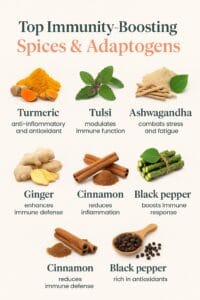 We’ve discussed turmeric before, but its versatility deserves another look. Curcumin, the active compound, is both anti-inflammatory and antioxidant, enabling immune cells to respond efficiently.
How I use it:
Add a pinch of turmeric with black pepper to warm milk before bed
Stir fresh turmeric into dals, curries, or vegetable stir-fries
Make a turmeric paste (turmeric + coconut oil + black pepper) to mix into smoothies or soups
Even small daily doses are effective — you don’t need a tablespoon at once.
🌿 2. Tulsi (Holy Basil) — The Stress-Immune Link
Tulsi is unique because it not only supports immunity but also helps manage stress, which is a major factor in immune weakness. NCBI has well-documented its antiviral and antibacterial compounds.
Simple ways to include tulsi:
Steep fresh or dried leaves into a warm tea, add a slice of ginger and honey
Keep a small pot of tulsi at your windowsill and pluck leaves daily
Tulsi herbal teas are convenient for work or travel
Pro tip: I make a small tulsi-ginger tea ritual every evening — it calms my mind and prepares me for restorative sleep, which I’ve noticed improves my resistance to colds and infections.
🟤 Ashwagandha is an adaptogen that helps with stress and immunity
Chronic stress suppresses immunity, and that’s where ashwagandha, a powerful adaptogen, comes in. It regulates cortisol levels while supporting overall vitality.
How to include:
Powdered ashwagandha in warm milk or smoothies
Ready-to-drink adaptogen blends for busy mornings
Affiliate placeholder:
Personal experience: When I added ashwagandha to my nightly routine, I noticed fewer mid-week energy crashes and faster recovery from mild illnesses — all without changing other habits drastically.
🌱 4. Giloy — The Immunity Booster
Another ayurvedic gem is Giloy (Guduchi). White blood cell function is improved and the body is able to handle infections better. I prefer using it in small daily doses as either juice or a boiled decoction.
Quick ways to use giloy:
Boil giloy stems in water for 15 minutes, strain, and sip
Mix giloy powder into honey or warm water
Giloy-based herbal teas for easy daily use
Affiliate placeholder:
🟡 5. Other Immune-Friendly Spices
A few more spices I rotate weekly:
Ginger: Antiviral, anti-inflammatory; I add it to teas, dals, and soups
Cinnamon: Regulates blood sugar; I sprinkle it on oats or smoothies
Cloves & Black Pepper: Support digestion and absorption of nutrients
Small, consistent use beats occasional megadose. I rarely take more than a pinch to a teaspoon in cooking or drinks, but it adds up over the week.
🪷 How to Integrate Spices Into Daily Life
Instead of overthinking, pick one spice or adaptogen and include it daily:
Morning: Warm water with a pinch of turmeric + black pepper
Afternoon: Tulsi tea or giloy juice
Evening: Ashwagandha milk or powder in smoothie
Pair this with your antioxidant foods and micronutrient staples, and you’ll have a complete daily immunity routine without feeling like you’re on a diet or taking medications.
For more tips on combining diet and lifestyle to support immunity, check out:
Daily Meal Plan and Practical Tips — Making Immunity Simple
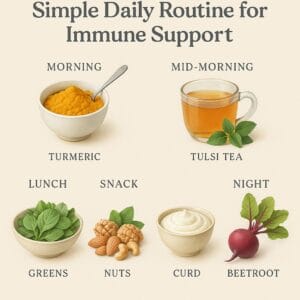 Now that we’ve covered antioxidant foods, micronutrients, gut-friendly choices, and immune-boosting spices, the real question is: How do you put this into a simple daily routine without feeling overwhelmed?
The key is small, consistent actions. You don’t need a complicated diet plan — just a balanced, colorful, and nourishing plate that hits all the immunity pillars. Here’s how I do it in a realistic Indian context.
🍽️ Sample 1-Day Immune-Boosting Meal Plan (India-Focused)
Morning:
Warm water with lemon + a pinch of turmeric and black pepper
1 boiled egg or poha with peanuts and vegetables
Optional: 1 glass of Amla Juice.
Mid-Morning Snack:
Handful of roasted pumpkin seeds and almonds.
1 small banana or guava (Vitamin C boost)
Lunch:
2 chapatis (whole wheat or millet-based)
Dal with spinach or methi
Cucumber and tomato salad with a squeeze of lemon
1 small bowl of curd.
Afternoon Snack:
Herbal tea: Tulsi + ginger .
A few soaked chana or sprouts
Dinner:
Vegetable khichdi with ghee
Side of beetroot salad or steamed seasonal veggies
Warm turmeric milk before bed
🪷 Practical Tips to Keep Your Immunity on Track
Consistency Over Perfection: Even adding one immune food per day is better than overloading sporadically.
Mindful Eating: Chew slowly, avoid distractions, and allow digestion to complete — this is crucial for gut health.
Hydration: Warm water, herbal teas, or infused water helps nutrient absorption and detoxification.
Sunlight & Movement: 10–20 minutes of morning sun and light movement supports Vitamin D and immune balance.
Rotate Foods: Don’t rely on just one superfood. Diversity feeds your microbiome and strengthens immunity.
💡 Lifestyle Integration
The immune system doesn’t work in isolation. Combining food, sleep, stress management, and movement is what really makes the difference. For example:
Pairing gut-friendly meals with a consistent sleep schedule helps immunity regenerate (How to Sleep Better Without Medication).
Using adaptogens like ashwagandha while practicing stress-reduction techniques can reduce cortisol levels, which improves immune response (How to Manage Stress Naturally Without Therapy).
By integrating even a few of these daily habits, your immune system begins to function more efficiently, and small illnesses become easier to recover from.
🌿 Final Thoughts: Start Small, Build Gradually
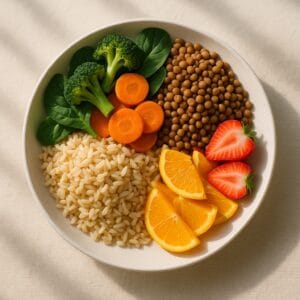 I know it can feel overwhelming to think about all the foods, nutrients, and lifestyle tweaks at once. The truth is, you don’t need to implement everything immediately. Start with one or two changes — maybe a daily bowl of antioxidant-rich fruits or a turmeric latte before bed. Once it becomes a habit, layer in gut-friendly foods, spices, and micronutrients.
Remember, immunity is built over time. It’s not a quick fix — it’s a lifestyle. Each small, conscious step you take feeds your cells, strengthens your defenses, and supports your overall well-being.
Your action today: Pick one food or spice from this guide and include it in your next meal. That’s your first small but meaningful step toward stronger immunity in 2025.







Sibani is the founder of The Calm Bloom, sharing mindful living tips, wellness guides, and practical routines for a balanced lifestyle.